 Donate
 Basket
 Login
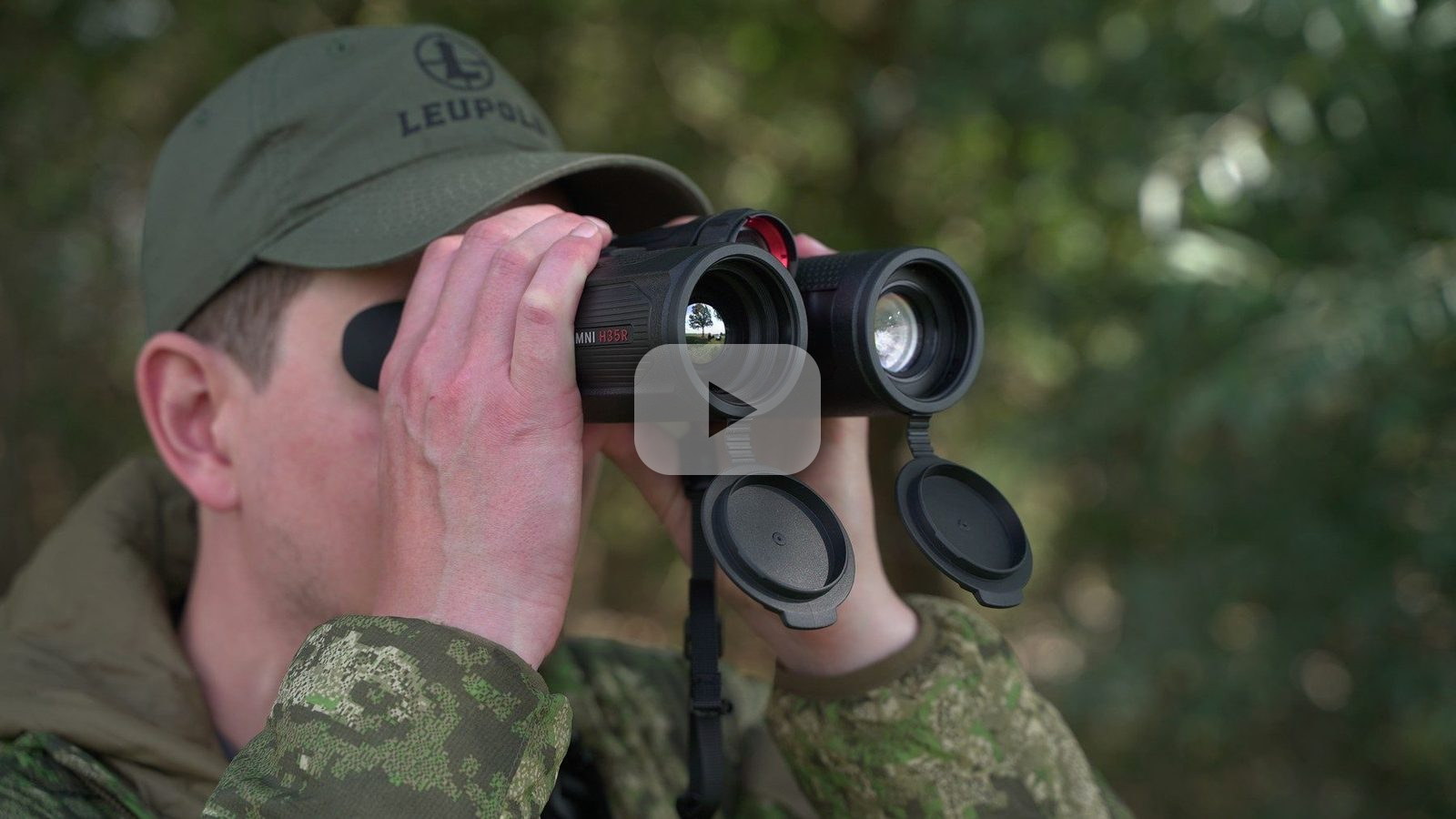
Thermal is superb at finding things and only average at telling you what they are, and every counter that sells it hears the same complaint. A hot signature turns up at distance, then the customer spends valuable minutes trying to make a positive identification through an image that was never built for the task. I am not happy until I am sure of what I am looking at, which is why multi-spectrum binoculars have won me over and why the format is now a serious line for any optics dealer.
The Omni is Nocpix’s first attempt at the format. With no shortage of choice in this corner of the market, I was keen to see what a new take would look like, particularly one arriving with a claim to being the world’s first 8K multi-spectrum binocular, and whether it gives the trade a product to put against the established names.
At £2,499 the H35R is a lot of money, and versatility is what the customer gets for it. One pair will pick up rats, rabbits, hares, foxes and deer across all sorts of environments and cover, day and night, when traditional glass would miss them. That is why this type of binocular has caught on the way it has, and why the question at the counter is no longer whether to stock one but which.
Omni H35R or L19R: what does the extra £1,000 buy, and who should be sold it?
There are two Omnis and a thousand pounds of retail between them. The H35R pairs a 640×512 thermal sensor with a 35mm objective, while the L19R drops to 384×288 behind a 19mm lens at £1,499, the R denoting the rangefinder on both. What is unusual is how little else separates them. Digital channel, display, battery, storage, rangefinder, body and weight are identical, so that £1,000 buys thermal resolution and reach alone. The L19R actually has the wider field of view, at 1.5x base magnification, which makes the two an easy pair to explain side by side.
Watch the Omni H35R in action in the video below.
Thermal and 8K digital technology: the specification a dealer will be asked about
The thermal side runs a 640×512 sensor on a 12µm pixel pitch with a sensitivity of ≤15mK, refreshing at 50Hz, behind a 35mm F0.9 objective. As with a thermal riflescope, that 35mm is focal length rather than front lens diameter, a distinction worth making for a customer comparing brochures. Field of view is 12.5°x9.4°, or 21.9×16.5m at 100m; magnification runs from 2x to 16x, and detection range is quoted at 1,800m.
The digital channel is the headline, and both models share it. An 8192×6144 sensor on a 1.2µm pitch gives a little over 50 megapixels, which is where the 8K claim comes from, behind a 50mm F1.8 lens for a very welcome 3x base magnification. Field of view narrows to 8.8°x6.6°, or 15.4×11.5m at 100m, with detection quoted at 1,000m. The display is only 1600×1200, so the user never sees all those megapixels at once. What they give is room to zoom. Because the sensor captures so much more than the screen can show, you can push a long way into the magnification range before the image is stretched rather than simply cropped, considerably further than a lower-resolution sensor allows. I worked mine up to 18x, although my favourite was around 14x.
The image lands on a 0.5in round AMOLED with a generous 25mm of eye relief, a 12mm exit pupil and dioptre adjustment from -4 to +4. Between the objectives sits a replaceable infrared illuminator, offered in 850nm and 940nm, adjustable for power and beam focus. Mine arrived with an additional IR850 module in the box, so I assume the one fitted as standard is the 940nm, the more discreet of the two at the cost of some reach.


Power is a pair of replaceable 18650 cells backed by an internal battery, quoted at 7.5 hours at 22°C and charged over USB-C. There is 64GB of storage with Wi-Fi and app support; the laser rangefinder is rated to 1,000m, and ballistic calculation is included. The body is IP67 rated from -20°C to +50°C, measures 198x144x75mm and weighs around 900g.
How the Omni H35R performed in the field
Foxes had previously been seen crossing a potato field at about 7.30pm, so I was in a high seat with the H35R well before then, with a hedgeline 130m out front, potatoes left and beet right. Setting up took moments, with independent dioptre adjustment on each eyepiece and adjustable interpupillary distance. Where a traditional binocular has its focus wheel, the Omni has a zoom control, which I much prefer to thumbing a button. Then it was a case of waiting.


Roe and muntjac appeared from 7pm, and I had a great time observing them, working through the thermal palettes and testing the Omni’s rangefinder. When two muntjac arrived, running and playing in the beet, I spotted them in the thermal immediately, then switched to digital to identify them. If a customer has not tried a pair of multi-spectrum binos, that is the process that will sell them, and it is the demonstration to give on the shop floor.
At around 8.20pm, the light was really fading, straining the digital “Day” mode. I tried the “Dusk” mode, which did not seem to offer much, so I went to “Moon”, and the difference was immediate. If a customer’s digital image is falling apart as the light goes, the answer is almost always the wrong mode rather than a binocular out of talent, which is worth saying at the point of sale before it becomes a return.
With it much darker at 8.43pm, I turned to rabbits and hares between 60 and 120m, running the illuminator through low, medium and high and playing with the beam focus. Their eyes made them stand out beautifully, and shifting the beam from flood to tight was easily done via the illuminator’s rubber wheel. Focus is handled by two dials underneath where your thumbs fall, the right for thermal and the left for digital. That affects one-handed use, but it is forgiving enough that one adjustment covers a decent bracket of distance, unlike some units that need constant fettling.
Then, at 8.54pm, what I had come for. The fox cub was halfway across the potato field before I clocked it, at around 300m on the rangefinder. I did not need digital, because a fox moves in a way nothing else does and the 640×512 sensor gave me plenty to be certain. Just as well, because I could not have used it. The low branches in front of the seat would have meant IR splashback and a ruined image, a quiet advantage thermal holds over digital. Those same branches also ruled out a safe shot, and calling the fox did not work, suggesting I need to work on my call.
Living with the Omni H35R: the build and the box
Living with the H35R threw up a few things. Magnification stays in sync, near as dammit, across both channels. The four buttons on top are large and easy to find by feel, and I do not think I pressed the wrong one all evening. The battery compartment is stiffer to open than I would like on the H35R, but easier on the L19R, so it may be luck of the draw. I am sure it will ease up with use.
Battery drain barely registered, with four hours of heavy use hardly denting it, helped by an auto-power function that shuts the unit down when you place the Omni back in a chest harness, for example.
The H35R box is a strong part of the proposition: a charger, four batteries, instructions, a spare IR850 module and a very nice Nocpix chest harness, though its straight-edged black cut did not tempt me from my Härkila one.
Verdict: which Omni should the trade recommend?
Assuming the customer likes the Omni on what I have described, the next challenge is which one, and that is a decision the dealer will be asked to help with. The L19R will tell the user there is a heat source out there and then let them identify the animal digitally, which, for most people, is the whole job. Seen that way, the H35R is a luxury, not a necessity, and the honest sale starts from the cheaper model.
A longer focal length lays more detector pixels across a distant animal, so detail holds together further out, and the bigger objective gathers far more infrared energy for a cleaner image. Oh, and the detection range increases from 1,000m to 1,800m. The cost, of course, is field of view, which is why the cheaper model is nicer to scan with. A customer who shoots ground that will use that reach is an H35R sale. One whose engagement distances are typically shorter, where a greater field of view is a huge advantage, should leave with the L19R.
One feature that deserves more shouting about is the image stabilisation. This is common enough these days, but not only can it be switched on and off independently for thermal and digital, it also works across the entire magnification range, not just the higher levels. Anyone who has tried to hold a pair of binoculars steady one-handed while recording footage for an upcoming YouTube review, with a spot of buck fever setting in, will know why image stabilisation matters. On its own, it is close to a reason to select the Omni, and it is the feature to lead with.
In the end, two things nagged at me. The auto-power function is a tad overenthusiastic, occasionally waking the unit when I had no need of it, and the battery compartment on my H35R is stiffer to open than it ought to be. Minor gripes both, and nowhere near enough to spoil things.
Overall, the Omni is a first attempt that behaves like a third, and I would happily have either one in my chest harness; the trade should expect to be asked for both.
Nocpix Omni H35R specification
| Specification | Detail |
|---|---|
| Name | Nocpix Omni H35R multi-spectrum binocular |
| Price (RRP) | £2,499 |
| Thermal sensor | 640×512, 12µm pixel pitch, ≤15mK, 50Hz |
| Thermal objective | 35mm, F0.9 |
| Thermal field of view | 12.5°x9.4° (21.9×16.5m at 100m) |
| Thermal magnification | 2x to 16x |
| Thermal detection range | 1,800m |
| Digital sensor | 8192×6144 (8K), 1.2µm pixel pitch |
| Digital objective | 50mm, F1.8, 3x base magnification |
| Digital field of view | 8.8°x6.6° (15.4×11.5m at 100m) |
| Digital detection range | 1,000m |
| Display | 0.5in round AMOLED, 1600×1200 |
| Eye relief / exit pupil | 25mm / 12mm |
| Dioptre | -4 to +4 |
| IR illuminator | Replaceable, 850nm or 940nm, adjustable power and beam focus |
| Laser rangefinder | 1,000m, with ballistic calculation |
| Power | Two replaceable 18650 cells plus internal battery, USB-C, 7.5hr quoted runtime at 22°C |
| Storage | 64GB, Wi-Fi and app support |
| Protection | IP67, -20°C to +50°C |
| Dimensions | 198x144x75mm |
| Weight | Around 900g |
| Sister model | Nocpix Omni L19R multi-spectrum binocular, 384×288 thermal, 19mm, £1,499 |
| Contact | nocpix.uk |
Frequently asked questions
How much does the Nocpix Omni H35R cost?
The Omni H35R has a retail price of £2,499. The cheaper Omni L19R costs £1,499. Prices were correct at the time of writing.
What is a multi-spectrum binocular?
A multi-spectrum binocular puts a thermal channel and a digital day and night channel in one housing. The user finds the animal with thermal, then switches to the digital image to identify it positively, which is the job thermal on its own does least well.
What is the difference between the Nocpix Omni H35R and L19R?
The H35R has a 640×512 thermal sensor behind a 35mm objective, with thermal detection quoted at 1,800m, while the L19R has a 384×288 sensor behind a 19mm lens and a wider field of view. The 8K digital channel, display, battery, storage, rangefinder, body and weight are the same on both.
Does the Nocpix Omni H35R have image stabilisation?
Yes. It can be switched on and off independently for the thermal and digital channels, and it works across the whole magnification range rather than only at the higher settings.
Who supplies the Nocpix Omni to the UK trade?
Details of the Omni range, trade terms and UK stockists are available from Nocpix at nocpix.uk.