 Donate
 Basket
 Login
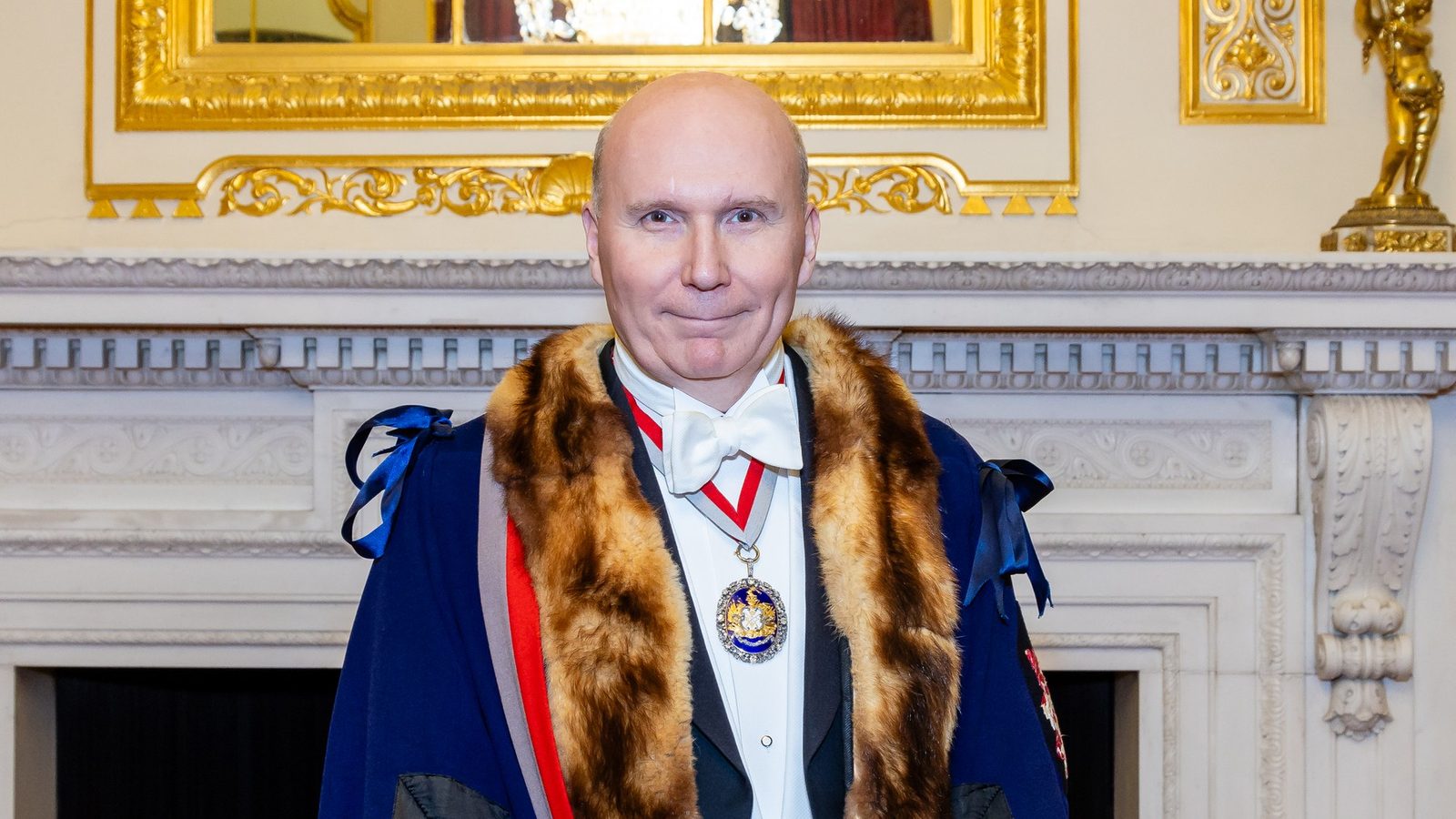
The Worshipful Company of Gunmakers has a new Master, and his first words on the job are about stewardship rather than ceremony. “I liken it to an ancient bonsai tree,” says John Taylor, two days into his year in office. “You’ve got this living thing that’s robust in ways and delicate in other ways, and it’s handed to you for only a year. Then you’ve got to gently take care of it and hand it on. You don’t want to change its fundamental nature, and you want to be a good steward.” For the trade whose guns pass through the Proof House, the intent is plain: hand the Company on a little bigger and more robust than he found it.
Taylor was installed on Tuesday, 3 November at Goldsmiths’ Hall, where he received the keys to the Proof House. Past Masters had warned him how quickly the year goes. “You get them, blink twice, and suddenly you’re handing them to somebody else.” The next morning he phoned his predecessor, Nicole Brocklebank-Fowler, to ask whether she too had woken wondering if it had really happened. She had. “It’s a surreal experience, because you’re so focused on getting everything that evening right it becomes a bit of a blur.”
Who is the new Master of the Gunmakers’ Company?
Taylor is a partner in a law firm whose practice has drifted into defence technology, taking him to Brussels, Tokyo and, above all, Washington DC and the Pentagon. He grew up in Tennessee – “known for whiskey, horses and its riflemen” – and came to London with his wife in early 2000 for what was meant to be a two- or three-year posting. The couple are dual nationals now and their daughter was born in Britain.
Game shooting brought him into the livery 13 years ago, on the advice of several gunmakers who told him he would enjoy it, and it has served as his education in British geography: he shoots across the UK, in Shropshire, Cornwall, Lancashire and Yorkshire, with a soft spot for the grouse moors above Whitby. He stalks as well, though “not anywhere near as well as I should”, and an African safari is talked about, but not before 2028. This year the shooting has been “trimmed to the bone”: two Shropshire days have already gone to livery dates he discovered late, and his club and charity commitments have been asked for a year’s grace. “Shooting’s fun, but this is much more important.”
What does the 400th anniversary mean for the trade?
His installation speech ran to five minutes – “very short”, the Clerk observed, and Nicole agreed – and carried one message for the industry. “The 400th anniversary of the livery will hit us before we know it.” The Company was founded by Royal Charter in 1637, and Taylor wants 2037 to mark more than a dinner. “There are two strands to the livery. If you look at its DNA, we’ve got working gunmakers – finding them, bringing them along, acknowledging their skills and making sure we remain the best in the world. The other is providing proof.” Both, he says, must be put on a footing that can survive whatever the market does next.
Funding the apprentice scheme and the Master Gunmaker panel
That comes down to money, and he makes no apology for saying so. Fundraising is his first priority: for the apprentice scheme, so the Company can find young people who want to make guns and support the working gunmakers who train them, and for the certification panel that confers the title of Master Gunmaker, which he would like to open to military armourers at home and abroad. The workforce case is stark: around 50 experienced gunmakers are looking at retirement over the next several years, and the funds have to exist to show school leavers that the bench is a career worth having.
The money, like the market for London best guns and top-end driven grouse, sits largely in the United States and the Middle East rather than in the United Kingdom or on the Continent. Taylor’s pitch to the private bankers, private client lawyers and sporting agents who manage those patrons is that a gift to the Gunmakers adds to their clients’ interests rather than competing with them. “You enjoy game shooting. You enjoy fine English guns. This is best of British – it’s like Savile Row, like Rolls-Royce and Bentley. We’re the custodians of that. Please give back to ensure its future.”
Proof House dinners and a wider circle of supporters
Alongside the appeals come what he calls livery-aligned events: exclusive dinners at the Proof House for clients who may own five or 10 London guns yet have never set foot in Whitechapel, with the chance to meet the craftsmen working on them. Transatlantic fundraisers are under discussion too. He also sees untapped supporters in defence technology and among collectors of fine Swiss watches, who already understand why hand skills deserve backing in the age of the smartwatch.
Membership is capped at 450 liverymen, a ceiling the Company persuaded the City of London to lift from 400, so places remain scarce. Taylor expects some of the new engagement to come by other routes: people who want an association with the Gunmakers, an occasional event and a chance to contribute, without the obligations of full membership. He also intends to map where the Company’s liverymen are around the world and identify the gaps.
Why proof comes before the silver
For the trade, the sharpest passage is one he told at the summer banquet, a tale of two buildings. A century ago, with a glut of guns left over from the Great War, proof volumes collapsed and the Company was proving at a loss. Faced with a choice between becoming a purely ceremonial company and acting radically, it sold its hall next door in 1927 to subsidise proof, buying it back only decades later. “We chose the hard way, because it’s central to our identity to prove guns. I want to give us the wherewithal to face the ups and downs of a market without having to sell the silver.”
The outlook for fine English gunmaking
On the craft itself he is bullish, citing Swiss horology, which survived the quartz crisis of the 1970s and 80s when a cheap watch could keep better time than anything made by hand in Geneva. “The industry was put through the fire, but it survived. I think we’re going to have fine English gunmaking for generations to come.” He plans to visit British gunmakers to see the benches at work, and to make contact with the armourers serving in the armed forces.
He is equally clear that 2037 is a milestone rather than a deadline. The apprentice scheme, the certification panel and a proof operation able to absorb the swings of the market are built to serve the Company into its fifth century. “2037 is a milestone. What we are really building is a Company that can look after itself for centuries to come.” He describes his year less as a term in which to make a mark than as one leg of a relay.
He is quick to credit the unseen work of the Court, the staff and the committees, many of whose members never sit on the Court. “People see the Master. They don’t see the Court, the staff and the committees doing the work week in, week out. Nobody does it to be thanked.” Above all he counts himself fortunate to carry a 389-year-old institution forward by one more year. “I’m grateful to have the tree for a year. The job is to look after it and hand it on.”
He has 363 days left, and an ancient bonsai to tend.
Frequently asked questions
Who is the new Master of the Worshipful Company of Gunmakers?
John Taylor, a Tennessee-born partner in a London law firm whose practice centres on defence technology, was installed as Master at Goldsmiths’ Hall on Tuesday, 3 November 2026. He succeeded Nicole Brocklebank-Fowler and serves for one year.
When was the Worshipful Company of Gunmakers founded?
By Royal Charter in 1637, which puts its 400th anniversary in 2037. Its two strands are the support of working gunmakers and the provision of proof, the testing of guns on which the UK trade depends.
How many liverymen does the Gunmakers’ Company have?
Membership is capped at 450 liverymen, a limit the Company persuaded the City of London to raise from 400, and the Master expects wider participation to come through routes short of full membership.