 Donate
 Basket
 Login
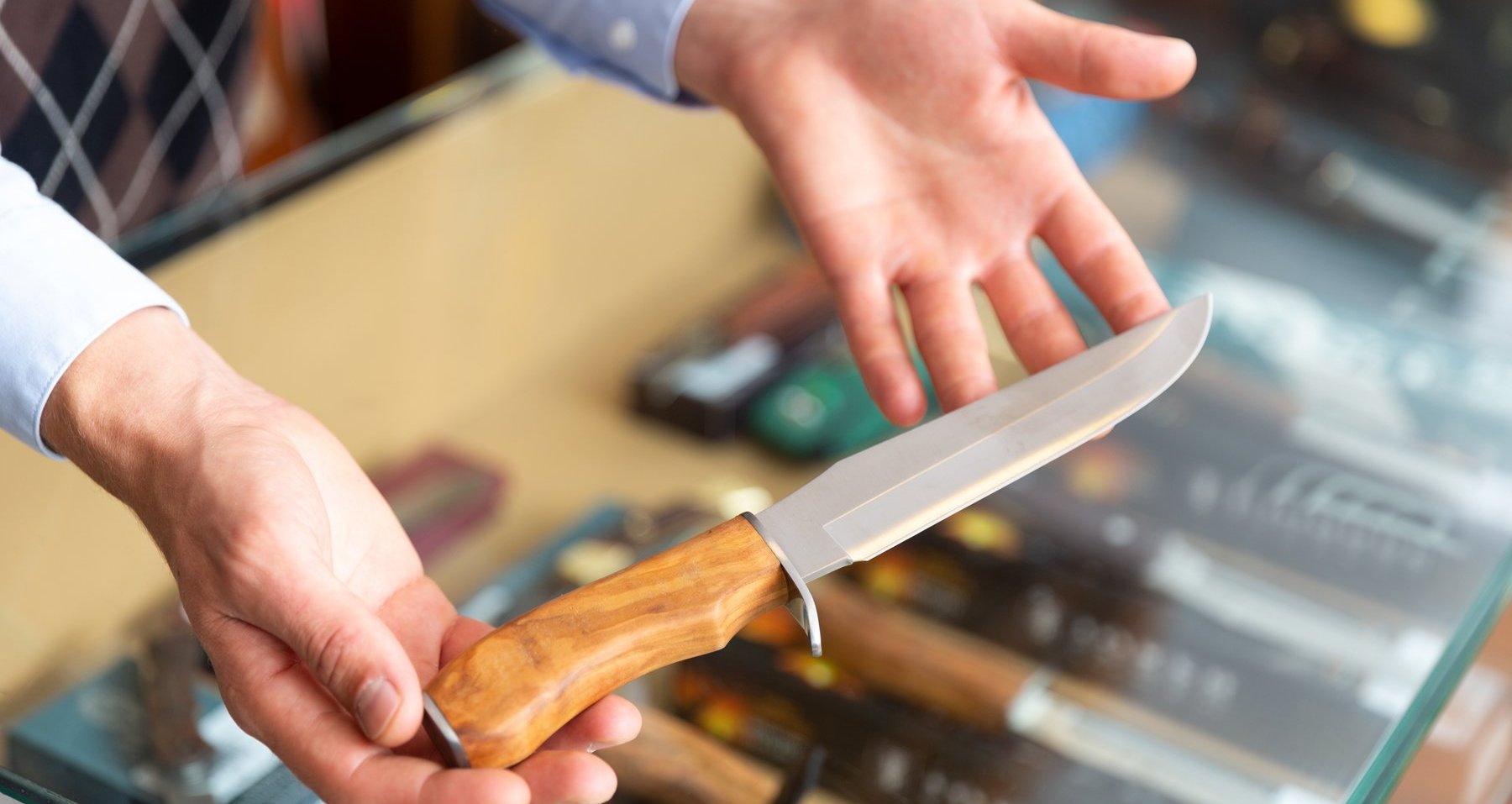
Every registered firearms dealer (RFD) and country store that sells a knife in England and Wales will need a police-issued licence to carry on doing so, under a scheme the Home Office confirmed on 25 November it will legislate for. The decision, published with a written statement from policing minister Sarah Jones, follows a consultation in which 79% of the small and medium-sized businesses that answered opposed licensing business sellers, and the department has pressed on regardless.
For the trade the consequence is a new permission beside the RFD registration, held by the business and renewable every three years, with a fee the Home Office says will be set at full cost recovery and has not yet fixed. Selling a knife or bladed article without it would be a criminal offence.
What the licence will require of a retailer
The government response states that the Government “intends to legislate to introduce a licensing scheme for sales and imports of knives”, and that it “would be a criminal offence to sell a knife or bladed article without the relevant licence to do so”. Both businesses and private sellers would need a licence, whether the sale is made in a shop or at a distance, so a dealer’s mail-order knife line, a game fair stand and the shop counter are all caught.
Conditions “may include regulated storage and display of blades”, and enforcement agencies would be able to revoke a licence where the conditions are not met. The detail of those conditions, the fee and the penalties beyond the new criminal offences remain to be set, so a retailer planning a refit cannot yet know whether an open knife display will pass.
How imports and the UK intermediary rule will work
A separate import licence would be open to UK businesses but not to private individuals, so the distributor bringing in continental or American blades holds that licence itself. A seller based abroad would have to appoint a UK intermediary company to hold the licence, which means an overseas maker selling direct to British customers must route the sale through a UK business, and a dealer offered that intermediary role takes on the licence and its conditions with it. The Home Office says it is exploring a combined sales and import licence.
How the trade’s objections were weighed
The consultation ran from 16 December 2025 to 24 February 2026 and drew 3,551 responses, 3,413 of them online. Among online respondents, 47% supported licensing business sellers and 52% opposed it; 38% supported licensing private sellers and 61% opposed it. Small and medium-sized businesses opposed the business licence by 79% and the private one by about nine in 10, and 95% of the 255 collectors, re-enactors and historical fencers who responded opposed a licence for private sellers. Police respondents, councils and the Crown Prosecution Service were largely in favour, though 44% of police respondents raised concerns about resourcing.
BASC and the Gun Trade Association (GTA) told the consultation in January that the proposals were the wrong way to tackle knife crime; neither had published a reaction to the decision by the morning of 26 November. Andrew Goodacre, chief executive of the British Independent Retailers Association, said: “Some shop owners may decide to stop selling bladed items as a result of this licensing.” Lucy Whing, crime policy adviser at the British Retail Consortium, said licensing “should be proportionate and risk-based, targeting the products and sellers most closely linked to harm”.
Ms Jones said: “If you make money selling knives, you should be responsible for making sure they are sold safely and lawfully.” The response says the Government will “work closely with the police to ensure any scheme is designed in a practical, enforceable, and sustainable way”, and it draws on Scotland, which already licenses dealers in non-domestic knives. Knife crime has fallen 11% since June 2024, according to the Home Office, and more than 80,000 knives have been removed from circulation in that time.
Which department will run it
The Countryside Alliance, which opposed the proposals, noted that the scheme may be run through police firearms licensing departments, whose performance has fallen for five quarters running, and repeated its call for firearms licensing to be centralised in a single national body before any new work is loaded onto forces. In its response the alliance said: “The problem is not the lawful sale of knives but ensuring they do not fall into the wrong hands.” For a dealer already waiting months on variations and renewals, the prospect of the same department issuing knife licences is the detail to watch.
No exemption has been written for the sporting trade. The response says only that ministers “will carefully consider the case for exemptions for heritage collections, crafts and trades”; the words countryside, hunting, stalking, fishing, agricultural and gamekeeping do not appear in the 30-page document, and no shooting or fieldsports organisation is named in it.
What happens next
There is no bill yet and no date. The response says legislation will be brought forward and “in due course” supported by guidance, and that the Home Office will keep talking to small businesses, enforcement bodies and the collectors’ groups that asked for exemptions. Retailers who sell knives alongside guns and ammunition should read the response in full, note where their current storage and display would fall short of a regulated standard, and put the case for a trade exemption or a combined licence through the GTA while the fee and conditions are still being drafted.
Useful links
Home Office – the government response to the consultation on licensing for knife sales, published 25 November 2026
Countryside Alliance – the alliance’s reaction to the decision and its reading of the consultation figures
BASC – the association’s January argument against licensing knife sales
Frequently asked questions
Will a registered firearms dealer need a separate licence to sell knives?
Yes, under the scheme the Government intends to legislate for. Every business selling knives in England and Wales, in a shop or at a distance, would need a police-issued licence lasting three years, and selling without one would be a criminal offence.
What will the knife sales licence cost?
The fee has not been fixed. The Home Office says it will be set at full cost recovery, and the licence conditions and penalties beyond the new offences remain to be decided.
Can a UK dealer still import knives from an overseas maker?
Yes, with an import licence, which would be open to UK businesses but not private individuals. An overseas seller trading direct would need a UK intermediary company to hold the licence.
Related articles
Knife Crime Centre results: bulk-sale reporting duty for retailers – the reporting duty already on knife retailers
Gun Trade Association report: 16-body coalition against shotgun reform – the trade body that argued against knife licensing in January
Licensing backlog in Sussex: renewals bulge to hit dealers in 2027 – the departments that may be asked to run the new scheme
Home Office to license all knife sellers despite majority opposition – the full story on ShootingUK