 Donate
 Basket
 Login
Login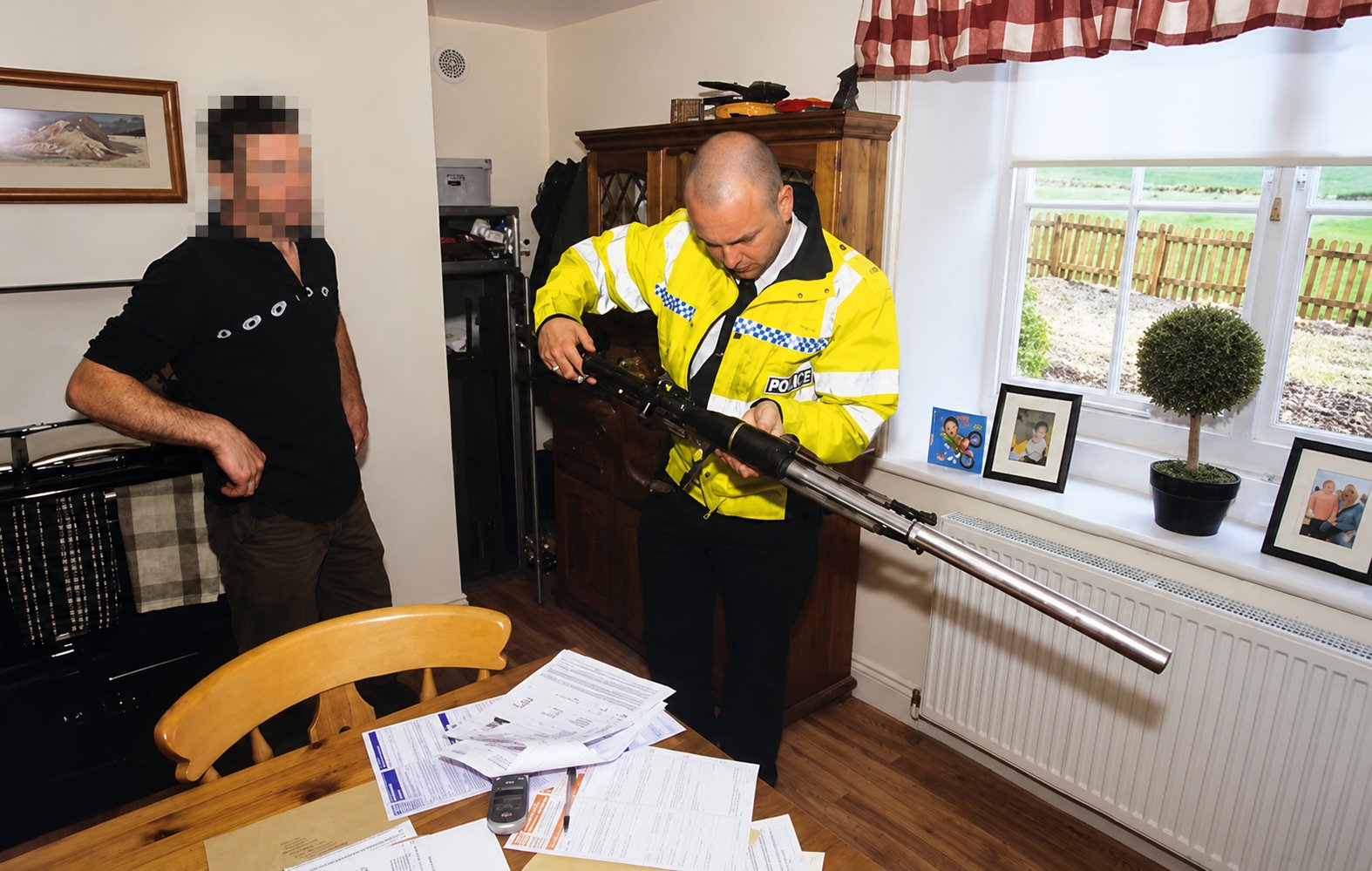
The trade has campaigned for licensing reform for years; today (28 August) it got a police watchdog report that proposes more of it than anyone asked for. His Majesty’s Inspectorate of Constabulary and Fire and Rescue Services (HMICFRS) declares firearms licensing in England and Wales not fit for purpose and makes 23 recommendations, from a single national licensing authority, to digital certificate verification at the point of sale.
What is proposed?
The headline recommendation replaces the 38 firearms and explosive licensing units run by police forces with one national authority handling applications, renewals and ongoing monitoring: locally based staff for suitability visits, central control over decision-making, risk management, training, governance and performance. Around it sit recommendations to modernise a legal framework spread across more than 30 pieces of legislation, an in-person medical assessment for every applicant, a standardised competence test, alignment of the shotgun and section 1 regimes, and a digital verification system, similar to the QR codes on driving licences, to defeat forged certificates.
What would it mean at the counter?
For the registered firearms dealer (RFD) the digital verification proposal is the operational change. The certificate check that today rests on a paper document and the dealer’s judgement would become a real-time confirmation, closing the forged-certificate risk that currently sits with the counter staff who accept the document. The British Shooting Sports Council (BSSC) supports exactly that, backing consistent national standards, proper training and modern digital systems including real-time certificate verification.
The commercial risk sits in the rest of the package. Aligning shotgun certificates with the section 1 regime, an in-person medical for every applicant and a competence test would lengthen the path to every first certificate, and the trade’s addressable market moves with the certificate-holder base, which stands at nearly 500,000.
Where do the sector bodies stand?
The BSSC warns that failures in administration “should not be confused with evidence that firearms law itself is fundamentally flawed”, and wants legal changes such as shotgun and ammunition licensing considered separately and supported by clear evidence.
What should the trade plan for?
Three dates and decisions follow. First, the 2029 timetable: if the Government accepts the authority, the trade would deal with one licensing counterparty rather than 38, with all the systems work that implies. Second, verification: a dealer-side digital check would need hardware, process and training decisions once a specification appears. Third, the pipeline: any lengthening of the first-certificate path tightens new-customer recruitment, so the recommendations’ fate in Parliament is commercial intelligence, not background noise. Nothing is law yet: the recommendations sit with the Home Office, which says, in a statement reported by the Mirror, that a number of them “reflect work already underway”.
Useful links
HMICFRS – the full firearms licensing inspection report and its 23 recommendations
British Shooting Sports Council – the council’s response on behalf of its member associations
Frequently asked questions
When would the national licensing authority take over?
The Countryside Alliance reads the report as proposing 1 September 2029. The Home Office says a review of licensing arrangements is already under way and has not committed to the new body; primary legislation would be needed.
What would digital certificate verification mean for RFDs?
A real-time confirmation that a certificate is genuine, similar to the QR codes on driving licences, replacing judgement of a paper document at the counter. No specification has been published yet.
Do the recommendations change dealer obligations now?
No. The report is advisory, the recommendations sit with the Home Office, and current certificate checks and transfer procedures stand until the law changes.
Related articles
NPCC firearms licensing performance slips again – the quarterly figures behind the backlog the watchdog describes
Certificate numbers fall across England and Wales – the shrinking certificate-holder base the trade sells into
Norfolk tackles its firearm certificate backlog – how one joint licensing unit is working through its queue