GTA CEO CHALLENGES S1&2 ALIGNMENT

Back to blog

Numbers often tell the story more clearly than commentary ever could. When the proportion of gun crime committed by licensed firearms holders amounts to just 0.00006 per cent of all recorded criminal offences, it raises a fundamental question: what problem are policymakers attempting to solve?

The UK has long maintained an outstanding record for public safety in relation to legally held firearms, supported by a gun control framework widely regarded as robust and effective. Yet proposals to re-align Sections 1 and 2 of the Firearms Act 1968 continue to gather momentum despite data suggesting that lawful ownership presents a negligible risk.

Set against a national backdrop of declining gun crime, the case for sweeping structural change becomes harder to reconcile with the available evidence. Indeed, the figure is so tiny that it is not recorded as a standalone category by the Office for National Statistics — less a measurable trend than a statistical anomaly.

The statistic sits within a broader national context that is often overlooked in the licensing debate. As of March 2025, gun crime accounted for just 0.1 per cent of all recorded crime in the UK, continuing a downward trajectory observed over the past six years.

Gun Trade Association CEO Stephen Jolly argues the data raises serious questions about the rationale for aligning shotgun controls with those governing rifles. The organisation argues that such a move could carry profound economic consequences, estimating a potential impact of £2.38 billion across the gun trade, the wider shooting sector, the Exchequer and the UK economy as a whole. The Exchequer alone could face lost tax revenues in the region of £600 million per annum.

Beyond the financial implications, the GTA warns that further regulatory complexity risks placing additional strain on already stretched police firearms licensing departments. More critically, it suggests that systemic overload could introduce new public safety risks — a concern sharpened by lessons drawn from the Plymouth shooting in 2021, where licensing failures were subject to intense scrutiny.

From the Association’s perspective, the issue is not the strength of existing controls but the effectiveness of the licensing infrastructure itself. Current safeguards surrounding legally owned firearms are characterised as robust and effective, while the licensing system is described as being in urgent need of structural reform.

Central to that argument is a call for the creation of a National Police Firearms Licensing Authority, supported by a modernised National Firearms Licensing Management System (NFLMS) and aligned with the proposed introduction of a National Police Service in 2034.

To better understand the origins of the data, Gun Trade Insider spoke with Tim Cooper of TDC Research about the sources behind the gun crime figures and the methodology used to arrive at such a striking conclusion. TDC Research was retained by the GTA late last year to conduct its members’ survey on the potential economic impact of re-alignment of Section 1 and 2 licensing on the trade.

Cooper is quick to stress that the figure is not the product of speculation or advocacy, but of working within the scope of publicly available evidence. The analysis draws primarily on Office for National Statistics crime data, parliamentary written answers and a Freedom of Information response obtained in March 2024 relating to firearms-related homicides involving certificate holders.

“The key point is precision,” Cooper explained. “There is very little data that directly links offences to the licensing status of an individual or the legal status of a firearm. Where that distinction exists, it tends to appear only in very specific categories.”

For the year ending March 2025, police in England and Wales recorded approximately 6.6 million crimes across all offence types. Of those, firearms offences accounted for around 0.1 per cent, a reduction from 0.2 per cent the previous year.

Separate ONS datasets show offences in which a shotgun was reported to have been used have also declined significantly over time, falling from 687 incidents in 2018–19 to 346 in 2024–25. Those figures combine longbarrelled guns and sawn-off weapons and do not distinguish between licensed and illegally held firearms.

The 0.00006 per cent figure is derived from the only category where licensing status can be identified: homicide. In the year ending March 2024, four homicide offences were recorded in England and Wales in which a licensed firearm was used. A Freedom of Information response covering the same period also identified four firearms-related homicides committed by certificate holders in the same time period.

While it cannot be definitively proven that the two datasets refer to the same incidents, Cooper said the overlap represents a reasonable working assumption when attempting to establish a worst-case scenario.

Newly published data from ONS was released as this article went to press. Drawing on information from national policing intelligence streams, it shows offences involving firearms across England and Wales have now fallen by approximately nine per cent between September 2024 and September 2025, measured on a year-on-year basis (February 2026).

This means that January of this year recorded the lowest level of firearms discharges since 2018, accelerating the broader downward trajectory observed in recent years. While regional variations remain, particularly in metropolitan areas facing organised crime challenges, the national trend points towards declining levels of firearms-related offending.

For policymakers considering structural changes to licensing legislation, those figures sit alongside the statistical rarity of offences involving certificate holders.

Taken together, they raise questions about whether proposed regulatory changes – most notably, a re-alignment of Sections 1 and 2 – are addressing the areas of greatest demonstrable risk.

0.00006 Per Cent

G U N T R A D E I N S I D E R. C O M P A G E 18

  • TALKING TRADE.indd 18 22. TALKING TRADE.indd 18 23/02/2026 15:15:19 23/02/2026 15:15:19

Other News Posts

The Great British Shooting Show 2026: A record-breaking statement of intent

Back to blog

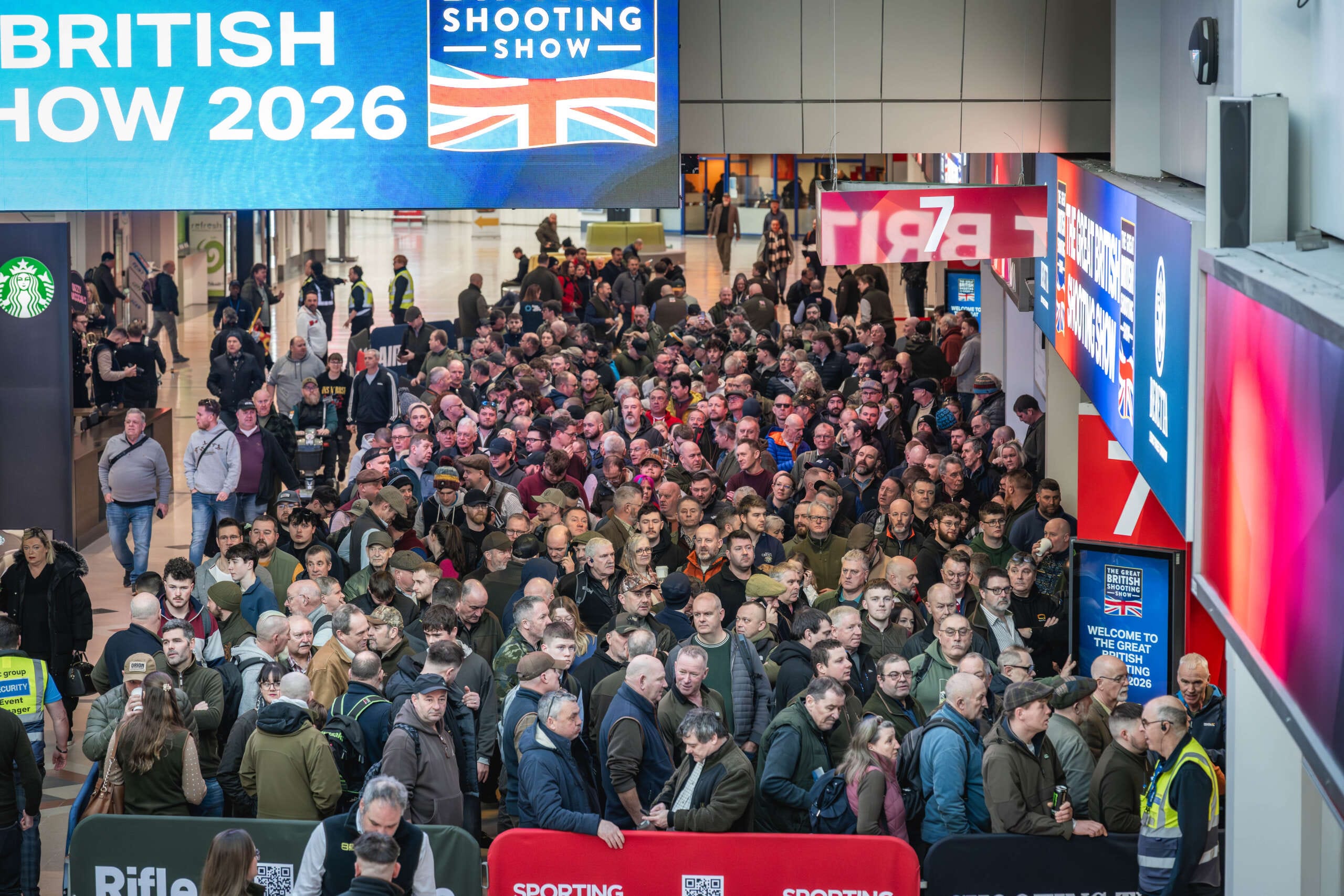
The 17th Great British Shooting Show closed its doors at the NEC Birmingham on Sunday 15 February having delivered one of the most significant editions in the event’s history. Attendance was up 20% on the previous year, the halls were busy across all three days, and the quality of brands, speakers and product launches confirmed what many in the industry have long believed; the UK shooting market is in great shape and commands global respect.

Now under the stewardship of Time Well Spent Group following its acquisition of the show in early 2026, this year’s event marked the beginning of a new chapter. The new ownership brought with it a clear and ambitious vision: to create the largest gun, shooting and associated product and services event the UK has ever seen, whilst remaining genuinely multi-discipline and accessible to every shooter, regardless of budget or background. On the evidence of 2026, that vision is well on its way to being realised.

Perhaps the most telling indicator of the show’s standing came not from the attendance figures, but from the decisions made by some of the world’s most prestigious firearms brands. Beretta, the oldest firearms manufacturer on earth, chose the Great British Shooting Show to celebrate its remarkable 500th anniversary. Perazzi, whose shotguns are revered by clay shooting champions the world over, selected Birmingham for the global launch of an entirely new model. These are not decisions taken lightly. When Italian gunmaking dynasties of that calibre look to make their most important announcements, the fact that they choose a British show speaks volumes about the international standing of the UK market and, indeed, of this event.

They were not alone. Bergara used the show for the worldwide launch of its new Cima Pro rifle, whilst Daystate unveiled the Blackwolf Zero to an audience perfectly placed to appreciate it. Dozens of other brands timed their new product reveals to coincide with the weekend, knowing they would have a knowledgeable and engaged audience in front of them. The Great British Shooting Show has become the annual moment the industry gathers to make its most significant statements and the world’s leading brands have noticed.

Exhibitors from across the globe filled the halls of the NEC: gunmakers, ammunition manufacturers, optics brands and clothing specialists representing the full breadth of the market. The show served the stalking and rifle shooting community like nowhere else in the UK, whilst remaining the largest showcase and retail opportunity for airguns anywhere in the world, a combination that few events anywhere in the world can match.

The 40 airgun ranges from Air Arms, BSA, Umarex, Stoeger and Weihrauch remained consistently busy throughout the weekend. The opportunity to shoot before purchasing is one the format uniquely affords and the queues at each stand reflected just how much visitors valued it. The Shooting & Hunting Academy complemented this with free practical airgun assessments, with instructors kept occupied throughout helping shooters refine technique and get more from their equipment.

One of the most significant additions for 2026 was the introduction of a dedicated main stage, hosting daily interviews and Q&A sessions. It proved an immediate success. Vinnie Jones drew a standing-room-only crowd, his genuine enthusiasm for country sports landing well with an audience that appreciated having someone of his public profile championing the shooting community. Mat Manning addressed the airgun world, whilst Olympic clay shooters Nathan Hales and Richard Faulds discussed competing at the highest international level. George Digweed, 28-times world clay shooting champion, drew one of the largest crowds of the weekend for his session, a reminder that the breadth of expertise within British shooting is extraordinary.

The calibre of those on stage, from Olympic medallists to world champions, reflected the depth of the UK shooting community and created an atmosphere of genuine excellence and aspiration that ran throughout the show.

The Great British Shooting Awards ceremony took place during the show, with winners receiving their trophies in front of the wider community. In a particularly well-received moment, outgoing organisers John and Annie Allison were presented with a lifetime achievement award, recognising the years they dedicated to developing the British Shooting Show into the institution it has become. It was a fitting and generous acknowledgement.

The Gunmakers’ Arms, sponsored by Shooting Times & Country Magazine, provided a welcome space to rest and reconnect, and became a natural hub for the kind of informal conversation between shooters, dealers and industry figures that no formal agenda can replicate.

A 20% increase in attendance in the first year under new management is a meaningful result by any measure. It reflects an industry in good health and a show that has retained the trust of its community whilst beginning to realise its broader ambitions. Time Well Spent Group has indicated that 2027 will build considerably on this foundation, more speakers, more interactive content and more reasons to attend across every discipline.

For those who were there, 2026 was a show to remember. For those who weren’t, it is one to put firmly in the diary.

Next year, the show will be held 12-14 February. 

shootingshow.co.uk

Other News Posts

Broadcast for RFDs in Metropolitan Police Area

Back to blog

Dear Member

This broadcast is specifically for those RFDs located in the Metropolitan Police force area.

One of the GTA’s core responsibilities is to attend Police Firearms Licensing stakeholder meetings. These meetings, typically held two to three times per year at the relevant Police Force headquarters, provide an opportunity for the Licensing team to present their performance, outline challenges, and explain future plans. Shooting organisations – including the GTA, BASC, BSSC, NRA, NSRA, and others – participate to monitor performance, offer informed feedback, and work collaboratively with the Police to ensure that licensing processes remain balanced, proportionate, and not unduly burdensome.

Last week, I attended the Metropolitan Police shareholder meeting at New Scotland Yard, where I continued to raise concerns about medical certificates for servants and the increasing regulatory burden surrounding explosive storage. The Firearms teams have appointed a new senior officer, Toby Noer, who was keen to make an early impact. As a result, two new issues were raised that I wish to bring to your attention:

Firearms Records & Storage Mr Noer was very clear that he is unhappy with the condition of certain firearms registers and the resulting impact on storage and security. His view was that some dealers are struggling to accurately trace firearms through their registers and armouries, which he considers unacceptable.

Black Powder Requirements Although the main focus of the discussion was on individual shooters, the Metropolitan Police are proposing new requirements for the storage of black powder. These include the installation of comprehensive fire alarm systems for anyone storing less than 1kg, and a 24-hour monitored fire alarm system for those storing more than 1kg in semi-detached, terraced, or apartment properties. Should these proposals be adopted, dealers holding more than 1kg could face the additional cost of installing and maintaining a dedicated 24-hour monitored fire alarm system.

While neither proposal has been finalised, the Metropolitan Police have repeatedly demonstrated their willingness to act outside the Statutory and Police Guidance. We therefore advise maintaining a degree of preparedness to avoid any unexpected compliance issues.

Best Regards

PAUL GREEN Technical Director, Gun Trade Association

tech@gtaltd.co.uk

Other News Posts

Westminster Hall Debate on Sections 1 & 2 Alignment, Monday 23 February 2026

Back to blog

Dear GTA Member

With our full support, colleagues at BASC are presently briefing MPs who plan to speak during the Westminster Hall debate on Home Office proposals to merge Section 2 shotguns with Section 1 firearms.

While the debate, tabled in response to an online petition, will not have any direct impact on Government policy, it offers an opportunity for the gun trade to make its voice heard loud and clear.

As a GTA member, you can therefore play an important role by contacting your local MP and urging them to attend the debate.

If you receive a response from your MP, please forward it to [email protected]so our team can monitor engagement and provide further support where needed.

You can find out who your MP is and how to contact them here: https://members.parliament.uk/members/commons

It may also be helpful to inform your MP how many people in his/her constituency signed the petition. You can find constituency-level petition data here: https://petition.parliament.uk/petitions/750236

WHAT SHOULD I WRITE?

The GTA has developed an official position on the S1&2 issue (below). You should feel free to rehearse any or all of our statement in your correspondence with your MP:

“The UK has an outstanding record of public safety when it comes to the ownership of legally held firearms. Realignment of Sections 1 & 2 of the Firearms Act 1968 on the grounds of public safety is simply not justified by current data on legal gun ownership.
 
Overall, gun crime at March 2025 represents 0.1% of all crime in England and Wales. Against a national backdrop of falling gun crime over the past six years, licensed shotgun holders account for a vanishingly small proportion. This is in the region of 0.00006% of all recorded crime in England and Wales. This is far too tiny to be recorded as a separate category by the Office of National Statistics.

In re-aligning shotguns with rifles, this ill-judged re-alignment will: 

  • cost the gun trade, shooting, the Exchequer and wider UK economy in the region of £2.38 billion and in effect, destroy the sector. 
  • overwhelm already struggling police firearms licensing departments. 
  • endanger public safety by driving failures in police licensing, as tragically demonstrated in the Plymouth shooting of 2021.  

These proposals are the wrong answer to the wrong question at the wrong time. The Home Office needs to create a new National Police Firearms Licensing Authority, supported by a renewed National Firearms Licensing Management System, as part of its introduction of a National Police Service in 2034.

Existing controls on legally owned firearms are robust and working. The police firearms licensing system is broken and in need of urgent reform”.

Please don’t hesitate to contact me if you have any questions.

STEPHEN JOLLY
CEO, Gun Trade Association

ceo@gtaltd.co.uk

Other News Posts

Home Office knife licensing consultation: key trade considerations

Back to blog

Drawing on decades of frontline policing experience, Chris Downs, Creator & Principle Advisor at https://firearmslicensing.net/ examines the Home Office’s proposed knife sales licensing regime, questioning its evidence base, enforceability and likely impact on both policing capacity and legitimate trade.

Knife crime remains one of the most significant threats to public safety in the UK. After nearly three decades dealing with the consequences of this on the streets of London, I have no doubt about the scale of harm it causes. The Government’s ambition to halve knife crime over the next decade is something every one of us should support.

However, the recently announced Home Office consultation on licensing knife sellers raises serious concerns. The proposals concern the introduction of a new licensing regime covering the sale and importation of knives – affecting retailers, private individuals, online sellers, second‑hand markets, and anyone importing bladed items for personal use. This is one of the most far‑reaching regulatory expansions in recent years.

It is essential that the trade responds, not least because:

  • Many RFDS also trade in outdoor equipment, sporting goods and knives. Any new regulatory burden will directly affect them.
  • The consultation repeatedly references firearms licensing and proposes that police take the primary role in administering and enforcing this new scheme. Firearms licensing teams are already under severe strain; adding a vastly larger licensing population risks further degrading service to the shooting community.
  • Significant legislation already exists to prevent underage knife sales, and police and Trading Standards already have the powers to enforce it.

Please note, in writing this article I have consulted with a variety of partners including the British Shooting Sports Council.

Key Issues and Concerns

1. Unrealistic Expectations on Policing

The independent review by Commander Stephen Clayman states:

“Lessons learned from firearms licensing shows that the regulation of the weapons markets reduces the availability and use of weapons in incidents, but it comes at significant cost to law enforcement.”

Firearms licensing and knife sales are not directly comparable. Even if they were, forces already struggle to meet statutory firearms licensing obligations. Adding a licensing population potentially larger than the entire firearms community is operationally unachievable and would inevitably divert resources from their core functions.

2. Vague and Subjective Suitability Criteria

The consultation refers to “intelligence”, “dishonesty”, and “concerns” as grounds for refusing or revoking a licence but provides no definitions. This mirrors the inconsistent decision‑making and postcode lottery already seen in firearms licensing. Without a single clear primary agency in place and statutory criteria, the risk of arbitrary or uneven enforcement is high.

3. Import Licensing Is Unworkable at Scale

Border Force cannot realistically police millions of parcels containing kitchen knives, craft knives, or tools. The proposals offer no credible enforcement model for imports, and risk creating a system that is burdensome for legitimate users while having little impact on illicit supply.

4. Weak Evidence Base

The consultation cites knife crime statistics but provides no evidence that licensing sellers or importers reduces harm.

The Clayman review is explicit:

  • There is no standardised national data from police or hospitals capturing the types of knives used in crime.
  • that data does not exist to support targeted regulation of knife types.
  • The only available dataset of this kind relates to homicides (ONS 2024), which shows that 53% of fatal offences involve a kitchen knife.

This means the majority of weapons used in the most serious incidents are already present in the home. Regulating the sale of outdoor knives, tools, or specialist equipment will not meaningfully address the highest‑risk category.

There is also no analysis of:

  • whether offenders would simply shift to unregulated channels
  • whether the proposals would push legitimate trade underground
  • whether enforcement would divert police resources from more effective interventions

For a policy with such wide regulatory reach, this is a major omission.

Your Voice Matters

This consultation will shape the future regulatory landscape for knives and may set precedents for other licensing regimes. It is vital that practitioners, businesses, and individuals with operational experience respond.

We encourage all trade members to:

  • Read the consultation in full
  • Consider how the proposals would affect your business or activities
  • Submit a response highlighting practical, evidence‑based concerns

Key opportunities to respond include:

  • Questions 4 & 5 -whether businesses or private individuals should be licensed
  • Question 8 -describing the operational impact on your business
  • Question 9 – making any other comments.

Please note, both questions 8 and 9 have 250 word limits. It is therefore important to use this space well to highlight key issues or use the email address below to add further information.

If you would like support drafting your response, or wish to contribute to a coordinated sector submission, please get in touch at info@firearmslicensing.net.

To respond, search “Home Office knife sales consultation” or visit:
https://www.gov.uk/government/consultations/licensing-for-knife-sales/licensing-for-knife-sales-accessible

You can complete the online form or email:
KnifeLicensingConsultation@homeoffice.gov.uk

Other News Posts

GTA Legal Counsel Nick Doherty in conversation with the Shooting Channel

Back to blog

Other News Posts

GTA REPORT WARNS £2.35 BILLION LOSS TO GUN TRADE, SHOOTING AND EXCHEQUER

Back to blog

A new Gun Trade Association commissioned economic impact report warns aligning Section 1 and Section 2 firearms licensing could drive a £2.35 billion loss to the gun trade, shooting and the Exchequer, with businesses forecasting turnover decline and job losses, while GTA chief executive Stephen Jolly says the policy risks overwhelming an already stretched licensing system and is not supported by robust national gun crime data.

The Gun Trade Association (GTA) has published a new economic impact report assessing the potential consequences of aligning Section 1 and Section 2 firearms licensing, with survey findings indicating widespread concern across the gun trade and forecasts of reduced turnover and employment if reform goes ahead.

The report also references wider estimates of a £2.35 billion loss in economic value across the firearms and ammunition sector and related final-demand sectors, including induced effects, warning of significant impact to the gun trade, shooting and the Exchequer.

GTA chief executive Stephen Jolly said the association’s survey and analysis is intended to provide government with an evidence-led assessment of the likely consequences of S1 and S2 alignment, and to strengthen the trade’s ability to challenge policy proposals that he believes are not grounded in reliable public safety data. Jolly warned that the debate around further controls is being advanced without credible, consistent national data on gun crime and argued the current approach risks tackling the wrong problem.

Jolly also argued that high-profile incidents cited in support of change point to failures in the administration and management of licensing rather than a need to restructure the licensing categories. He raised concerns about inconsistency in firearms certificate formats across forces and said this undermines confidence in checks during private transfers, adding that standardisation would be a practical reform.

The report, conducted by TDC Research and published in January 2026, is based on a survey of 211 businesses across the UK gun trade and connected sectors, with responses gathered between 24 September and 15 November 2025. GTA members and subscribers to Gun Trade Insider were invited to participate, and the respondent group included 139 GTA members, 69 nonmembers and three who were unsure.

SURVEY RESULTS SHOW WIDESPREAD CONCERN ACROSS THE TRADE According to the findings, 93 per cent of respondents said they were aware of the potential alignment, 70 per cent said they were very concerned about its impact, and 75 per cent forecast a reduction in turnover if alignment proceeds.

Respondents were based across England, Wales, Scotland and Northern Ireland, with the South-East and South-West of England the most represented English regions. The survey suggests the sample was predominantly retail and dealer-facing, with 73 per cent describing a retail focus and 51 per cent a dealer focus. Nearly all respondents reported serving sports and leisure shooting (97 per cent), while 53 per cent also supplied the conservation and pest control sector and 5 per cent reported supplying defence and law enforcement customers.

Turnover data was provided by 147 businesses, totalling £310.7 million for the reporting period, including VAT where relevant. The leading sales categories reported were firearms and airgun parts and accessories (£77.4 million), firearm sales (£70.5 million) and ammunition sales (£64.0 million).

The report also outlines how the trade activity reported by respondents is split between Section 2 and Section 1 markets. It found 180 businesses supplied shotgun certificate holders and 191 supplied firearm certificate holders. Based on turnover data shared, it estimates 42 per cent of reported firearm turnover value is linked to Section 2 activity and 58 per cent to Section 1 activity, while noting the industry-wide split may differ due to the larger number of shotgun certificate holders relative to firearm certificate holders.

Within the sample, the report estimates £53.4 million turnover linked to new and second-hand shotguns and related products and services, with respondents reporting 38,641 new shotguns and 40,209 secondhand shotguns supplied in the past year. For Section 1, it estimates £73.7 million turnover linked to new and second-hand firearms and related products and services, with 29,707 new firearms and 29,523 second-hand firearms supplied in the past year.

The report places this in the context of a longer-term decline in shotgun certificate numbers in England and Wales. It cites official figures showing shotgun certificates on issue falling from 572,488 in 2018/19 to 482,612 in 2024/25, a 16 per cent reduction over six years. The report suggests shotgun sales have dropped in recent years and links that decline to factors including an ageing user base, cost, bureaucracy and reduced popularity, adding that alignment is anticipated to remove the ability to conduct walk-in sales, creating further pressure on shotgun volumes.

On projected economic impact, the report records an average forecast reduction in annual turnover of 35 per cent across all responding businesses sharing turnover data. For businesses anticipating reduced turnover because of alignment, the average forecast reduction rises to 40 per cent, and the report records an average forecast reduction of 50 per cent among registered firearm dealer-related businesses anticipating reduced turnover.

The report also provides estimates scaled beyond the survey sample, projecting a £393 million reduction in annual turnover for affected GTA member businesses and a £627 million reduction for affected RFDrelated businesses. It further references wider estimates of a £875 million reduction in gross value added from the UK shooting sector and a £2.38 billion reduction in economic value across the firearms and ammunition sector and related final-demand sectors, including induced effects.

Employment impacts are also forecast in the report, with responding businesses sharing workforce data indicating an average projected reduction of 24 per cent in full-time employees and 39 per cent in parttime employees. The scaled estimates project potential losses of 892 full-time and 635 parttime roles across GTA member businesses, and 1,917 full-time and 1,524 part-time roles across RFD-related businesses.

GET IN TOUCH gtaltd.co.uk

Gta Report Warns £2.35 Billion Loss To Gun Trade, Shooting And Exchequer

G U N T R A D E I N S I D E R. C O M P A G E 2 2

  • TALKING TRADE.indd 22 22. TALKING TRADE.indd 22 26/01/2026 14:45:47 26/01/2026 14:45:47

Other News Posts