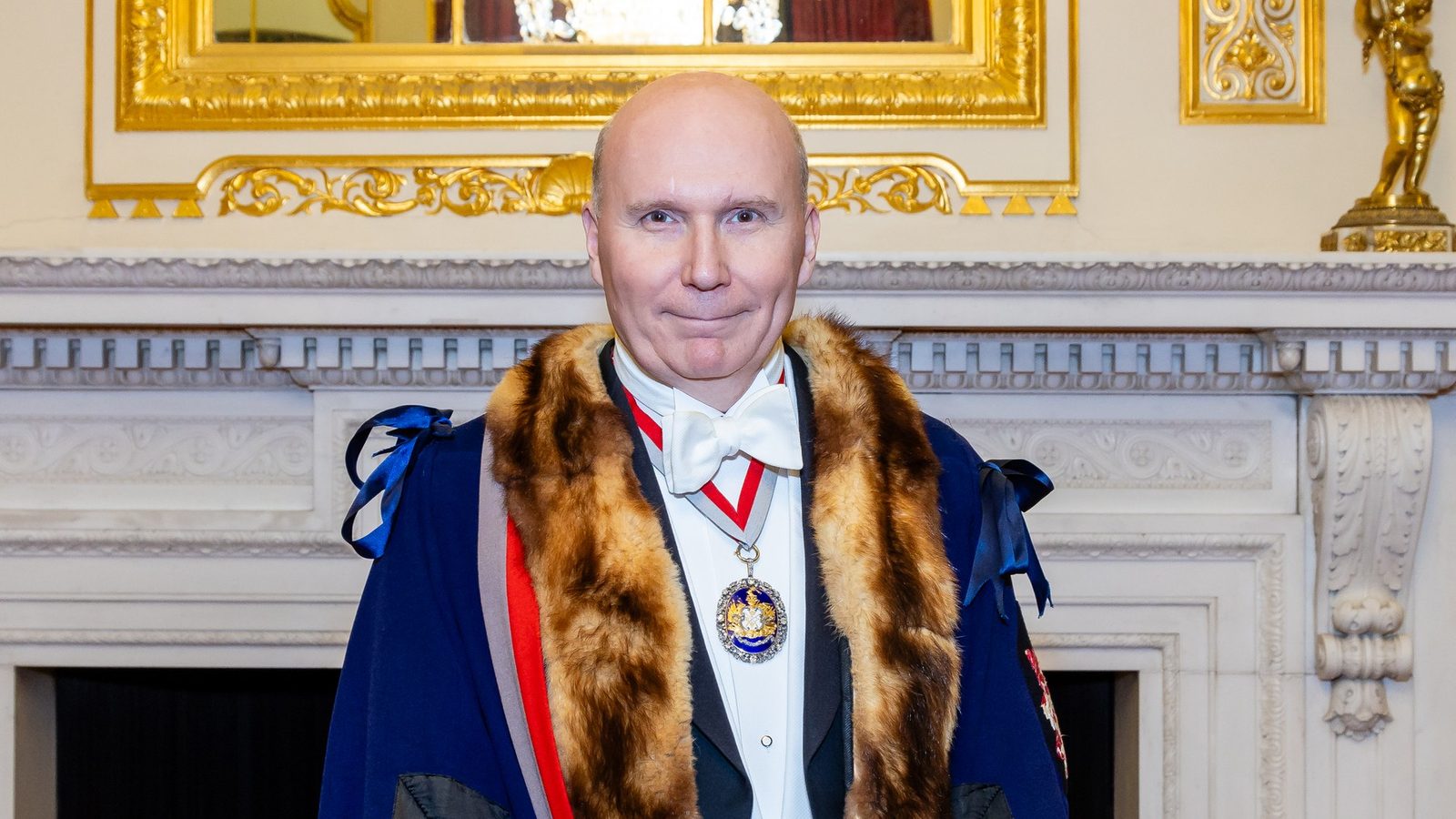
David Winks, the Holland & Holland barrelmaker, salesman and director who became one of Britain’s leading authorities on sporting guns and rifles, has died aged 92.
From Pall Mall to the Harrow Road factory
A Londoner born into an army family in Croydon, he was moved around the country as a child during the Second World War and left school at 14, by his own account barely able to read or write. He found work sweeping floors, making tea and running errands for WW Greener in Pall Mall, and three years under the manager, Ernest Kempster, left him fascinated by guns. After National Service with REME and six months as a barrelmaker at Greener’s Birmingham works, he walked into Holland & Holland’s Harrow Road factory, overstated his abilities and negotiated three shillings an hour.
Double rifles and the Nizam’s armoury
Within five years David was foreman of the barrelmaking department, specialising in double rifles. His repair work earned the firm so much money that, unusually, he was moved from the factory to the Bruton Street gunroom as a junior salesman in the early 1970s. In 1974 he was sent to Hyderabad to value the Nizam’s armoury, where he recognised a 1799 Mortimer flintlock that completed a set the firm already held. He and Ken Prater spent 18 months restoring it.
Gunroom manager and director
On his first trip abroad, to a Los Angeles auction, he bought 10 English guns at a fraction of their value. He rose to gunroom manager and director, and clients such as the American collector Bill Feldstein trusted him to buy guns on their behalf without consulting them. He was part of the firm’s big-bore revival that produced the .700 Nitro Express, and was blown backwards firing it, only to come up grinning. He revived the short-barrelled Holland & Holland Brevis and chose the name of the Brevis Room at Bruton Street. He also contributed to a number of books on guns, among them a study of the Paradox.
“They’re buying the dream”
He never lost his Cockney accent and was as plain-spoken with Arab princes as with American tycoons, a forthright character who knew his own mind and was unforgiving of poor wood or finish. Customers came through the door asking for him by name. “They’re not buying the gun,” he told lifelong friend and colleague Nick Coggan. “They’re buying you, and they’re buying the dream.” He also told him never to forget where he came from.
David retired in 1995 but never really left. Holland & Holland and its clients continued to ring him for information, and for years he worked the London arms fair at Earl’s Court.
His wife, Maureen, died seven months before him. He is survived by his daughters, Amanda and Sarah.
“You’ve got to have it in your head, your hands and your heart,” he said of gunmaking. He had all three.
Frequently asked questions
Who was David Winks?
David Winks was a barrelmaker, salesman and director at Holland & Holland and one of Britain’s leading authorities on sporting guns and rifles. He started out sweeping floors at WW Greener in Pall Mall, joined Holland & Holland’s Harrow Road factory after National Service, and retired in 1995. He died aged 92.
What did David Winks do at Holland & Holland?
He became foreman of the barrelmaking department, specialising in double rifles, then moved to the Bruton Street gunroom, rising to gunroom manager and director. He was part of the big-bore revival that produced the .700 Nitro Express and revived the short-barrelled Holland & Holland Brevis.
Like many American gunmakers, Savage keeps half a dozen different rimfires in its arsenal, because the .22 and .17 rimfires are as popular as ever and demand is high.
So many things are made to a price these days that I was very pleasantly surprised when a new Savage B Series Timberlite Thumbhole bolt-action rifle dropped on the doorstep.
Verdict at a glance
A light, agile and accurate rimfire that makes clever use of timber and carbon.
Who it is for: rabbit and vermin shooters who want a light, quiet .22LR to carry and shoot in the field
Most impressive: 0.65in groups at 50 yards with CCI Suppressor, and head shots on rabbits out to 94 yards
Least impressive: a slow lock time and a noisy tang safety
Price as tested: £1,050 (rifle only)
How we tested
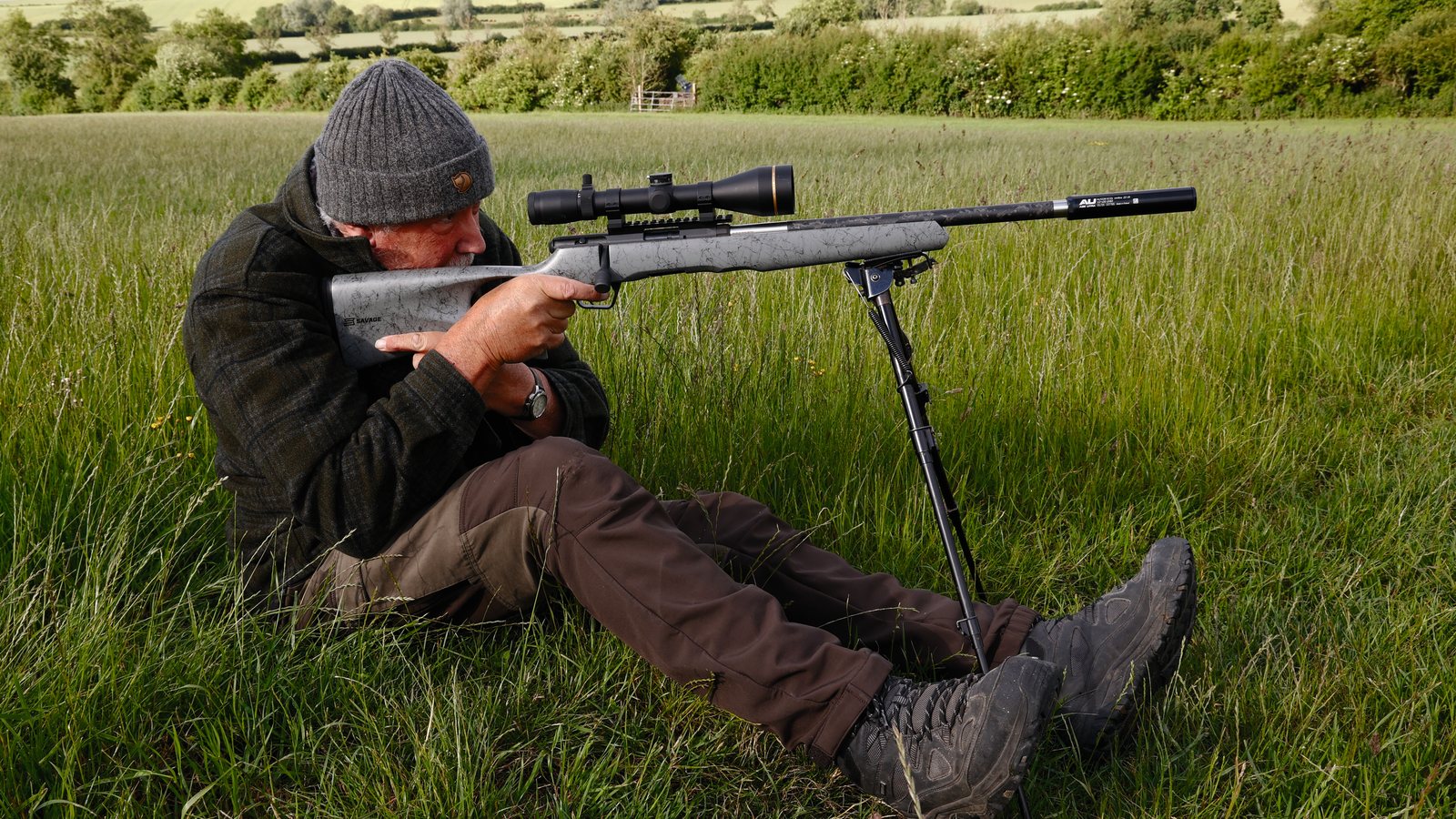
Tested by Bruce Potts for Gun Trade Insider’s Reviewed by the experts. He shot four subsonic .22LR loads for groups at 50 yards with a Leupold VX-3HD 4.5-14×50 scope and an ASE Utra ECOi moderator, then took the rifle rabbiting with a HIKMICRO Alpex Pro A50PL, accounting for 13 rabbits at 29 to 94 yards. Reviewed for the November 2026 issue.
I was expecting the usual light, plastic, utilitarian rifle that most US rimfires offer, but the Timberlite is different. Why? Well, the Timber part is exactly that: this model wears an ambidextrous thumbhole stock finished in grey and black speckled paint, but underneath it is wood, not plastic. That makes for far better handling and a more ergonomic feel – more of which later. The Lite comes from the fact that the 18in barrel is carbon fibre wrapped, which brings this short, 36in rimfire in at only 5.3lb. Add to that the AccuTrigger, which has been around since 2003 – blimey, I feel old – plus a convenient 10-shot rotary magazine and a one-piece scope rail.
Priced at £1,050 it has a lot to live up to, so let’s see how it works and performs.
Savage B22 Timberlite Thumbhole specification
Feature
Savage B Series Timberlite Thumbhole
Type
Bolt action
Calibre
.22LR on test (.22 WMR and .17 HMR also available)
Barrel
18in carbon-fibre-wrapped stainless steel, ½in x 28 UNEF muzzle thread
Overall length
36in
Weight
5.3lb
Finish
Matt blued receiver, carbon fibre wrapped barrel
Stock
Hardwood with painted finish, ambidextrous thumbhole
Trigger
AccuTrigger, adjustable 2.5lb to 6lb (measured break 1lb 12oz on test)
The B Series Savage rifles are eight to nine years old now and offer a no-nonsense turn-bolt rimfire action. These receivers are long at 8in and the bolt operation is quite mechanical – reasonably smooth is the best way to describe it – although it was totally reliable on test, and a few hundred rounds will smooth things up a treat. The bolt handle sits further forward than usual, more in line with the trigger guard than the trigger blade, and has a tactical teardrop form; there is no knurling but it feels in the right place for assured operation.
As with most of these designs there is a 60-degree bolt lift that locks at the rear with a single lug; the front end of the bolt runs parallel while the rest of the bolt body is free to rotate and lock in place. Extraction is particularly good, with two large opposed claw extractors that gripped all the ammunition tested positively, while ejection is via a spur that protrudes through a slotted bolt base when the bolt is rearmost.
The lock time is pretty slow, so good follow-through control is needed, but this is helped by the addition of Savage’s wonder trigger, the AccuTrigger. Again, it seems a long time since its introduction offered a safe but adjustable trigger from 2.5lb to 6lb.
The first pull from the skeletonised inset blade is imperceptible, and it then breaks finely at 1lb 12oz on this rifle. That is very good for a rimfire in this price range and, although it is not my bag, you cannot knock these triggers: they work well and they are safe.
Talking of which, the safety catch itself is a tang-mounted type, which I think is more user friendly in practice thanks to the convenient nature of its operation and the easy access it gives the supporting thumb. It is noisy, though – pushing down as you operate it does quieten it significantly. It only blocks the trigger, so the bolt is still operational.
The magazine feed is very good, with no stoppages at all during the test from this 10-round rotary mag. Its rugged black polymer construction makes it lightweight and it will not rust either. There is a knack to loading it, with a positive push-and-slide motion for each case, but I do like the integral release lever sited on the front of the magazine, which ensures an expedited exit of the mag from the rifle.
Carbon-wrapped barrel and hardwood stock
The stainless steel barrel is 18in long and 0.80in in diameter at the muzzle end, but that is due to the carbon wrap encasing the slimmed-down barrel beneath. This lightens and, to some degree, stiffens the whole barrel, which terminates in an end cap threaded ½in x 28 UNEF for a sound moderator. These barrels are threaded into the B Series action and have Savage’s characteristic knurled headspace nut, if one feels the need to tamper.
It has that lovely carbon fibre finish and contributes not only to the fine accuracy but also to the good handling of this model.
The Timberlite’s speckled paint finish hides a hardwood stock
Of equal interest is the stock, which at first glance looks like a synthetic model until you pick it up and it feels solid, well balanced and very tactile. Beneath the overall grey livery and black spiderweb paint finish is a hardwood stock. Its coverage extends into the bedding area too, so moisture ingress is stopped and consistent accuracy maximised.
This finish is perfect as it gives the Timberlite a great handling feature and a much better overall feel that negates the need for chequering. The forend is semi-stepped just in front of the magazine well and has a very tactile rounded profile that is equally good off the bags or with a bipod fitted.
A small squishy recoil pad is snag free and the sling swivel studs are helpful, but it is the ambidextrous nature of the thumbhole stock design that gets full marks for a well-assured hold and steady aim.
How accurate is the Savage B22 Timberlite?
The Timberlite came with a Leupold VX-3HD 4.5-14×50 scope and an ASE Utra ECOi rimfire moderator fitted, and we started the test with these at 50 yards. Great optics for a crystal-clear image, and the mod’s new two-piece internal removable baffle stack is very convenient and super quiet too.
First up was one of my favourite rimfire rounds, the CCI Suppressor, with its heavier 45-grain hollow point bullet that is well subsonic and thus quiet and always accurate. Through the Timberlite barrel it shot 0.65in groups at 50 yards at a very quiet 947fps for 90ft/lb of energy.
Next up, another good subsonic round with a 42-grain bullet, the Winchester Subsonic Max, which shot a looser group at 1in at a velocity of 1,101fps and a decent 113ft/lb.
Norma Subsonics, with a 40-grain bullet, are always very quiet, and at 917fps they were super stealthy, yet still yielded 75ft/lb and put five shots into 0.80in at 50 yards.
My choice, because I ran out of Suppressor loads, was the Eley Subsonic, offering a good blend of accuracy at 0.72in and quiet running at 1,023fps, with a decent energy figure of 88ft/lb.
Ammunition
Bullet
Velocity
Energy
Group at 50 yards
CCI Suppressor
45-grain hollow point
947fps
90ft/lb
0.65in
Winchester Subsonic Max
42-grain
1,101fps
113ft/lb
1in
Norma Subsonic
40-grain
917fps
75ft/lb
0.80in
Eley Subsonic
Not stated
1,023fps
88ft/lb
0.72in
Rabbiting with the Timberlite and HIKMICRO Alpex Pro
For the rabbit hunt I swapped out the Leupold after four rabbits for a new HIKMICRO Alpex Pro A50PL and headed for the warrens. Loading the mag with 10 Eley Subsonics takes a knack, as we said, but gives plenty of firepower for the numerous rabbits encountered without reloading.
What is really pleasing about this Timberlite is its lightweight, agile nature when stalking the fields and crawling through bushes. I like the solid feel, to be honest, and it was not long until I had a couple of head-shot rabbits in the bag. The AccuTrigger’s pull was light and this did help with some head shots out to 94 yards, on film, which has me really respecting how this Savage rimfire shot.
The HIKMICRO Alpex Pro A50PL allowed head shots from 29 to 94 yards
Primarily I shot the Timberlite off a bipod, but it is equally good as a walk-and-shoot rimfire off sticks, free hand or resting on a branch. In other words, the accuracy and consistency, coupled to the good handling, instilled the confidence to shoot rabbits at the ranges the Alpex Pro’s ballistic reticle indicated. After 13 rabbits at ranges from 29 yards to 94 yards, I think any potential buyer would be very happy with this little Timberlite.
Strengths and weaknesses
Strengths
Hardwood stock gives a solid, well-balanced, tactile feel under its synthetic look
Light at 5.3lb and agile in the field
Sub-inch groups at 50 yards with three of the four subsonic loads tested
AccuTrigger broke cleanly at 1lb 12oz
Reliable 10-shot rotary magazine with no stoppages
Ambidextrous thumbhole stock and threaded barrel
Weaknesses
Slow lock time demands good follow-through
Noisy tang safety unless pushed down as it is operated
Bolt operation is mechanical until it has run a few hundred rounds
Magazine takes a knack to load
Verdict
It is obvious that Savage have stepped up to the plate with this rifle and thought about producing a great-handling gun using both retro and modern materials to achieve a terrific little rimfire. Fed the right ammunition it shot tiny groups at 50 yards and was capable of head shots on rabbits out to nearly 100 yards. It handles really well and, although I am not a great fan of the AccuTrigger, it contributed to the fine accuracy, and the thumbhole stock design and finish are ideal for a vermin gun.
To me this Timberlite is Savage’s best rimfire rifle, and it looks as good as it handles and shoots.
Frequently asked questions
How much is the Savage B22 Timberlite Thumbhole?
It is priced at £1,050. Savage rifles are distributed in the UK by Viking Arms.
Is the Savage Timberlite stock wood or synthetic?
It is hardwood. The stock is finished in grey and black speckled paint, so it looks synthetic, but underneath it is wood, and the coverage extends into the bedding area.
What calibres is the B22 Timberlite available in?
The test rifle was .22LR. The Timberlite is also available in .22 WMR and .17 HMR.
Is the Savage Timberlite barrel threaded for a moderator?
Yes. The 18in carbon-wrapped barrel ends in a cap threaded ½in x 28 UNEF for a sound moderator.
A dealer in Sussex now sells into a certificate base of about 16,000 holders whose force decided 27% of new applications inside the 120-day guideline in the year to the end of August, and about a quarter of renewals. The force told its police and crime commissioner this month that its licensing workload could double in 2027, and it is recruiting to meet it. For the trade the question is not whether the bulge arrives, but how many sales it delays on the way through.
What are the Sussex figures?
Assistant Chief Constable Steve Rayland gave the numbers to Katy Bourne’s performance and accountability meeting in October, Brighton and Hove News reported. In the year to June the force handled 850 new firearm licences and 3,100 renewals; in the first six months of the year just over half of applications met the 120-day guideline, against a force target of 80%. By the end of August the new-grant figure had fallen to 27%. The team is working through legacy cases while trying to hold newer applications inside the guideline.
“Once we have those plans, we are going to assess how we’re able to respond,” Mr Rayland said of the demand analysis under way. “We know it’s coming. We’re looking at trying to address it and trying to manage the backlog demand.”
Why does the pandemic cohort matter to the trade?
Certificates granted during the pandemic, when much of the process ran online and fewer home visits took place, run for five years and are now falling due together. Every application now needs a home visit, and Mr Rayland said each case also carries social media checks, visits to children and to everyone at the applicant’s address, and checks for any history of domestic abuse. More work per case, on more cases at once, in a team already carrying a backlog: that is the arithmetic a dealer’s 2027 order book sits on.
Mrs Bourne said Sussex’s 16,000 holders is a high count for a single-county force; Thames Valley Police has about 20,000 across three counties. “That’s where a few forces have come a cropper,” she said of the renewals bulge. “They didn’t understand and were caught short.”
What should dealers plan for?
A grant that takes most of a year defers a first gun, its cabinet and its first season’s cartridges with it; a renewal that overruns leaves a customer on a temporary permit and a counter staff member checking its terms before a sale; a variation stuck in the same queue holds a rifle on the shelf for a buyer who has already paid a deposit. Dealers in Sussex should expect customers to arrive with less certificate time in hand than they think, and dealers everywhere should note that the pandemic cohort is national and every force will see it at once. Prompting customers whose certificates fall due in 2027 to apply early is in the shop’s interest as much as the customer’s.
Where does reform stand?
His Majesty’s Inspectorate of Constabulary and Fire and Rescue Services found in August that firearms licensing across England and Wales was not fit for purpose and recommended a national licensing authority to replace the 43 force units, the structural change BASC and the Countryside Alliance have argued for. The Government has not yet set a timetable, so each force’s performance remains its own.
What happens next
Sussex Police will set out how it responds once its demand analysis is complete. The trade will read the answer in the time its customers wait, and the figure to watch is the share of grants and renewals inside 120 days as the 2027 cohort arrives.
Useful links
Sussex Police – the force recruiting more staff for its licensing team
ShootingUK – the group’s full account of the Sussex meeting
Frequently asked questions
How many applications did Sussex Police decide in time?
In the year to the end of August 2026, 27% of new certificate applications and about a quarter of renewals were processed inside the 120-day national guideline.
Why does the force expect its workload to double?
Certificates granted during the pandemic, when processing ran online with fewer home visits, run for five years and are now falling due together, and every case now requires a home visit and wider checks.
What can a dealer do about licensing delays?
Prompt customers whose certificates fall due in 2027 to apply early, check temporary permits carefully at the counter, and plan 2027 stock on the assumption that grants and variations will run slower than the guideline.
More than 10,000 people have emailed the Department for Environment, Food and Rural Affairs (Defra) in response to its review of game shooting in England, BASC told members on Friday, 23 October, and the association says thousands more are needed before the call for evidence closes at 23:59 on Sunday, 1 November. Businesses that benefit from shooting are explicitly within scope, and the trade’s evidence is the part of the picture most likely to go unwritten.
What is the review and who may respond?
Defra’s call for evidence covers the rearing, release and shooting of gamebirds in England. Anyone with a connection to game shooting in England qualifies, whether or not they live there: Guns, beaters, pickers-up, shoot managers, farmers who host shoots and businesses that benefit from shooting. For the trade that means the gun shop whose autumn depends on the game season, the cartridge maker, the game dealer, the feed and equipment supplier, the gunmaker whose order book is written at the shoot lunch and the clothing retailer whose busiest quarter is this one.
BASC asked Defra for more time; the department refused, calling the two-month window reasonable, so the 1 November deadline is final. Defra is obliged to consider every submission within the review’s scope, and it has commissioned an independent economic assessment alongside the evidence it receives.
Why is BASC pressing so hard?
“Anti-shooting groups, including Wild Justice and Protect the Wild, are urging their supporters to respond to Defra’s call for evidence,” the association wrote in its email to members. “They want to use this review to create a negative story around shooting to justify a ban. Let’s make sure the real story of shooting is told.” It asked members who have already responded to forward the appeal to “three friends who shoot, beat, pick up or work in the countryside”, because many still do not know the review is happening.
What should a trade response contain?
Evidence, in the plain sense: turnover attributable to the game season, staff employed and the months their hours depend on, stock bought ahead of the season, the share of custom that comes from shoots and syndicates, and the knock-on trade for the local economy a shoot sustains. BASC’s campaign page carries a template email, and the association urges respondents to add their own lines “because personal accounts carry far more weight than identical letters”. A dealer’s own figures, however rough, are exactly the kind of account that a template cannot supply. BASC also asks respondents to copy its evidence team in, so it can track engagement and shape its own overall submission, and it has produced posters, leaflets and a written response form for shoot rooms and shop counters.
The Game and Wildlife Conservation Trust (GWCT) has published its own template, and shooting organisations across the sector have spent October driving responses. The Gun Trade Association’s members have the same deadline as everyone else.
What happens next
The call for evidence closes at 23:59 on Sunday, 1 November. Defra will then weigh the submissions alongside the independent economic assessment it commissioned, and the sector’s organisations are expected to publish their own full responses. Evidence can be sent by email until the deadline; BASC’s template and guidance on what counts as evidence are on its campaign page, linked below.
Useful links
BASC – the Be the Voice of Shooting campaign page with the email template
GWCT – the trust’s template for responding to the call for evidence
ShootingUK – the group’s full account of BASC’s appeal to members
Frequently asked questions
Can a business respond to Defra’s game shooting review?
Yes. Businesses that benefit from game shooting in England are within the review’s scope, alongside Guns, beaters, pickers-up, shoot managers and host farmers.
When does the call for evidence close?
At 23:59 on Sunday, 1 November 2026. Defra refused BASC’s request for an extension, so no later submissions will be taken.
What evidence counts from the trade?
Turnover tied to the game season, jobs and hours that depend on it, stock bought ahead of the season and the local trade a shoot sustains, written in the business’s own words rather than a template alone.
The UK trade can stop planning for a heritage lead line. The Department for Environment, Food and Rural Affairs (Defra) confirmed on Monday, 19 October 2026 that historic firearms will get no derogation from the restriction on lead ammunition, in a written answer to Dr Luke Evans, the Conservative MP for Hinckley and Bosworth, who had asked whether one would be considered.
Defra minister Emma Hardy replied: “Where lead ammunition has been restricted, the availability and suitability of non-lead alternatives were considered. The Health and Safety Executive recommended derogations to the restriction, including for elite athletes and outdoor shooting ranges with risk management measures, based on key criteria including enforceability. No derogations were recommended for historic firearms.”
What does the answer settle for stock planning?
The REACH (Amendment) Regulations 2026 apply in England, Scotland and Wales and ban the sale and use of lead shot for live quarry and recreational clay shooting from 1 April 2029, with lead bullets of 6.17mm and above banned for live quarry from the same date and restricted on outdoor ranges from 1 April 2028 unless the range operator declares risk management measures. Calibres below 6.17mm and airgun pellets are unaffected, and Northern Ireland sits outside the regulations.
Until this week a dealer serving the muzzle-loading and black-powder disciplines could reasonably have held open the possibility of a continuing lead line for historic arms, as the heritage associations had argued for. That possibility is closed. The only lawful sales of lead shot and large-calibre lead bullets after April 2029 in Great Britain will be to the two derogated classes, elite athletes preparing for international competition and outdoor ranges operating measures such as lead recovery, and both are narrow enough that no retailer should build a range plan around them.
Why did enforceability decide it?
Ms Hardy’s answer names enforceability as a key criterion, and the department’s reasoning is a trade point as much as an environmental one: a derogation for historic firearms would be policed at the counter, where a dealer would have to judge whether a given purchase of lead shot or round ball was destined for a muzzle-loader or a modern gun. The two derogations that survive are tied to a status the buyer can evidence, an elite athlete’s standing or a range’s declaration, rather than to the age of the gun.
The heritage case was that lead is integral to how these arms were designed to shoot, that many muzzle-loading rifles and pistols have no proven non-lead projectile, and that the volumes are tiny. Clubs under the Historical Breechloading Smallarms Association umbrella and the muzzle-loading associations made it over several years; it has been heard and refused.
What should dealers do now?
Run the lead down on one clock. The range restriction of April 2028 is the first date that affects sell-through, because it will change what club shooters can use at their own outdoor ranges; the live quarry and clay dates of April 2029 close the rest. Stock of lead shot and large-calibre lead bullets bought for Great Britain needs to be sold by then, because the restriction covers use as well as sale and the customer cannot lawfully shoot it afterwards. The non-lead projectile question for antique barrels remains unresolved, and a dealer who serves that market should expect the question rather than carry the answer.
What happens next?
The heritage disciplines are expected to press their case again as the restriction’s detail is finalised, but any change would need ministers to depart from the Health and Safety Executive’s advice, and the trade should not plan on it. The written answer is on the Parliament website below, and this title will report the range declaration process when Defra publishes it.
Useful links
UK Parliament – the written question and Defra’s answer in full
Will there be a lead derogation for historic firearms?
No. Defra confirmed on 19 October 2026 that no derogation was recommended for historic firearms, so antique and black-powder arms are covered by the restriction like modern guns.
When must UK dealers stop selling lead ammunition?
Lead shot for live quarry and clay shooting, and lead bullets of 6.17mm and above for live quarry, cannot be sold or used in England, Scotland and Wales from 1 April 2029; outdoor range use of lead bullets is restricted from 1 April 2028.
Who can still shoot lead shot or large-calibre lead bullets after the ban?
Only the two derogated classes, elite athletes preparing for international competition and outdoor ranges operating risk management measures such as lead recovery.
Thermal is superb at finding things and only average at telling you what they are, and every counter that sells it hears the same complaint. A hot signature turns up at distance, then the customer spends valuable minutes trying to make a positive identification through an image that was never built for the task. I am not happy until I am sure of what I am looking at, which is why multi-spectrum binoculars have won me over and why the format is now a serious line for any optics dealer.
The Omni is Nocpix’s first attempt at the format. With no shortage of choice in this corner of the market, I was keen to see what a new take would look like, particularly one arriving with a claim to being the world’s first 8K multi-spectrum binocular, and whether it gives the trade a product to put against the established names.
At £2,499 the H35R is a lot of money, and versatility is what the customer gets for it. One pair will pick up rats, rabbits, hares, foxes and deer across all sorts of environments and cover, day and night, when traditional glass would miss them. That is why this type of binocular has caught on the way it has, and why the question at the counter is no longer whether to stock one but which.
Omni H35R or L19R: what does the extra £1,000 buy, and who should be sold it?
There are two Omnis and a thousand pounds of retail between them. The H35R pairs a 640×512 thermal sensor with a 35mm objective, while the L19R drops to 384×288 behind a 19mm lens at £1,499, the R denoting the rangefinder on both. What is unusual is how little else separates them. Digital channel, display, battery, storage, rangefinder, body and weight are identical, so that £1,000 buys thermal resolution and reach alone. The L19R actually has the wider field of view, at 1.5x base magnification, which makes the two an easy pair to explain side by side.
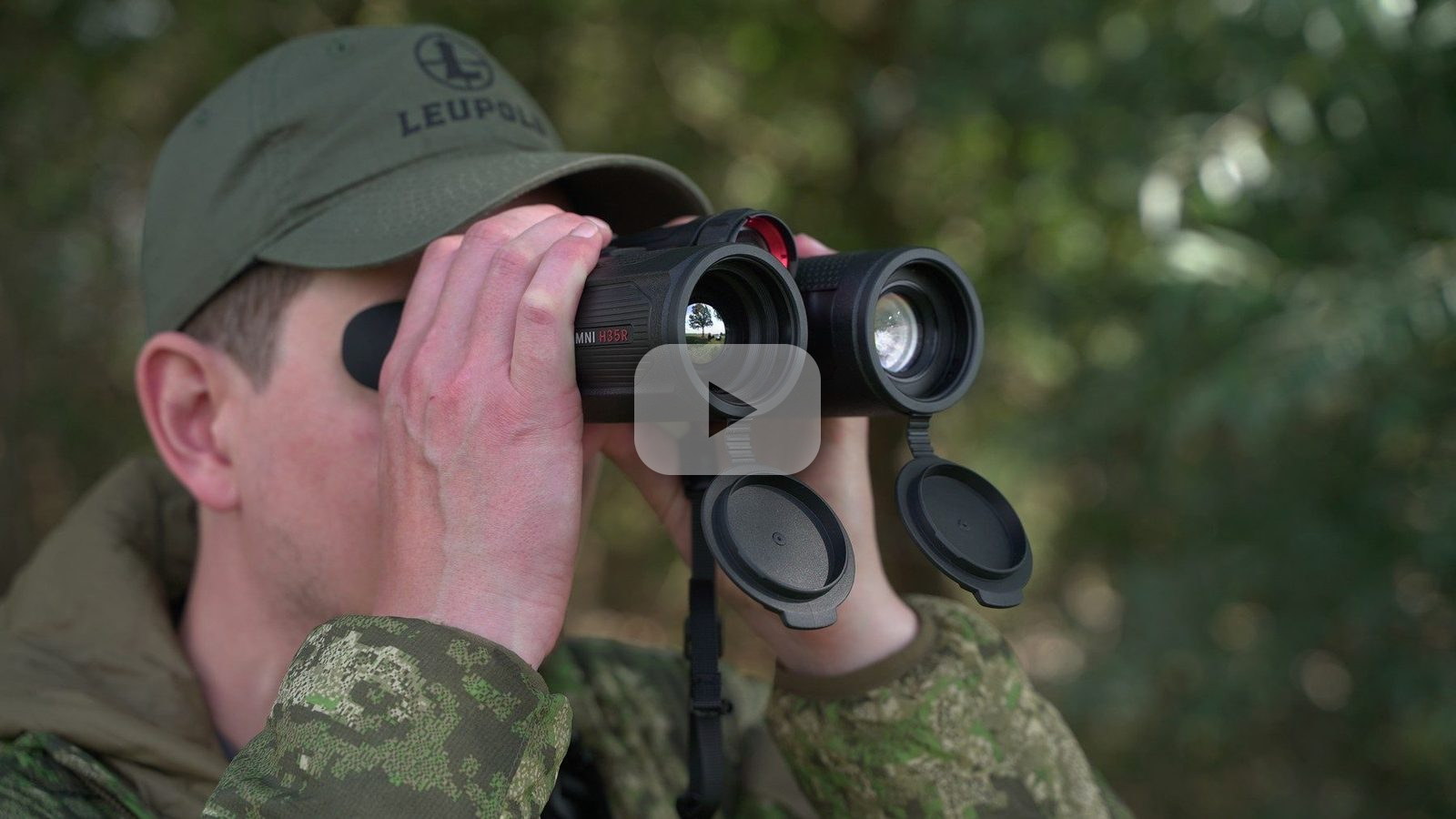
Watch the Omni H35R in action in the video below.
Thermal and 8K digital technology: the specification a dealer will be asked about
The thermal side runs a 640×512 sensor on a 12µm pixel pitch with a sensitivity of ≤15mK, refreshing at 50Hz, behind a 35mm F0.9 objective. As with a thermal riflescope, that 35mm is focal length rather than front lens diameter, a distinction worth making for a customer comparing brochures. Field of view is 12.5°x9.4°, or 21.9×16.5m at 100m; magnification runs from 2x to 16x, and detection range is quoted at 1,800m.
The digital channel is the headline, and both models share it. An 8192×6144 sensor on a 1.2µm pitch gives a little over 50 megapixels, which is where the 8K claim comes from, behind a 50mm F1.8 lens for a very welcome 3x base magnification. Field of view narrows to 8.8°x6.6°, or 15.4×11.5m at 100m, with detection quoted at 1,000m. The display is only 1600×1200, so the user never sees all those megapixels at once. What they give is room to zoom. Because the sensor captures so much more than the screen can show, you can push a long way into the magnification range before the image is stretched rather than simply cropped, considerably further than a lower-resolution sensor allows. I worked mine up to 18x, although my favourite was around 14x.
The image lands on a 0.5in round AMOLED with a generous 25mm of eye relief, a 12mm exit pupil and dioptre adjustment from -4 to +4. Between the objectives sits a replaceable infrared illuminator, offered in 850nm and 940nm, adjustable for power and beam focus. Mine arrived with an additional IR850 module in the box, so I assume the one fitted as standard is the 940nm, the more discreet of the two at the cost of some reach.
You can clearly identify the digital and thermal lenses. Note the central IR illuminator and the smaller laser rangefinderAlthough the instructions did not tell me how, you can swap out the illuminator, switching between 850nm and 940nm depending on your requirements
Power is a pair of replaceable 18650 cells backed by an internal battery, quoted at 7.5 hours at 22°C and charged over USB-C. There is 64GB of storage with Wi-Fi and app support; the laser rangefinder is rated to 1,000m, and ballistic calculation is included. The body is IP67 rated from -20°C to +50°C, measures 198x144x75mm and weighs around 900g.
How the Omni H35R performed in the field
Foxes had previously been seen crossing a potato field at about 7.30pm, so I was in a high seat with the H35R well before then, with a hedgeline 130m out front, potatoes left and beet right. Setting up took moments, with independent dioptre adjustment on each eyepiece and adjustable interpupillary distance. Where a traditional binocular has its focus wheel, the Omni has a zoom control, which I much prefer to thumbing a button. Then it was a case of waiting.
Each eyepiece has its own dioptre adjustment, and the interpupillary distance can be set to suitYou can see the independent focus dials where your thumbs will be. Note the rubber cover over the USB-C port and the tripod mounting point
Roe and muntjac appeared from 7pm, and I had a great time observing them, working through the thermal palettes and testing the Omni’s rangefinder. When two muntjac arrived, running and playing in the beet, I spotted them in the thermal immediately, then switched to digital to identify them. If a customer has not tried a pair of multi-spectrum binos, that is the process that will sell them, and it is the demonstration to give on the shop floor.
Side by side, you can see how quickly you move from spotting to identifying. Bear in mind that images are never as good as the real thingThe same scene in the digital channel, where the two muntjac can be identified
At around 8.20pm, the light was really fading, straining the digital “Day” mode. I tried the “Dusk” mode, which did not seem to offer much, so I went to “Moon”, and the difference was immediate. If a customer’s digital image is falling apart as the light goes, the answer is almost always the wrong mode rather than a binocular out of talent, which is worth saying at the point of sale before it becomes a return.
A clear-as-day muntjac doe at around 175m, one of many seen during testingThe colours and detail on offer were amazing
With it much darker at 8.43pm, I turned to rabbits and hares between 60 and 120m, running the illuminator through low, medium and high and playing with the beam focus. Their eyes made them stand out beautifully, and shifting the beam from flood to tight was easily done via the illuminator’s rubber wheel. Focus is handled by two dials underneath where your thumbs fall, the right for thermal and the left for digital. That affects one-handed use, but it is forgiving enough that one adjustment covers a decent bracket of distance, unlike some units that need constant fettling.
With the IR set to flood, the decent field of view allowed me to scan wide areas
Then, at 8.54pm, what I had come for. The fox cub was halfway across the potato field before I clocked it, at around 300m on the rangefinder. I did not need digital, because a fox moves in a way nothing else does and the 640×512 sensor gave me plenty to be certain. Just as well, because I could not have used it. The low branches in front of the seat would have meant IR splashback and a ruined image, a quiet advantage thermal holds over digital. Those same branches also ruled out a safe shot, and calling the fox did not work, suggesting I need to work on my call.
Living with the Omni H35R: the build and the box
Living with the H35R threw up a few things. Magnification stays in sync, near as dammit, across both channels. The four buttons on top are large and easy to find by feel, and I do not think I pressed the wrong one all evening. The battery compartment is stiffer to open than I would like on the H35R, but easier on the L19R, so it may be luck of the draw. I am sure it will ease up with use.
As you would see them in the field, the controls are incredibly easy to find and use. Note the silver magnification dialThe dimensions were spot-on for me and, crucially, the unit fitted in my chest harness
The H35R battery compartment was pretty stiff, making it tricky to open. However, I am sure it will ease up with useAs well as an internal battery, there is room for two 18650 rechargeable cells, giving a generous runtime
Battery drain barely registered, with four hours of heavy use hardly denting it, helped by an auto-power function that shuts the unit down when you place the Omni back in a chest harness, for example.
The H35R box is a strong part of the proposition: a charger, four batteries, instructions, a spare IR850 module and a very nice Nocpix chest harness, though its straight-edged black cut did not tempt me from my Härkila one.
This is what you can expect to find in the H35R’s boxThe H35R, specifically, comes with a well-made chest harness. I just wish it was not black
Verdict: which Omni should the trade recommend?
Assuming the customer likes the Omni on what I have described, the next challenge is which one, and that is a decision the dealer will be asked to help with. The L19R will tell the user there is a heat source out there and then let them identify the animal digitally, which, for most people, is the whole job. Seen that way, the H35R is a luxury, not a necessity, and the honest sale starts from the cheaper model.
A longer focal length lays more detector pixels across a distant animal, so detail holds together further out, and the bigger objective gathers far more infrared energy for a cleaner image. Oh, and the detection range increases from 1,000m to 1,800m. The cost, of course, is field of view, which is why the cheaper model is nicer to scan with. A customer who shoots ground that will use that reach is an H35R sale. One whose engagement distances are typically shorter, where a greater field of view is a huge advantage, should leave with the L19R.
One feature that deserves more shouting about is the image stabilisation. This is common enough these days, but not only can it be switched on and off independently for thermal and digital, it also works across the entire magnification range, not just the higher levels. Anyone who has tried to hold a pair of binoculars steady one-handed while recording footage for an upcoming YouTube review, with a spot of buck fever setting in, will know why image stabilisation matters. On its own, it is close to a reason to select the Omni, and it is the feature to lead with.
In the end, two things nagged at me. The auto-power function is a tad overenthusiastic, occasionally waking the unit when I had no need of it, and the battery compartment on my H35R is stiffer to open than it ought to be. Minor gripes both, and nowhere near enough to spoil things.
Overall, the Omni is a first attempt that behaves like a third, and I would happily have either one in my chest harness; the trade should expect to be asked for both.
Nocpix Omni H35R specification
Specification
Detail
Name
Nocpix Omni H35R multi-spectrum binocular
Price (RRP)
£2,499
Thermal sensor
640×512, 12µm pixel pitch, ≤15mK, 50Hz
Thermal objective
35mm, F0.9
Thermal field of view
12.5°x9.4° (21.9×16.5m at 100m)
Thermal magnification
2x to 16x
Thermal detection range
1,800m
Digital sensor
8192×6144 (8K), 1.2µm pixel pitch
Digital objective
50mm, F1.8, 3x base magnification
Digital field of view
8.8°x6.6° (15.4×11.5m at 100m)
Digital detection range
1,000m
Display
0.5in round AMOLED, 1600×1200
Eye relief / exit pupil
25mm / 12mm
Dioptre
-4 to +4
IR illuminator
Replaceable, 850nm or 940nm, adjustable power and beam focus
Laser rangefinder
1,000m, with ballistic calculation
Power
Two replaceable 18650 cells plus internal battery, USB-C, 7.5hr quoted runtime at 22°C
Storage
64GB, Wi-Fi and app support
Protection
IP67, -20°C to +50°C
Dimensions
198x144x75mm
Weight
Around 900g
Sister model
Nocpix Omni L19R multi-spectrum binocular, 384×288 thermal, 19mm, £1,499
The Omni H35R has a retail price of £2,499. The cheaper Omni L19R costs £1,499. Prices were correct at the time of writing.
What is a multi-spectrum binocular?
A multi-spectrum binocular puts a thermal channel and a digital day and night channel in one housing. The user finds the animal with thermal, then switches to the digital image to identify it positively, which is the job thermal on its own does least well.
What is the difference between the Nocpix Omni H35R and L19R?
The H35R has a 640×512 thermal sensor behind a 35mm objective, with thermal detection quoted at 1,800m, while the L19R has a 384×288 sensor behind a 19mm lens and a wider field of view. The 8K digital channel, display, battery, storage, rangefinder, body and weight are the same on both.
Does the Nocpix Omni H35R have image stabilisation?
Yes. It can be switched on and off independently for the thermal and digital channels, and it works across the whole magnification range rather than only at the higher settings.
Who supplies the Nocpix Omni to the UK trade?
Details of the Omni range, trade terms and UK stockists are available from Nocpix at nocpix.uk.
Hawke’s Vantage HD 30 6-24×50 SF (side-focus) has taken a full magazine verdict into the market at a recommended retail price of £299, and the reviewer rated its glass above scopes at twice the money. Writing in Airgun World, Nigel Allen said the series “proves you don’t need to spend big bucks to get a high-quality scope”, a line the counter will hear quoted back from now on.
What is the Vantage HD 30 proposition for the trade?
The series launched earlier this year as two side-focus bodies, a 4-16×50 at £279 and the 6-24×50 at £299, each offered with a choice of reticles that adds up to seven stock options across the range. The Mil Pro II (20x) model Allen tested carries 0.1 milliradian (MRAD) turret adjustment; the LR2 and .223/.308 Marksman versions sell at the same price, and the Marksman models carry ¼ minute of angle (MOA) turrets instead. For the dealer, that makes the qualifying question the customer’s turret preference rather than the budget.
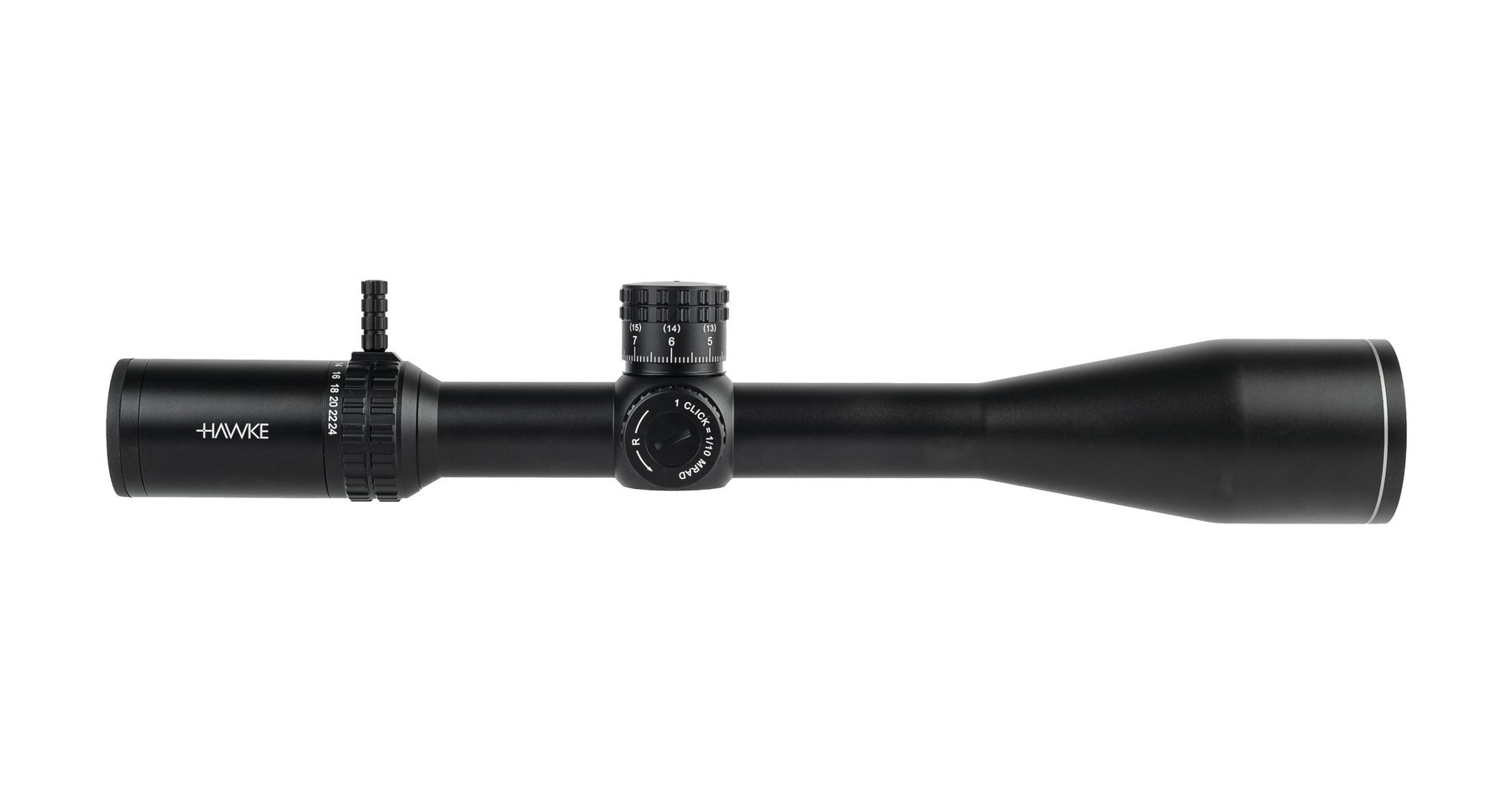
HD stands for high-definition and 30 for the 30mm one-piece tube. The optics are Hawke’s H2 system, 11 fully multi-coated layers behind a 50mm objective with a wide-angle field of view, and the package comes with a lifetime warranty, clear lens covers, a 22mm screw-in zoom throw lever with a blanking plug, a cloth, the turret tools and a CR2032 battery.
The test scores behind the verdict
Airgun World rates optical performance at 25m against newspaper print and sets the reviewer’s expectation for the price and the brand alongside. The Vantage HD 30 scored 10 at 6x against an expectation of 7, 9 at 12x against 8, 9 at 20x against 7 and 8 at 24x against 7. “For a high-mag scope, the clarity of the sight picture was nothing short of exceptional; I’ve tested scopes costing twice as much that didn’t render such crisp image quality,” Allen wrote, adding that “even in the dim light of dawn and dusk, my test scope rendered an amazingly clear sight picture, often at a magnification setting that I wouldn’t normally think possible”.
Which customers does a 6-24×50 reach?
Allen’s own observation is the market signal. “It always amazes me how popular zoom scopes with a 6-24x magnification range are with hunters,” he wrote, tracing the demand from field target shooters who used the range to range-find, through to pest controllers who took up multi-stadia reticles and learned to range at 24x before winding down to between 7x and 10x for the shot. The Mil Pro II’s true milliradian subtends at 20x, its red or green illuminated centre at five intensities and the side-focus wheel from 9m to infinity serve both ends of that customer base, and he judged that “the new Vantage HD 30 will appeal to hunters”.
At 390mm and 745g without mounts, the scope is recoil-rated but “probably sits best on a recoilless PCP”, a pre-charged pneumatic rifle, Allen said, as it would “need plenty of anchoring down” on a springer. The target shooter who dials a new zero at each range gets a Zero-Stop on the elevation turret and a push-lock on the windage; the hunter can disengage the Zero-Stop and read the vernier instead.
The basket beyond the box
Mounts are not supplied, so every Vantage HD 30 leaves the shop with a pair of 30mm rings. Hawke lists a 100mm sidewheel extension at £42, a 100mm sunshade at £20, a honeycomb objective diffuser at £30, metal flip-up covers at £28 for the objective and £24 for the ocular, and a neoprene scope cover at £20. Allen’s one criticism points at a further line: eye relief of around 90mm that let his peripheral vision wander, for which he suggested “an aftermarket rubber ‘boot’ could be pushed over the 43mm diameter ocular bell”.
What happens next?
The prices above were the recommended retail prices at Airgun World’s publication on 17 October 2026 and may change. Airgun World is offering a Vantage HD 30 worth £299 as a competition prize through its competitions page, which will put the scope in front of its readers for a second time. Allen’s full test, with its range-finding and turret panels, is linked first below.
Hawke Optics – the maker’s UK site, with the Vantage HD 30 range and its accessories
Frequently asked questions
What does the Hawke Vantage HD 30 retail for?
The 6-24×50 SF has a recommended retail price of £299 and the 4-16×50 of £279, each with a choice of reticles that gives seven options across the range. Mounts are not supplied.
Which reticles are offered on the Hawke Vantage HD 30?
The second focal plane Mil Pro II (20x), with 0.1MRAD turrets, and the LR2 and .223/.308 Marksman reticles at the same price, the Marksman versions with ¼MOA turrets.
Is the Hawke Vantage HD 30 recoil-rated?
Yes. Airgun World judged it best suited to a pre-charged pneumatic at 390mm and 745g, but said it will hold zero on a spring rifle with the right mounts.
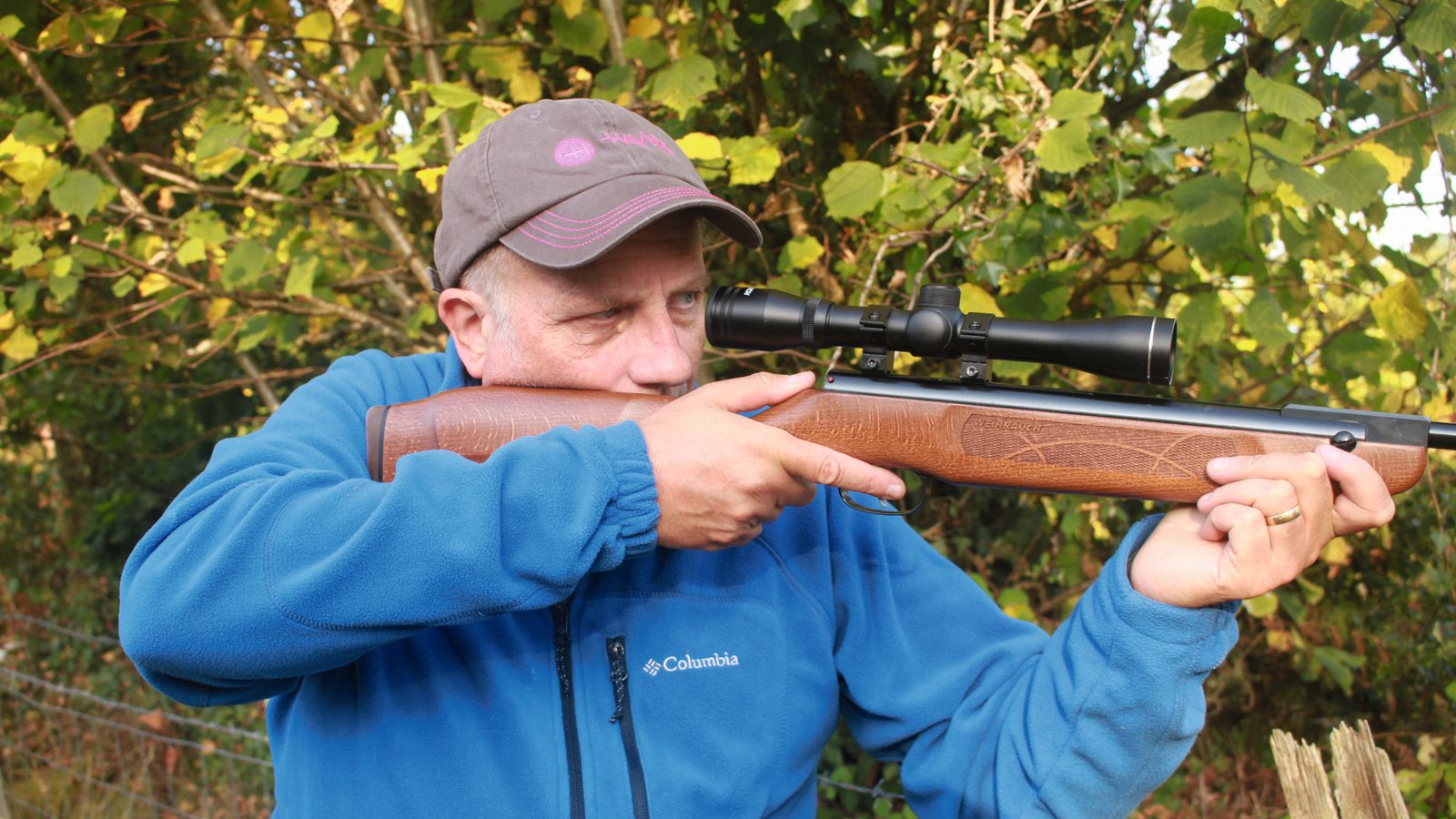
A full strip-down and service of the Weihrauch HW30, published in Airgun World on 17 October 2026, gives the trade a clear picture of what the starter springer looks like inside, which faults a second-hand example is likely to arrive with, and how little a workshop needs to put one right.
Writing in Airgun World, Pete Evans took his own second-hand HW30S apart after a month with the rifle, which he had earlier found had “much to commend this rifle as a back-garden plinker or even short-range pest control rifle”. His account is a service column for the owner, but every stage of it is a point a dealer’s workshop or part-exchange counter will recognise.
What faults does a used HW30 arrive with?
The first problem Evans met was a rounded hex recess on a scope-mount screw, left by a previous owner who had “either been too enthusiastic tightening the forward mount screw or had used an ill-fitting hex key”. His cure was a Torx bit a size larger than the hole, tapped in to grip the remains of the flats. “Socket-head screws which have been rounded are a problem often faced by the airgun engineer, but thankfully there are a few measures that can be used to save you from tears,” he wrote. A replacement screw is needed afterwards.
Two more checks matter on a used gun. The nut captive in the rear of the trigger frame is staked on recent Weihrauchs but loose on older models, where it “was apt to fall out and get lost”; Evans notes it is “a standard M4 size obtainable from any hardware shop”. More seriously, the small slot-head screw securing the back block must be present before the trigger is removed. If it is missing, the trigger pins are all that hold the back block, which will come back under spring tension when they are drifted out.
What does the service itself involve?
Evans is firm that the mainspring needs a spring compressor. “Bear in mind there is a fair amount of preload (63mm) on the spring, so holding that back and undoing the screw will be impossible, unless you happen to be an octopus,” he wrote. A ¾in tap washer buffers the flush back block in the sash cramp without marking the finish. The barrel comes off after the breech bolt’s domed nut and its spring washers, and a thin shim washer sits on each side of the breech block, easily damaged if the gun is reassembled carelessly.
The parts figures are the ones a workshop will want on file. The piston seal is 25mm, “as opposed to the 26mm found on the majority of other Weihrauchs”. The standard spring has a wire diameter of 2.67mm and an overall length of 203mm; Evans found his straight and correctly finished, kept it, and turned a Delrin front guide to stop it buckling. The piston has no liner as standard, so he made a metal one from material three times the piston’s internal diameter in width, anchored by bent-over teeth with the join opposite the cocking-link recess. He also advises checking the cocking link’s articulation on its rivet and the underside of the cylinder for wear tramlines.
Why does the result matter to the counter?
Reassembly turns on the barrel shims, held in place with molybdenum paste and realigned with a non-marring rod before the breech bolt passes through, and on the back block, which must line up perfectly before its retaining screw goes in because it is easy to cross-thread. Over the chronograph the rifle showed a mild rise in power from the front guide’s preload, and the liner cancelled out any extra mechanical noise. “Most importantly, the gun retained its pleasurable firing cycle,” Evans wrote. “All in all, it was a worthwhile exercise, very financially reasonable, with some tangible benefits.”
For the trade, the column makes two points. A sound used HW30 can be made as good as new with a seal, a front guide and an hour on the bench, which supports a part-exchange price. And Evans’s closing aim, “ensuring that it is never considered just a gun for a beginner”, is a selling argument for a rifle whose compact proportions and build quality earned “enthusiastic approval” from a group of adult shooters at a social evening; as he put it, “Testament to its popularity was the difficulty I had getting it back at the end of the evening!” His full column, with its workshop photographs, is linked first below.
Weihrauch – the maker’s site, with the HW30 and HW30S specifications
Frequently asked questions
What size is the Weihrauch HW30 piston seal?
25mm, rather than the 26mm fitted to most other Weihrauch springers, so a workshop needs the correct part on the shelf.
Does the HW30 need a spring compressor to service?
Yes. There is about 63mm of preload on the mainspring, so the back block must be held in a spring compressor, or sash cramp, while its small retaining screw is removed, with a buffer such as a ¾in tap washer against the flush block.
What should a dealer check on a part-exchange HW30?
The scope-mount screw recesses for rounding, the captive M4 nut in the trigger frame on older examples, the presence of the back-block retaining screw, the barrel shims on each side of the breech block and the piston seal for scorching, a sign of dieseling.
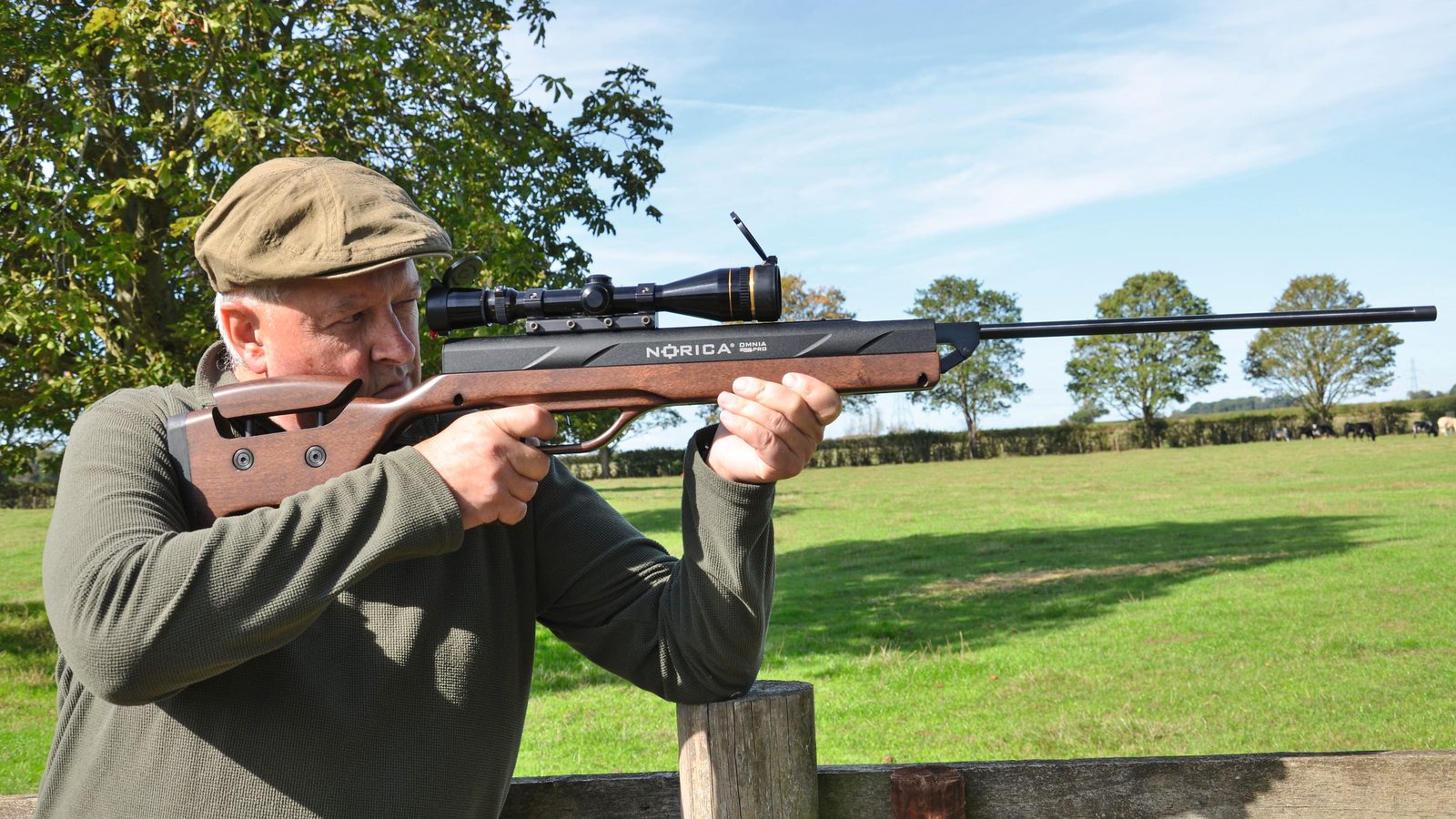
Norica’s Omnia ZRS Pro, a gas-ram break-barrel whose action slides back as it fires, has had a full magazine test in Airgun World and come away with a verdict that gives UK dealers a new answer for a familiar customer: the shooter who wants pre-charged pneumatic (PCP) manners without buying into bottles, pumps and gauges. Writing in Airgun World, Mark Camoccio called it “a whole lot of airgun hardware for the money” and said it “just feels very civilised to shoot”.
The rifle carries a recommended retail price of about £529, current at Airgun World’s publication on 17 October 2026, and Just Airguns is the UK contact named in the review. For the counter the interest is less the review score than the slot the rifle fills, the add-on basket it brings with it and the two cautions the test raised.
What slot does the Norica Omnia ZRS Pro fill?
Recoil-reduced self-contained airguns are a small category. Camoccio placed the Norica beside the discontinued Air Arms TX200 SR, which used the same principle, “whereby the main action (barrel and compression cylinder) sits on a sliding sledge mechanism, and moves back as the gun fires”, and named Diana’s 54 Airking as “the one obvious rival”, which “sits at a much higher price point”. That leaves the Omnia with the sub-£600 end of the category largely to itself.
The customer it reaches is the one who has resisted a PCP. “The necessity for all that external charging paraphernalia – bottles, pump, gauges and the like – will definitely not appeal to all,” Camoccio wrote. On the Norica the action moves back about 7mm against rubber bushes inside an oversized anodised aluminium casing: “In truth, yes, it still recoils, but the action is a slick snap, with just a modest nudge backwards, rather than the usual kick from a springer.” Because the 11mm dovetail rails are on the outer casing, the scope is largely spared, which bears on the optics a dealer can sell with it.
What goes in the basket with it?
The Pro has no sights of any kind, so every sale carries a scope and 11mm mounts. Its “ambidextrous vaporised beechwood stock”, as Norica terms it, has an adjustable cheekpiece; a standard Omnia ZRS with a synthetic stock, a drop-down grip and open sights is also made, and the review gave no price for it. The muzzle is screw-cut ½in UNF (Unified National Fine) under a blanking collar, so a moderator is a natural add-on.
Pellets are the third line. The .22 test gun averaged 603fps for 11.5ft/lb with Webley Mosquitos, an 11fps spread over ten shots and “¾in groups at 30 yards”, but BSA Blackstar shifted the zero by several inches and dropped the power to 9ft/lb, and Air Arms Diabolo Field and Rangemaster Sovereign did not suit it. “Proof that research and pellet trials will pay dividends,” Camoccio wrote: a reason to sell a sampler of tins with the rifle rather than a single brand.
What should the counter be ready to say?
Two points from the test will come back across the counter. Loading needs care, because most pellets were “fairly tight in the breech on my test gun”. And the long-term durability of the sliding system is, in Camoccio’s words, “an unknown quantity”, since a review is “a snapshot in time”. A dealer who sets that expectation honestly protects the sale.
The positives are easy to carry. The two-stage adjustable trigger with automatic safety was “a delight to use on my test gun, and excellent bearing in mind this is a gas-ram-powered action”. The rifle appeared to hold its zero when shot kneeling at knockdown discs over 30 yards after being zeroed from a rest, which Camoccio called “more forgiving than a conventional recoiling spring-piston or gas-ram design”. Norica’s marketing trick of a pellet balanced on the action through the shot worked on test: “sure enough, the pellet stayed put, which says an awful lot.”
What happens next?
Norica, a Spanish maker that traces its history to 1917, showed a prototype of the Omnia at IWA some years ago, and the production rifle is now in the UK in .22 and .177 at 8.8lb (4kg) and 47.25in (1,200mm). The magazine verdict gives the trade a tested proposition for the PCP-averse customer this autumn. Mark Camoccio’s full review, with the specification table and his pictures of the action, is in Airgun World and linked first below.
Just Airguns – the UK contact for the Omnia ZRS Pro named in the review
Frequently asked questions
Who is the UK contact for the Norica Omnia ZRS Pro?
Airgun World’s review names Just Airguns as the contact for the Omnia ZRS Pro, at a recommended retail price of about £529 at publication on 17 October 2026.
What is the Norica Omnia ZRS Pro’s competitor?
Diana’s 54 Airking is the other recoil-reduced self-contained air rifle on the market, at a much higher price. The Air Arms TX200 SR, which used the same sliding principle, has been discontinued.
Does the Norica Omnia ZRS Pro need a scope?
Yes. The Pro is supplied without sights, so a scope and 11mm dovetail mounts go with every sale. The standard Omnia ZRS has open sights.
The Precihole Club Pro Junior, the .177 side-lever pre-charged pneumatic (PCP) air rifle that Air Arms distributes in the UK, has had a full test in Airgun World, and the verdict gives the trade a clear line on where the rifle sits. Writing in Airgun World, Gary Chillingworth called it “a surprisingly serious piece of equipment for what it is” and placed it “in a useful space between a basic junior air rifle and a full-sized match rifle”.
What does the Club Pro Junior offer that a scaled-down rifle does not?
The rifle is made by Precihole Sports and aimed at target shooting and at introducing younger or smaller shooters to the sport, but the reviewer’s point for anyone stocking it is that it is not a conventional rifle made small. It “takes a slightly different approach from many junior rifles”, Chillingworth wrote. “Rather than simply being a smaller version of a conventional air rifle, it has been designed around the principles of a target rifle.”
In practice that means a side-lever PCP action filled to 160bar, with the maker quoting 80 to 120 consistent shots per fill, a 500mm barrel, and target-style aperture sights in place of open sights: a replaceable-element front and a 20-click rear with an anti-glare tube, adjusting 0.35mm per click at 10m. The trigger is two-stage and fully adjustable, the stock is lightweight polymer and ambidextrous, and the rifle weighs 2.8kg at 992mm overall, running at 5.5ft/lb with virtually no recoil.
The counter conversation: sights, loading and fit
Three points from the test will come up across any gun-room counter. The first is the sights. Chillingworth, who shot .22 LR with dioptres years ago, wrote that the click adjustment “gives the shooter considerably more control than the basic iron sights and makes the Club Pro Junior much more appropriate for formal 10m target shooting”, and that using a dioptre “is a skill in itself”.
The second is loading. The rifle uses a single-shot pellet tray cycled by the side lever, with no magazine, which the reviewer read as reinforcing “the rifle’s role as a training tool”, though he found the loading space narrow until he had practised. The third is fit: at 6ft, Chillingworth reported “no issues with the rifle whatsoever” and found it “almost identical” in proportion to the old Air Arms S200, so the customer is not only the junior.
How did it perform on the 10m card?
From a bean bag and rear rest on printed 10m targets, the reviewer was putting in good groups by his fourth sheet, and eight sheets of 12 targets used only about 40bar of air. From the bench most shots were in the 9 and 10 rings in windy conditions; prone, off the elbows, he was mainly in the 7 to 10 range; standing, he kept every shot on the target and no more, which he presented as the rifle’s virtue rather than its fault.
“It encourages you to learn the fundamentals of shooting properly,” he wrote. On the trigger, he judged it “very good for a rifle in this price point” and “set up with a good balance between predictability and safety” for a newcomer, while noting he would personally make it “a tad lighter”.
Where does the rifle sit in the range?
Chillingworth’s closing argument is the one a dealer can repeat: rather than a rifle “a young shooter is expected to grow out of quickly”, the Club Pro Junior “appears to have been designed to teach the fundamentals of accurate shooting properly from the beginning, or, for an experienced shooter, to help them keep those fundamentals razor sharp”. He named its market as 10m target shooting, club training, garden shooting and introducing a new shooter to the discipline.
What happens next?
The full test in Airgun World, with the reviewer’s pictures of the sights and the targets, is linked first below, and Chillingworth has also filmed the rifle for an Airgun World video review. He closed by looking forward to testing its bigger brother, the Precihole Match Pro, which puts the next rung of the same range on the review calendar. Air Arms is the UK distributor for trade enquiries.
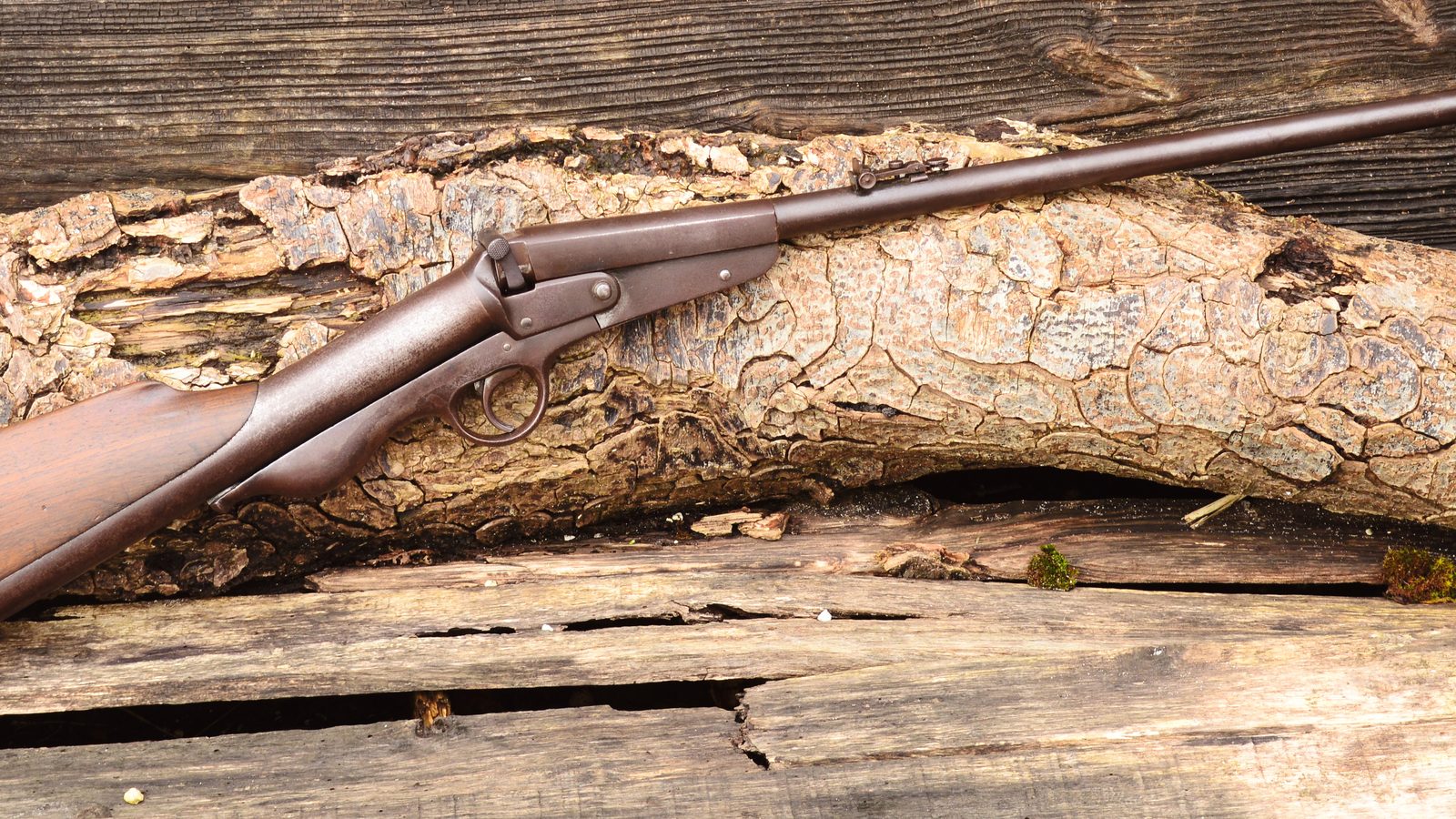
The Britannia air rifle, an Edwardian break-barrel designed by a man named Cox and finished in Birmingham by Bonehill, has had a full appraisal in Airgun World, and it gives the pre-owned counter a reference for a rifle that arrives perhaps once in a career. Writing in Airgun World, Jon Young put the find rate at “20-odd Lincoln Jeffries or later BSA Improved Model Ds to only one or two Britannias”.
Why does the Britannia command attention in the pre-owned trade?
Scarcity is the first reason. Young wrote that “very few Britannias were ever made, most probably only in the low thousands”, that the number has “diminished dramatically” and that prices “have unfortunately risen exponentially”. The second reason is engineering. The Britannia answered the Gem’s weakness, a leather breech seal that wore and let the barrel loosen, with a sprung catch over a tapered breech that, in Young’s words, “compensates for this by being pushed further back onto the taper by its own spring”.
The marks and features that confirm a Britannia
The metal carries the two names a counter needs, Cox’s Patent for the designer and Bonehill for the maker. Young noted that some early examples appear to have been made in Germany as parts and castings for Cox to assemble, before the Birmingham firm took the project on and had the rifles hand-finished “by those more accustomed to gunsmithing than rough foundry work”.
The layout is a long spring chamber running back to the shoulder, cocking by the trigger guard, a rifled barrel, threaded screws in place of the Gem’s tapered pins and an adjustable trigger. Finishes include two-tone plating, blacked barrels with nickel spring chambers, in the German fashion of the period. An earlier, simpler version exists without the catch at the top, and variations in cocking lever, barrel length and sights, from static to folding leaf to the see-saw backsight, all bear on a valuation. Young warned that the see-saw sight’s “tiny parts often go missing”.
Which calibre claims should the counter test?
Almost all Britannias are .177, with a far smaller number, mostly from later production, in No 3 Bore, the .25in calibre. The one to question is .22. Young wrote that despite examples surfacing over the years, “it appears that this calibre was never considered for the Britannia at least during factory manufacture”, so a .22 example needs a closer look before it is described as factory-made.
Retailer-branded Britannias are not unusual for the period, and an unknown number were built under contract for a firm called R Ramsbottom and marked as the Anglo Sure Shot Mark I. A counter that knows the name will not pass one by.
Condition against function: the valuation question
Young’s view challenges the trade’s usual order of priorities. Condition, he wrote, is what a dealer cites when selling expensive stock or buying cheaply, yet with a Britannia few, if any, survive in their best original finish. Period workshop refinishing and plating have left many “rather dull and grey”, and most have been historically refinished, so he argued that “due to rarity, original condition can take second place in the world of rare airguns”.
His conclusion is that “the better gun, however, one that works well enough to use today, may be the rougher example of the two”. That is a point the counter can use both ways: a sound mechanism supports a price on a plain rifle, and a refinished example is the norm for this model rather than the exception, unlike a factory-finished BSA of the same period.
What happens next?
A Britannia’s mechanism can be inspected on the spot. A short piston and spring sit over an extra-long spring guide with no real pre-load, and, as Young put it, “only a coin was needed to undo the rear chamber end plug”; a quarter turn frees the mainspring and piston in seconds to check the piston seal. Jon Young’s full feature, with the pictures of the catch, the markings and the sight, is in Airgun World, linked first below.
By the Cox’s Patent and Bonehill markings, the sprung catch over a tapered breech, trigger-guard cocking and a long spring chamber running back to the shoulder. A retailer-branded Anglo Sure Shot Mark I is also a Britannia.
Was the Britannia air rifle made in .22?
Jon Young wrote that it appears not to have been, at least during factory manufacture. Almost all are .177 and a smaller number are No 3 Bore, the .25in calibre, so a .22 example needs checking.
How rare is the Britannia air rifle?
Very few were made, most probably only in the low thousands, and far fewer survive. For every one or two Britannias, Young wrote, you may see 20-odd Lincoln Jeffries or later BSA Improved Model Ds.
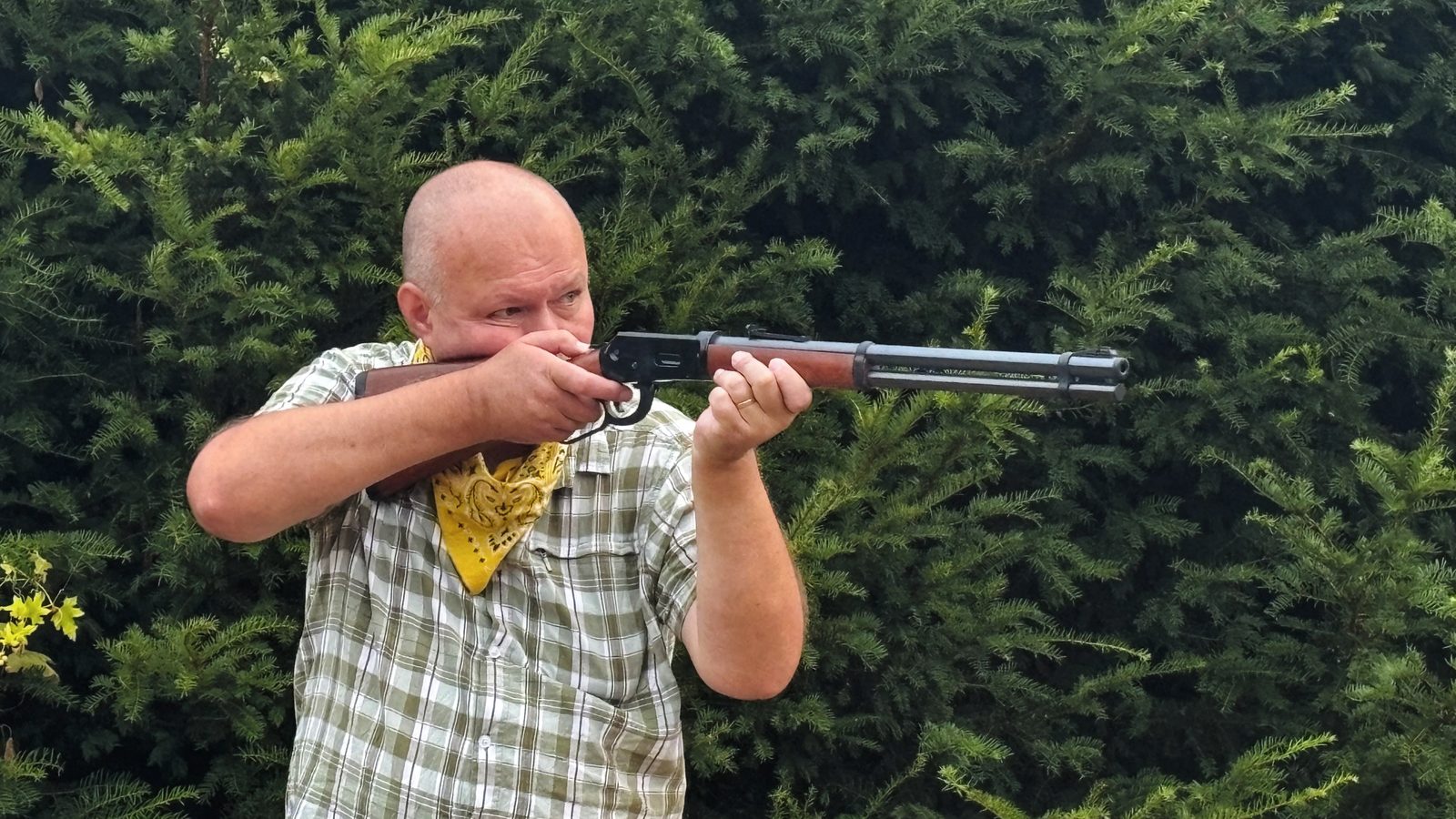
The Walther Lever Action, Umarex’s CO2 pellet-firing homage to the Winchester Model 1894, has been in the line-up since 2002. A fresh appraisal in Airgun World gives the counter a reference for a rifle that arrives in two generations with different consumables, and for the simple service that restores one that has sat in a cabinet. Writing in Airgun World, John Milewski called it “a quality product made from wood and steel”.
Why do CO2 replicas still matter to the UK trade?
Milewski traced the market to 1997, when CO2 came “off ticket” and “UK-based airgunners could once again own CO2-powered airguns without the need for a firearm certificate”. Umarex, which owns Walther, was among the first with replica pistols that “shot pellets rather than BB/ball, which made them more consistent”, and in 2002 added the lever-action. It takes the standard Umarex eight-shot rotary magazine, a consumable the counter already stocks, and the manual’s 175 metres per second, about 574fps, was borne out on test at 576fps with .177 Excite flat heads.
Which version is on the counter, and what does it need?
Pre-2010 rifles take two 12g cartridges in a cradle behind the butt plate, pierced together, so, as Milewski wrote, “it was vital that cartridges of equal length, preferably from the same manufacturer, were used”. A mismatched pair can leave one cartridge unpierced, which is a point to make at the sale. For a short session the rifle can be charged with one full and one empty cartridge, and a lever in the cradle helps pierce them.
From 2010 the rifle was modified for a single 88g cartridge, which “resolved the issue of two different-sized 12g cartridges causing problems but meant that more expensive cartridges had to be used and a wider, more unsightly butt plate was also fitted”. An adaptor lets the 88g rifle run on two 12g cartridges, at further cost and without curing the butt plate. Milewski’s preference, “from an aesthetically pleasing and practical perspective”, is the earlier twin-12g rifle.
What should a pre-owned Walther Lever Action be checked for?
The pivoting magazine arm behind the fake loading port needs to be clean and free of debris, because a pellet can jam there when the CO2 fades and the shooter keeps going; a rod through the muzzle clears it. The more common pre-owned fault is simpler. Milewski’s own rifle, tested in 2019 and then put away, managed only 290fps on a mild August morning because it was “bone dry”. A light lube around the hammer and a few drops into the mechanism took it back to 576fps, 5.23ft/lb, and a high of 604fps with Econ II. A rifle that chronographs low on the counter may need nothing more.
His two cosmetic niggles are worth knowing when a customer asks: a discernible gap between the barrel and the dummy magazine tube, and a stock that sits higher than a Winchester’s to house the CO2, which gives the rifle “somewhat of a club-foot profile”. Neither affected function; he reported no jams or misfeeds, a 4.8lb trigger that broke cleanly, single-hole groups at 6 yards and hits on 40mm field target zones out to 20 yards.
Which variants carry a premium?
The 88g rifle has been sold blued or plated, as a shorter carbine and as “a John Wayne commemorative model with a wide-loop lever”. Milewski bought his early twin-12g blued rifle from Protek Supplies for £220, with its original illustrated carton, noting that “retaining the original box with a rifle enhances collectability”. That is the figure a pre-owned counter can put against a boxed early example in working order; the saddle ring, the ramp rearsight and the drift-adjustable foresight are the details a buyer checks are present.
What happens next?
For the counter the reading is that a 20-year-old CO2 replica remains a straightforward sale and a straightforward service: matched 12g pairs or 88g cartridges by generation, rotary magazines, and a lube before it is chronographed. John Milewski’s full test in Airgun World, with his pictures of the cradle, the loading port and the sights, is linked first below.
Does the Walther Lever Action need a firearm certificate?
No. It is a .177 CO2 air rifle, and John Milewski wrote that CO2 airguns came off ticket in the UK in 1997, so no certificate is needed to own one.
What CO2 does a Walther Lever Action use?
Rifles made before 2010 take two 12g cartridges of equal length behind the butt plate. From 2010 the rifle takes a single 88g cartridge, and an adaptor allows two 12g cartridges in the later rifle.
Why has a stored Walther Lever Action lost power?
A dry mechanism. Milewski’s rifle dropped to 290fps after years in storage, and a light lube around the hammer and into the action returned it to 576fps and a high of 604fps.

 Donate
 Basket
 Login