Combined BSSC, HO, CoP moderator guidance

Back to blog

Dear GTA Member

You may recall that our last moderator broadcast included guidance on both trade and user matters and referenced a meeting with the Home Office that took place last Friday.

That meeting has now concluded, and the new document above consolidates the two previous documents, together with several additional points raised by both the Home Office and the College of Policing. In the GTAs view, the guidance has become somewhat more complex as matters have progressed; however, there are several important points that those involved in the trade should be aware of:

Sound moderators are no longer required to be listed on applications for visitors’ permits. In Scotland, sound moderators for firearms are deregulated. However, sound moderators for air weapons remain subject to Scottish licensing controls under the Air Weapons and Licensing (Scotland) Act 2015. Moderator variations submitted to the Police before 29 June 2026 should no longer be processed, and police forces should consider refunding any fee that has been paid. Moderator transactions completed by Registered Firearms Dealers (RFDs) before 29 June 2026 must still be recorded. Historic moderator record-keeping maintained before 29th June 2026 should be retained. Understanding the new possession offence: This is one of the areas causing the greatest confusion nationally. The offence is not intended to criminalise lawful shooters or create unnecessary administrative burdens. Rather, its purpose is to target individuals who possess sound moderators in circumstances connected with the unlawful possession of firearms. Paragraph 1(4), Section 9 (Exemption for Auctioneers, Carriers and Warehousemen): The Section 9 exemption for auctioneers, carriers and warehousemen extends to relevant accessories including moderators. Section 44 and Schedule 5 apply in England, Wales and Scotland. They do not extend to Northern Ireland, where separate firearms legislation applies.

Please take the time to familiarise yourself with these points, as they may affect how future trade transactions and enquiries are handled.

If you have any further enquiries ref the above, please note I am working away from the office and will be unable to answer your questions until Monday 20th 2026.

Best regards

Paul Green, Technical Director The Gun Trade Association

Download: Combined BSSC.HO.CoP.Moderators Advice.pdf

Other News Posts

BSSC publishes guidance on new sound moderator rules

Back to blog

Following the deregulation of sound moderators (also known as silencers or suppressors) on 29 June 2026, the British Shooting Sports Council (BSSC) has produced guidance, with input from its legal advisers, to help certificate holders, registered firearms dealers and other members of the shooting community understand the new legislation.

Throughout this guidance, references to sound moderators also apply to flash hiders.

Following the commencement of the relevant provisions of the Crime and Policing Act 2026, sound moderators and flash hiders are no longer treated as firearms in their own right. They no longer require individual authority on a firearm or shotgun certificate and will no longer be recorded on the National Firearms Licensing Management System (NFLMS).

Where a sound moderator is intended to be used with a Section 1 firearm it is an offence to be in possession of such an item unless the owner holds a current firearm or shotgun certificate.

A person who may lawfully possess a Section 1 firearm may also acquire and possess a sound moderator intended to be fitted to that firearm, without any separate authority or certification.

The important consideration is the firearm for which the moderator is intended to be used. Not simply whether it is physically capable of being fitted to another firearm.

Interpretation

The phrase “intended to be fitted” should be interpreted objectively, having regard to the circumstances of possession and the lawful purpose(s) for which the moderator is held. It should not be determined solely by the moderator’s technical compatibility with other firearms. An intention to use the sound moderator with a firearm which does not come within Section 1 of the Act removes the requirement for the owner to hold a firearm or shotgun certificate. A moderator capable of fitting multiple firearms does not change legal status merely because it is capable of being used on a firearm of a different class.

The following examples illustrate how the legislation should be applied.

  1. Moderators for Section 1 firearms
    A person who lawfully possesses a Section 1 rifle may acquire and possess a suitable sound moderator without the need for it to be separately authorised on a firearm certificate.
    No variation application is required. No separate authority is required.
  2. Existing moderators previously entered on firearm certificates
    Many certificate holders already possess moderators that were previously authorised on their firearm certificates.
    If a firearm or shotgun certificate is still held – No action is required.
    Those moderators remain lawfully possessed and there is no requirement to have them removed from certificates or to apply for replacement authorities.
  3. Moderators capable of fitting more than one firearm
    Some moderators are capable of fitting both firearms requiring a firearm certificate and firearms that do not require one, such as certain air rifles. The fact that a moderator is physically capable of fitting more than one firearm does not, of itself, determine whether it may be possessed. The relevant consideration is the firearm for which the moderator is intended to be used. A person who may lawfully possess that firearm may also lawfully possess a suitable moderator for it.
  4. Moderators intended solely for shotguns and non-Section 1 air rifles
    A moderator intended for use only with a shotgun or an air rifle that does not require a firearm certificate may be freely acquired and possessed. This remains the case even if an identical model could also physically fit a Section 1 firearm.
  5. Moderators intended for airsoft or paintball devices
    Moderators manufactured and intended for use with airsoft or paintball devices may continue to be acquired and possessed without restriction.
  6. Moderators fitted to deactivated firearms
    A moderator fitted to, or intended solely for display with, a lawfully deactivated firearm may be possessed without restriction.
  7. Deactivated sound moderators
    Some sound moderators were previously deactivated because they were themselves treated as firearms. Since sound moderators are no longer firearms, there is no legal requirement for a moderator to be deactivated. A previously deactivated moderator may continue to be possessed lawfully.
  8. General principle
    When considering whether a sound moderator may be lawfully acquired or possessed, the question should be: “Is this moderator intended to be used with a Section 1 firearm?”
    If the answer is yes, no separate authority for the moderator or flash hider is required, so long as the owner remains a firearm or shotgun certificate holder.
    The penalty for unlawful possession of such an accessory is a summary offence carrying a Level 3 Fine.

Sound moderators have ceased to be a controlled accessory, therefore a seller is not required to check that the buyer has the authority to possess it. The onus to have authority to hold a sound moderator lies with possessor. The only offence created is for unlawful possession of a sound moderator.

N.b. this legislation covers England, Wales and Scotland, however sound moderators for air guns remain subject to separate licensing requirements in Scotland.

British Shooting Sports Council
Chairman: Mark Garnier OBE MP
Secretary: Jeremy Hinde
Legal Advisor: Nick Doherty

Other News Posts

SGC Group’s formula for success

Back to blog

SGC Group managing director Gary Lamburn continues to play a prominent role in the UK shooting industry. Here, he discusses customer service, supply chains, new product launches and the opportunities shaping the airgun market in 2026.

Gun Trade Insider (GTI): How’s business, in a nutshell?
Gary Lamburn (GL): As the weather improves and this year’s new releases begin arriving on our shelves, we’ve seen some fresh momentum within the business, particularly around the Umarex and FX brands.  So, on a whole, business is positive and we have lots of exciting new product for shooters to look at.


GTI: Following the British Shooting Show, how did consumer engagement this year compare to previous shows, and what were the main talking points from an airgun perspective?
Since our first British Shooting Show in 2019, we’ve always had a great time at the event. People usually leave our stand happy—often armed with a bit more knowledge and sometimes with the latest kit as well.

This year was particularly strong for the airgun consumer. Among our guests were renowned shooter Thayne Simmons (Saber Tactical), Donny Du (DonnyFL), along with ammunition specialists Zan Sude (Zan Slugs) and Pavel Kobalec (JSB). Compared to previous years, visitor numbers felt noticeably higher, and there was a clear increase in interest around slug shooting—especially from people wanting to understand how to extract the very best performance from their individual setups.

GTI: Sportsman Gun Centre handles everything from high-end optics to bulk ammunition; how has the current landscape of global conflicts impacted your supply chains and lead times for imported goods?
Although the picture in the press can often appear quite negative, we’ve yet to experience any significant knock-on effects. Much of this is due to the fact; most key manufacturers are based in the US and Europe.

Of course, it’s difficult to predict exactly what the rest of 2026 may bring, but currently the outlook for supply and lead times remains positive.

GTI: How do you manage the delicate balance of supporting your independent dealer network while maintaining a strong direct-to-consumer presence?
At the end of the day, the consumer is the most important part of any business, and every end user is our customer. Because of that, it’s important for us to treat every independent dealer as if they were an extension of our own business.

Maintaining a first-class level of service for every product is essential, as brand loyalty and long-term support are fundamental to success in any industry.

GTI: What are the core “dos and don’ts” that define the Sportsman Gun Centre’s business philosophy regarding customer service and after-sales support?
With after-sales support, it’s really about what you do rather than what you avoid doing. For us, it comes down to three key areas: information, ownership, and strong relationships with suppliers.

It’s important to have knowledgeable staff who can help customers understand the products they’re buying and assist with troubleshooting if an issue arises. In the rare event a product does develop a fault, it’s equally important to have a team that takes ownership of the issue and works to resolve it.

Supporting both areas are our strong relationships with suppliers. These partnerships enable us to deliver first-class service and support.

GTI: Which new arrivals do you believe will have the most significant impact on the UK airgun market over the next 12 months?
One of the standout new PCP releases for 2026 is the FX DRS MKII. Building on the outstanding success of the original DRS, the latest generation raises the bar for what shooters can expect from a mid-priced PCP platform.

The popularity of the original model is reflected in FX’s decision to expand the range significantly. Shooters can once again choose from three distinct variants: Classic, Tactical, and Pro, each offering unique stock configurations, accessory options and in some cases, different power sources to suit a variety of shooting disciplines.

With its combination of innovation, performance and value, the DRS MKII is a model that every FX dealer should consider. Starting at just £789.99 RRP, it delivers the quality, refinement and versatility that shooters have come to expect from FX, while remaining one of the most competitive options in the PCP market.

From Umarex, one of the standout launches was the PAC range of compressors. From the compact and affordable Eco Silent through to the powerful PAC1400, sales have been particularly strong—especially for models that can be powered by popular drill batteries.

GTI: The UK shooting industry faces constant legislative scrutiny; what is the biggest regulatory challenge currently facing a business of your scale?
Outside the airgun sector specifically, the legislation currently being discussed around firearms licensing is something the wider shooting community will be watching closely. We have a great deal of confidence in the work the GTA are doing and hope that the views of experienced and informed stakeholders continue to be considered.

The positive news at present is that airguns are not included in the current scope of discussions, and airgun ammunition is exempt from the proposed lead ban. Both of these factors leave airgun shooting in a good position moving forward.

GTI: How do you approach selecting which international brands to bring into the UK, and what are the primary criteria a brand must meet to join your portfolio?
The first questions we ask are simple: do we believe in the product and the people behind it, and does it bring something positive to the airgun market? In some cases, we may also work with brands that are already well established, but perhaps not receiving the exposure they deserve.

With our team, infrastructure, and buying power, we like to think we can make a meaningful impact to any brand we represent. Ultimately, that should translate into better availability and competitive pricing for the end user.

GTI: In an era of increasing overheads, how are you balancing remaining competitive on price while still investing in your physical showrooms and staff expertise?
It’s certainly true that the business landscape has changed significantly since the pandemic, and many companies have had to absorb increased overheads. From a pricing perspective, it’s important that products remain accessible to customers, so we work closely with our suppliers to keep prices as reasonable as possible. Sometimes that means difficult negotiations and the occasional compromise.

Staff training is an ongoing process and is often supported by our suppliers, who are always keen to share their knowledge and expertise. As for our showroom investment, we’re fortunate that healthy footfall and strong gun sales continue to support it. Unlike many industries, firearm transactions require a face-to-face element, which naturally helps maintain a steady flow of customers through the business.

GTI: We have seen a significant trend toward “tactical” and modular airgun designs; do you see this as a long-term shift in the market or a passing fashion?
While tactical styling isn’t to everyone’s taste, these designs offer genuine practical advantages. Many provide mounting options and levels of customisation that traditional wood or synthetic stocks simply can’t match.

For shooters who value flexibility and the ability to tailor their setup, these features are extremely appealing, so we believe this trend is likely to remain part of the market for the foreseeable future.

GTI: Digital presence is vital for any modern business, but the shooting industry faces unique restrictions on social media and online advertising; how do you navigate these digital hurdles?
The approach taken by platforms such as Meta and Google can certainly be frustrating at times. However, we’ve found that success often comes from understanding their rules and working within them.  By focusing more on education, product awareness, and community engagement rather than direct sales messaging it’s often still possible to achieve good results.

GTI: What is the single most important “don’t” when maintaining long-term relationships with international manufacturers and suppliers?
Simply put: never take the brand for granted.

Strong relationships are built on adding value for the manufacturer, whether that’s through maintaining healthy stock levels, effective marketing, strong customer service, or solid after-sales support. If we do our job well and help the brand succeed in the market, then everyone benefits.

GTI: With the increasing popularity of disciplines like benchrest, how is the Sportsman Gun Centre adapting its stock profile to cater to these more specialised target shooters?
Fortunately, we work with two of the most innovative companies in the airgun sector. FX in particular has always focused on pushing the boundaries, and their recent Benchmark rifle features one of the most specialised competition stocks available.

Alongside the rifle manufacturers, we’re also fortunate to work with Saber Tactical. Designed and built by some of the best benchrest and target shooters in the world, their accessories can transform much of the FX range into highly capable competition platforms.

GTI: Inventory management is a mammoth task for a business with such a vast catalogue; how has your approach to stock changed in the post-pandemic era?
Interestingly, our stock holding has actually grown since the pandemic. We firmly believe in having products available—particularly for popular lines.

We’re also fortunate to work with manufacturers who put a great deal of effort into meeting demand and maintaining consistent supply.

GTI: When looking at the next generation of shooters, what initiatives is the company taking to ensure the sport remains accessible and inviting to newcomers?
As part of our ongoing commitment to the sport, we take part in numerous open days around the country and also host shooting ranges at the British Shooting Show.

We feel it’s important to give younger people the opportunity to experience shooting first-hand and discover the enjoyment it can offer, always in a safe and supervised environment. From there, we hope to encourage them, along with their families, to further explore field sports or target shooting.

GTI: Looking ahead to the remainder of 2026, what is the primary goal for the Sportsman Gun Centre, and what can the trade expect from you in the coming year?
Our goal remains the same as always: to provide the best possible service and products to the industry.

We see 2026 and 2027 as particularly exciting years for Umarex and their associated products. As a relatively new brand within the SGC portfolio, we’re looking forward to getting more of their pistols and air rifles into the hands of the airgun community.

From an FX perspective, there are also several excellent new rifles entering the market, and knowing the team there, we wouldn’t be surprised to see more exciting releases before the year is out.

GET IN TOUCH

SGC

01392354870

trade@sportsmanguncentre.com

www.sgctrade.co.uk

Other News Posts

Security and the shipping of firearms

Back to blog

Dear GTA Member

You may recall that the transition from the old Parcelforce HDMO software to the Click & Drop system was not without its challenges over the last six months. Since then, a significant amount of work has been undertaken by both the GTA and the Parcelforce Firearms Team to improve the situation and address the issues encountered during the implementation.

One of the unfortunate consequences of this transition was the misplacement of a number of firearms in transit. While I understand that all firearms were ultimately recovered, such incidents carry serious implications, including potential risks to public safety, additional costs for businesses, operational difficulties for the trade, and increased scrutiny and engagement with the police.

Following the recent incidents involving misplaced firearms in transit, Parcelforce, the GTA, the British Shooting Sports Council (BSSC), the College of Policing and the National Crime Agency (NCA) have worked together to identify other areas where improvements could be made. One of the key areas identified was the labelling and packaging of firearms during transportation.

Poor packaging can result in a firearm shifting during transit, damaging both the firearm and its packaging, and in some cases leading to the item being lost. Similarly, the use of recycled packaging with old labels still attached can result in firearms being delivered to the wrong address, increasing the risk of them being mislaid or, in the worst-case scenario, falling into the wrong hands. The operational, financial, and reputational consequences of such incidents are well understood across the firearms trade.

To help minimise these risks, the GTA, with support from the BSSC and Parcelforce, has developed a short presentation providing a friendly reminder of the importance of effective labelling and packaging procedures. This presentation has now been incorporated into the GTA RFD training programme, published on the Parcelforce website (Information for customers sending firearms | Parcelforce Worldwide) and will also be published shortly in Gun Trade Insider, the GTA in-house journal.

Best regards

Paul Green, Technical Director The Gun Trade Association

Download: Labeling Packaging presentation.pdf

Other News Posts

ANNUAL GENERAL MEETING 2026 – NEW DATE – WEDNESDAY 7 OCTOBER

Back to blog

Dear GTA Member

The Annual General Meeting of the Gun Trade Association will be held at Holland and Holland Shooting Grounds in West London on Wednesday 7 October 2026.

This is a note for your diary. Formal notification and invitations will follow shortly.

With thanks for your continuing support.

Stephen Jolly, Chief Executive The Gun Trade Association

Other News Posts

Update on Moderators

Back to blog

Dear GTA Member

The Crime and Policing Act 2026 has now come into force, introducing a significant and welcome change to the law concerning sound moderators. However, the GTA has intentionally delayed its initial announcement, as further guidance from the Home Office had been promised. At the time of writing, this guidance has yet to be issued.

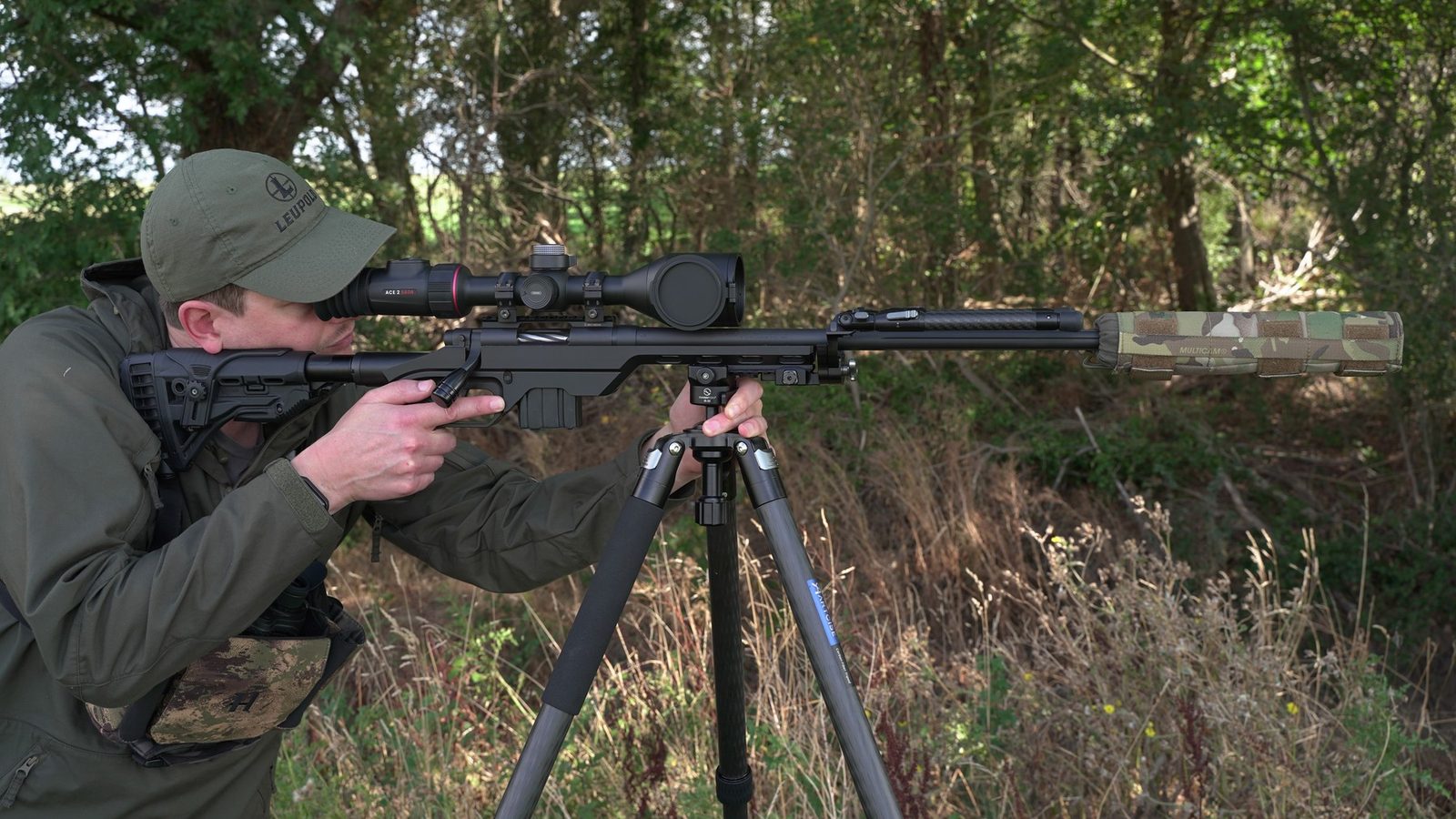
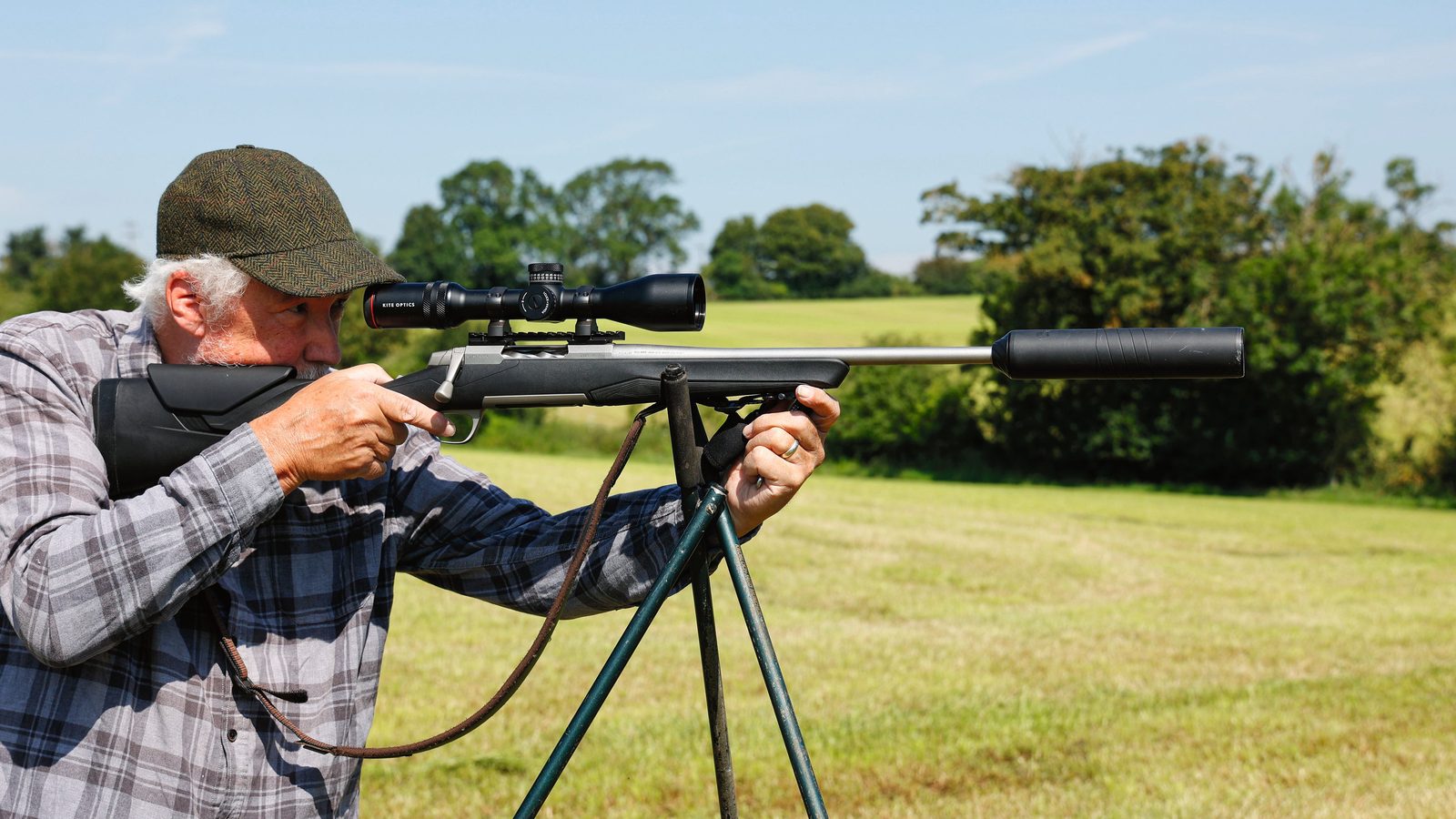
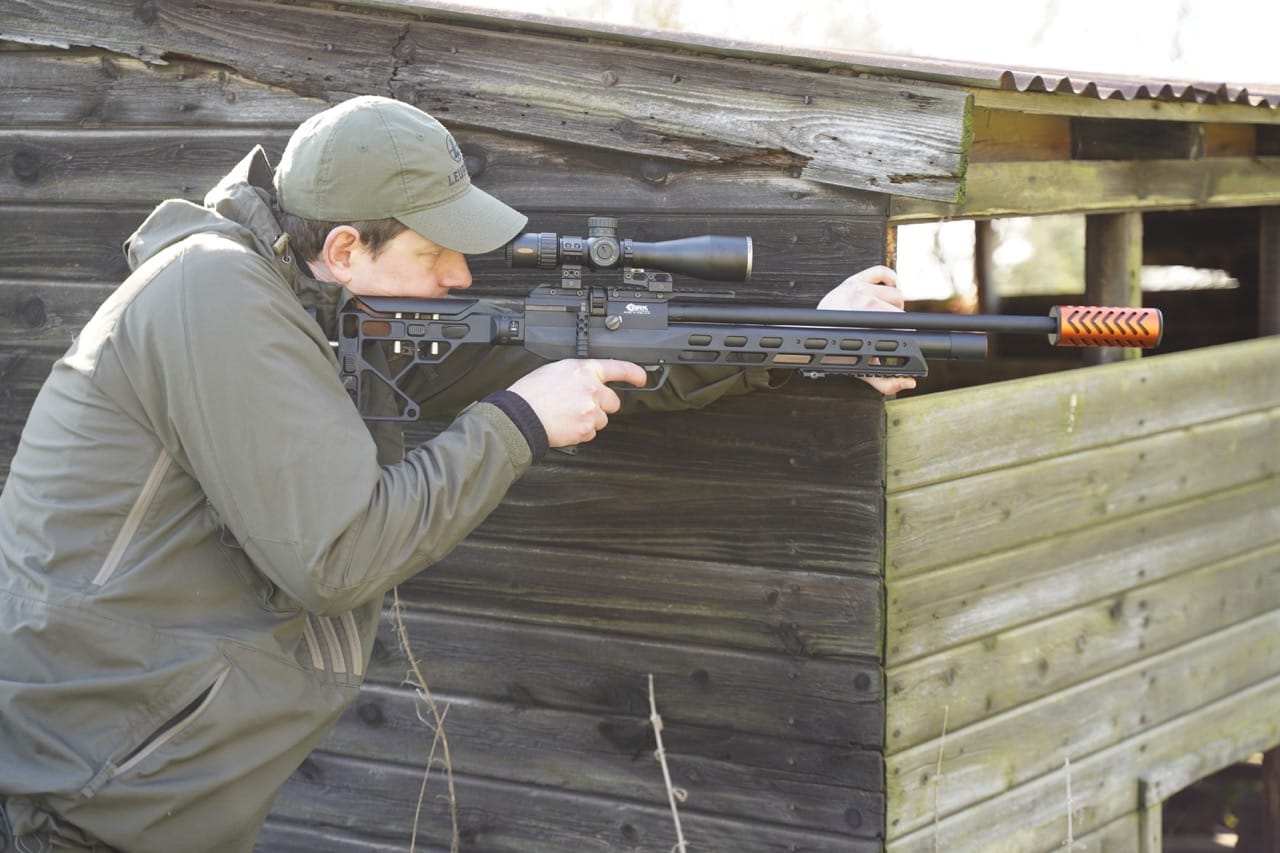
Previously, a sound moderator capable of being fitted to a firearm required a firearm certificate which had to be specifically authorised. The new legislation removes sound moderators and flash hiders from the legal definition of a firearm, thereby removing an unnecessary administrative burden on both certificate holders and police firearms licensing departments, while maintaining the existing controls over the possession of firearms themselves. For existing certificate holders, there is nothing that needs to be done. If your firearm certificate already includes authority for one or more sound moderators, those entries will remain until your next renewal. At renewal, police forces will cease recording moderators as separate authorities, and the existing entries will naturally fall away without any action being required on your part. It will also benefit RFDs by removing the need to keep a record of transactions. To ensure Section 1 moderators are held lawfully only by those with a legitimate purpose and who have been subject to full suitability checks to possess a firearm. Subsection 44(2) adds a new section 2A to the Firearms Act 1968 creates a summary only offence of possessing a relevant accessory without having a valid firearm certificate. As with primers and powders, RFDs therefore must ensure the buyer has a valid FAC prior to the sale taking place.

Moderators for air weapons and shotguns can already be held without the need for a certificate and that will continue to be the case. These measures extend and apply to England and Wales and Scotland.

The GTA, working with the British Shooting Sports Council, has consistently argued that sound moderators are vital safety devices and should not be subject to legislative control, making this a small but nonetheless positive step forward.

Paul Green Technical Director

Other News Posts

Three brands, one pallet: how The Fiocchi Group UK is backing the trade at 150

Back to blog

Direct supply, flexible order sizes and home-grown manufacturing – the Italian ammunition house marks its anniversary with a pitch aimed squarely at the British retailer.For the British gun trade, the most interesting thing about Fiocchi’s 150th anniversary is not the heritage but the commercial model sitting behind it. While the wider business celebrates a century and a half since its founding in Lecco in 1876, the UK operation is making a pointed case to retailers: that a manufacturer making its own ammunition on British soil, and selling it direct, is built for the way gun shops actually trade.

The starting point is supply. Fiocchi established a UK company in 2007, on the judgement that the British market was loyal and strong enough to warrant a local presence rather than remote servicing from Italy. That presence became a manufacturing platform in 2022, when the group acquired Lyalvale Express, the long-established cartridge maker based in Staffordshire, giving Fiocchi a purpose-built shotshell factory in this country. The logic, as chief executive James Rose puts it in an exclusive interview, is the trade’s own rhythm: “Nobody orders stuff six months in advance. They order on a Monday and want it on Tuesday, or they need it for the weekend.” A domestic factory shortens that chain.

The pallet problem, solved

Where the UK pitch sharpens is in how Fiocchi sells. It supplies retailers direct, with no distributor in between, and it carries three brands under one roof – Fiocchi itself, Lyalvale Express, and the premium Italian house Baschieri & Pellagri, whose UK production was added this year. That combination produces what is, for a retailer, an unusually flexible proposition.

“The beauty of it compared to our competitors is that we can have three brands on one pallet,” James explains. A shop does not have to commit to a full pallet of any single line to get it on the shelf. “If they want to try the really expensive Baschieri & Pellagri brand, they don’t have to have a pallet. They can just have one box and test it’s demand.” For a sector where cash flow and shelf space are perennial constraints, the ability to mix small quantities across three price tiers – from everyday to super-premium – is a genuine stock-control advantage. The retailer can tailor an order to what local customers actually want, rather than to a manufacturer’s minimum.

That model also speaks to margin. Because Fiocchi manufactures its own components from raw material to finished round, it is not paying a mark-up to a third party for the parts that go into its ammunition. James is careful about how he frames the pricing: the ammunition is not cheap, he says, “it’s just that we don’t have a middleman.” For the trade, the relevant point is that the savings come from vertical integration and domestic manufacturing rather than from corners cut, and that a UK-made product avoids the freight costs loaded onto ammunition shipped in from abroad.

For the retailer, the practical upshot of the three-brand, direct model is better control of cash flow and stock. A shop can tailor each order to what its customers are actually asking for, test a super-premium line with a single box rather than a pallet, and keep its capital working across a spread of price points instead of tied up in one. James frames it as the company doing the heavy lifting on flexibility so the retailer does not have to carry the risk: “It helps the retail premises with their cash flow and stock control, because you can tailor what they’re ordering depending on what their customers are desiring.” In a trade where shelf space and working capital are the constant pressures, that is a more compelling pitch than price alone.

There is a resilience argument here too. Ammunition supply has been volatile in recent years, and a retailer dealing with a manufacturer that makes the product in this country – rather than waiting on containers from abroad – has a shorter, more predictable line to restock. Because Fiocchi controls its components from raw material to finished round, it is less exposed to the component shortages that can leave import-dependent rivals waiting, and it can turn a UK order around without the lead times and freight costs that come with shipping ammunition across an ocean. For a shop trying to keep the right cartridges on the shelf through a busy season, that predictability is worth as much as a keen price.

Planning for the transition

For retailers the move away from lead is as much a stock-planning question as a regulatory one, and the timetable is well enough known by now that it needs no rehearsing here. What is useful is how Fiocchi is positioning its own supply around it. Rather than launch a commemorative anniversary product, the company has been streamlining its SKUs in preparation for the steel transition, concentrating on core sellers and customers’ favourites. It has also, by its own account, spent the past two or three years putting non-toxic loads into shooters’ hands to build confidence. The advice implicit in that strategy is one a retailer can pass on: customers planning to move away from lead should not leave their ordering to the last minute, and shops should expect a widening stream of new non-toxic lines as demand builds.

A boxed case of Fiocchi FBlack 12-gauge British Traditional Line cartridges, 28g 7.5 shot, being lifted off a factory line.
A shooter loading Fiocchi FBlack plastic-wad cartridges into the barrels of an engraved over-and-under shotgun.

A rifle opportunity for the counter

The trade should also note where Fiocchi intends to grow. James is candid that the company has under-promoted its metallic ammunition in the UK and means to change that, with an emphasis on non-toxic loads for the larger calibres most affected by the move away from lead. The same direct, flexible model applies: small order sizes, no pallet commitment, and reloading components available for handloading customers. For a shop that cannot justify deep stock in every rifle calibre, the ability to bring in a box or two on demand is the part worth flagging to a metallic-minded clientele. It is also a way to open a new revenue line without tying up cash: a single box of a non-toxic calibre on the shelf tests demand at minimal risk, and stocking reloading components gives handloading customers a reason to keep coming back.

Feedback as strategy

Underpinning all of this is a company that has gone out of its way to stay close to the end user, which ultimately serves the retailer too. Fiocchi UK exhibits at the British Shooting Show even though it sells through retailers rather than to the public there, treating the cost as the price of direct feedback, and has gone as far as bringing its own production staff to meet shooters. A manufacturer that listens that closely to the people pulling the trigger tends to make stock that moves – which, for the trade, is the whole point.

It is worth the trade noting, too, that the company sees the show circuit as a long-term investment in the British market rather than a sales channel, and that its broader 150th-anniversary programme has deliberately included suppliers and competitors alongside customers, on the view that the sector is one closely connected industry. For a retailer weighing which supplier relationships to deepen, a manufacturer that is visibly committed to the UK, manufactures here, sells direct and is investing in the post-lead range is a reasonable bet. At 150, Fiocchi’s message to the British retailer is less about the past than about being an easy, responsive company to do business with – one that has built its model around the realities of running a gun shop rather than around its own convenience.

fiocchi.com/en/homepage-uk

Other News Posts

Sound moderator deregulation comes into force

Back to blog

The Crime and Policing Act 2026 has now come into force, introducing a significant and welcome change to the law concerning sound moderators. However, the GTA has intentionally delayed its initial announcement, as further guidance from the Home Office had been promised. At the time of writing, this guidance has yet to be issued.

Previously, a sound moderator capable of being fitted to a firearm required a firearm certificate which had to be specifically authorised. The new legislation removes sound moderators and flash hiders from the legal definition of a firearm, thereby removing an unnecessary administrative burden on both certificate holders and police firearms licensing departments, while maintaining the existing controls over the possession of firearms themselves.

For existing certificate holders, there is nothing that needs to be done. If your firearm certificate already includes authority for one or more sound moderators, those entries will remain until your next renewal. At renewal, police forces will cease recording moderators as separate authorities, and the existing entries will naturally fall away without any action being required on your part. It will also benefit RFDs by removing the need to keep a record of transactions. 

To ensure Section 1 moderators are held lawfully only by those with a legitimate purpose and who have been subject to full suitability checks to possess a firearm.  Subsection 44(2) adds a new section 2A to the Firearms Act 1968 creates a summary only offence of possessing a relevant accessory without having a valid firearm certificate. As with primers and powders, RFDs therefore must ensure the buyer has a valid FAC prior to the sale taking place.

Moderators for air weapons and shotguns can already be held without the need for a certificate and that will continue to be the case.

These measures extend and apply to England and Wales and Scotland.

The GTA, working with the British Shooting Sports Council, has consistently argued that sound moderators are vital safety devices and should not be subject to legislative control, making this a small but nonetheless positive step forward.

Other News Posts