The Great British Shooting Awards, the trade-only ceremony at the British Shooting Show, will be hosted in 2027 by Mike Tindall, James Haskell and Alex Payne, the trio behind the podcast The Good, The Bad and The Rugby, the show has announced. The same three take over the show’s main stage on the afternoon of Friday 12 February 2027, the opening day, which gives exhibitors a known draw to plan their Friday footfall around.
What has the show announced?
The three will host the main stage at the NEC Birmingham on the Friday afternoon, welcoming guests for chat show-style interviews, with well-known names from television and the shooting world set to join them. They will also host the Great British Shooting Awards, bringing the same mix of humour and shooting know-how to the ceremony, which the announcement says is open to trade only.
“It’s also a privilege to be hosting the Great British Shooting Awards and celebrating the trade that keeps this sport going,” Mike Tindall said in the announcement, after saying of the main stage: “We all love our shooting, so getting the chance to host the main stage at the British Shooting Show is a real treat. We’ve got some great guests lined up and, no doubt, James will talk far too much, but that’s what people come for.”
Simon K. Barr of Time Well Spent Group, which owns the show, said: “Mike, James and Alex are a perfect fit for the British Shooting Show. They are brilliant entertainers, but they are also genuine shooters, and that comes across every time they talk about the sport. Their Friday afternoon session is set to be one of the highlights of the show.”
What does it mean for exhibitors?
Two things, both about the Friday. The first is footfall: the show is telling visitors to plan their day around the session and to arrive at the main stage early to secure a good spot, which concentrates the trade day’s crowd around one stage for the afternoon. Stands within sight of it gain; stands elsewhere may find the aisles quieter until the session ends, and can plan demonstrations and appointments accordingly. The second is the awards themselves. In 2026 the Great British Shooting Awards were presented on the Friday of the show, 13 February, across 24 categories decided by a record public vote, with winners presented on their stands; the product categories ran from Airgun, Clay Shotgun and Game Shotgun of the Year through both cartridge categories to Rifle, Riflescope, Thermal Scope, Thermal Handheld, Thermal Attachment and Night Vision Optic of the Year, plus Innovative Product and Footwear and Apparel of the Year. A shortlisted product now has a celebrity presentation to build a stand story around.
Where does the show sit in the trade calendar?
The British Shooting Show runs from 12 – 14 February 2027 at the NEC Birmingham, in the weeks after the game season closes, as the retail year turns to the spring. Gun Trade Insider’s recent conversations with GMK and Edgar Brothers about the show set out how the distributors approach February; the Friday now carries a fixed afternoon fixture that the trade audience, as much as the public, will build the day around.
What happens next
Tickets are available at britishshootingshow.com. The guest list for the Friday afternoon session and the awards shortlist have not yet been published.
Who is hosting the Great British Shooting Awards 2027?
Mike Tindall, James Haskell and Alex Payne of The Good, The Bad and The Rugby, according to the British Shooting Show. The awards are open to trade only.
When is the main stage session at the British Shooting Show 2027?
On the afternoon of Friday 12 February 2027, the opening day of the show at the NEC Birmingham. The show is advising visitors to arrive early.
How many categories did the 2026 awards carry?
Twenty-four, decided by a record public vote and presented on the Friday of the 2026 show, 13 February, with winners presented on their stands.
In early September, YouTube rewrote the rulebook for anyone who makes money from sponsored video. Its old “paid product placement” guidance has gone, replaced by a set of Branded Content Policies, and in the list of goods that may not be promoted at all, sandwiched between recreational drugs and hacking software, sits a line that every gunmaker, cartridge supplier, optics house, knife brand and airgun distributor should read twice. It says “weapons or ammunition”, and YouTube adds that the list is not complete.
What YouTube now counts as branded content
The definition is broad. Branded content is anything on the platform influenced by a brand partner in exchange for something of value, whether that is payment, a sponsorship or free product, now or later. It applies to videos, descriptions, comments, live streams and Shorts alike. Crucially, the policy covers the entirety of a piece of content, not just the part where the sponsorship appears. A 30-second ad read at the top of a 20-minute rifle review turns the whole review into branded content.
YouTube also requires branded content to comply with Google’s advertising policies, and those leave little room for doubt. Google’s guns policy prohibits ads for handguns, rifles, shotguns, hunting guns, airsoft and BB guns, and warns that it may err on the side of caution with sporting guns. It extends to any part or component that enhances a gun’s function, naming ammunition, silencers (moderators, to the trade), stocks, bipods, scopes and sights among its examples. Put together, that makes a sponsored video built around a new airgun, a thermal riflescope or a box of premium cartridges precisely what YouTube will not carry.
The disclosure trap
Here is the trap. UK creators must disclose commercial relationships: the ASA and CMA require it, and YouTube’s policy page points British creators to the ASA’s influencer guide. Tick the paid promotion box on a sponsored shotgun review and the video becomes prohibited branded content. Leave it unticked and YouTube says its systems may detect the relationship and apply the label anyway. Disclose and risk deletion, or stay quiet and let a classifier decide, with the same result if it judges the product to have been placed. There is no third option, and YouTube’s advice to anyone in doubt is not to post.
The penalties are spelled out: removal, age restriction, and a violation recorded against the channel, its Partner Program eligibility and its access to other features. For a micro influencer, that is the whole business. Their model rests on exactly the arrangement YouTube has now named: a brand sends guns and equipment, the creator films it, a commercial relationship grows. Most have no legal advice on tap, no diversified income and no contact inside YouTube to call when a video, or worse the channel, disappears. A single removal can undo years of audience-building, and it exposes an uncomfortable truth. The audience never belonged to the creator. It belonged to the platform.
A change of wording, or a change of direction?
The sky has not fallen. YouTube has reportedly told creators the rewrite is largely a change of terminology, everyday firearms content is still governed by its separate firearms policy, and whether a loaned test rifle counts as free product remains open. But the direction of travel is not in doubt. American gun control campaigners have spent a year arguing that sponsored influencer content is the loophole through which the industry sidesteps advertising bans, and in a product liability case against Smith & Wesson a subpoena served on a reviewer now defines an advertisement to include unpaid organic content. The loophole is being closed on purpose, and it will not stop at YouTube.
What brands should check this week
For the trade, the exposure is immediate. Brands that have moved budget into creator deals should audit every live agreement this week. A contract that requires YouTube deliverables featuring firearms, ammunition, optics or components may be asking a creator to breach platform policy, and when the video comes down the brand’s name comes down with it, possibly the creator’s channel too, along with the money. Ask four questions of every piece of paid content: what exactly are we paying for, where does it live, who controls whether it stays there, and do we own the film if it goes? If the answers are a video, YouTube, YouTube and no, the budget is standing in the doorway.
Gun Trade Insider is a Time Well Spent Group title, so a declaration of interest is due. TWS is a publisher with YouTube channels of its own, more than 500,000 subscribers between them, and it is not immune: any branded video it runs featuring a rifle, a shotgun or a scope falls under the same rules, and the group is reviewing its output accordingly.
Simon Barr, chief executive of TWS Group, said: “YouTube has been an outstanding platform for us and for the wider trade, through the many micro influencers and larger channels it carries, and we will keep publishing there and working within its guidelines for as long as it lets us. But this is a worrying development for the whole trade, and the lesson is not to abandon video, it is to stop building on ground you don’t control. Our websites and newsletters put us in front of hundreds of thousands of shooters every week with no moderation layer between us and them, and that is where partners should be putting their money.”
Build on land you own
The rest of the TWS portfolio sits on ground it owns. Shooting Times, Sporting Gun, Rifle Shooter, Gun Mart, Airgun World, Fieldsports Journal, Gundog Journal, Trout & Salmon, Gun Trade World and this title reach readers in print and online, ShootingUK and the group’s other websites carry product coverage that no platform policy team can switch off, its newsletters go direct to readers who asked for them, and the British Shooting Show at the NEC puts brands in front of buyers in person. A partner who advertises there knows the content will still be there next month, and when a title tests a gun or a scope on its merits, the review carries a credibility that paid content struggles to match. No classifier can flag it as branded.
None of this means video is finished. Audiences still want to watch guns being shot, scopes being tested and deer being stalked, and the best creators will adapt. But the lesson for the trade is an old one, relearned at short notice. Build on land you own, work with partners whose channels answer to editorial standards rather than an algorithm, and treat any platform you do not control as borrowed space, as the trade found with Facebook. YouTube has just reminded everyone who holds the lease.
Frequently asked questions
Has YouTube banned all gun and shooting videos?
No. The new Branded Content Policies bar branded content featuring weapons or ammunition. Everyday firearms content is still governed by YouTube’s separate firearms policy.
What counts as branded content on YouTube?
Anything on the platform influenced by a brand partner in exchange for something of value, whether payment, a sponsorship or free product, now or later. It covers videos, descriptions, comments, live streams and Shorts, and it applies to the whole video, not just the ad read.
What should brands paying shooting creators do now?
Audit every live agreement. Ask what you are paying for, where it lives, who controls whether it stays there, and whether you own the film if it is taken down.
The executive order President Trump signed on 17 September, Reinvigorating America’s Hunting Heritage, gives the US Departments of the Interior, Agriculture, Commerce and War 180 days to propose changes to the rules restricting access to the land they manage, including a direction to “permit the use of traditional lead ammunition and tackle”. For the UK trade the consequence is commercial rather than legal: the two largest English-speaking shooting markets now point in opposite directions, and the makers and importers serving both will be carrying lead for one and non-lead for the other for years to come.
What the order does, and what it does not
The order was announced at a White House ceremony attended by executives from Beretta USA and senior figures from Ducks Unlimited and the Boone and Crockett Club, among others. It requires the Interior Department, within 90 days, to allow hunting of species not listed under the Endangered Species Act at the Castle Mountains National Monument in California and the Craters of the Moon National Monument in Idaho, and applies a presumption that federal land outside national parks is open to hunting unless a local closure is justified, with encouragement for predator management, prescribed fire and grazing.
On lead it names no rule to repeal. Field & Stream reported that federal rules already require non-toxic shot for waterfowl and that there is no blanket ban on lead bullets for big game on federal land, so the practical effect will depend on what the agencies propose by March 2027. American demand for lead bullets and lead shot for upland game is, in other words, secured rather than created.
The British dates the trade is stocking against
The REACH (Amendment) Regulations 2026, announced on 3 March and applying in England, Scotland and Wales, ban the use and sale of lead shot for live quarry shooting and for recreational clay shooting from 1 April 2029, with exemptions for elite athletes in Olympic and Paralympic disciplines. Lead bullets in calibres of 6.17mm and above are banned for live quarry from the same date, and their use for outdoor rifle target shooting is restricted from 1 April 2028 unless a range operates the required risk management measures. Airgun pellets are not affected and Northern Ireland is outside the regulations.
The sale ban is the trade’s date as much as the shooter’s. BASC’s guidance is that shooters cannot stock up and use lead cartridges after the deadline, because the restriction covers use as well as sale, which limits the run-down trade a dealer might otherwise plan for early 2029 and puts the emphasis on moving customers across to steel, bismuth and copper before then.
Why a lead-friendly America matters at the counter
Manufacturers that serve both markets will carry lead lines for American hunters through and beyond 2029, so lead production does not end when British demand does; the question for the UK trade is how allocation, pricing and range depth on non-lead lines develop as the transition here accelerates. The argument that lead is a settled question has just been reopened on the other side of the Atlantic, and the British customer will hear it; none of it moves the dates on this side, and the dealer’s job is to say so plainly.
What happens next
The US agencies have until mid-March 2027 to publish their proposals, and the monument hunting openings fall due in December. In Great Britain the outdoor range restriction on lead bullets starts on 1 April 2028 and the live quarry and clay ban on lead shot, with the ban on larger lead bullets, on 1 April 2029. BASC’s questions-and-answers page and the regulations as made are linked below.
Useful links
The White House – the executive order Reinvigorating America’s Hunting Heritage
BASC – the association’s questions and answers on the British lead restrictions
The use and sale of lead shot for live quarry shooting and recreational clay shooting is banned in England, Scotland and Wales from 1 April 2029 under the REACH (Amendment) Regulations 2026.
Are lead bullets covered by the UK restrictions?
Yes. Lead bullets of 6.17mm and above are banned for live quarry from 1 April 2029, and their use on outdoor rifle ranges is restricted from 1 April 2028 unless the range runs the required risk management measures.
Does the US order change British law?
No. It directs US federal land agencies to propose rule changes within 180 days; its effect on the UK trade is commercial, through the makers and importers that serve both markets.
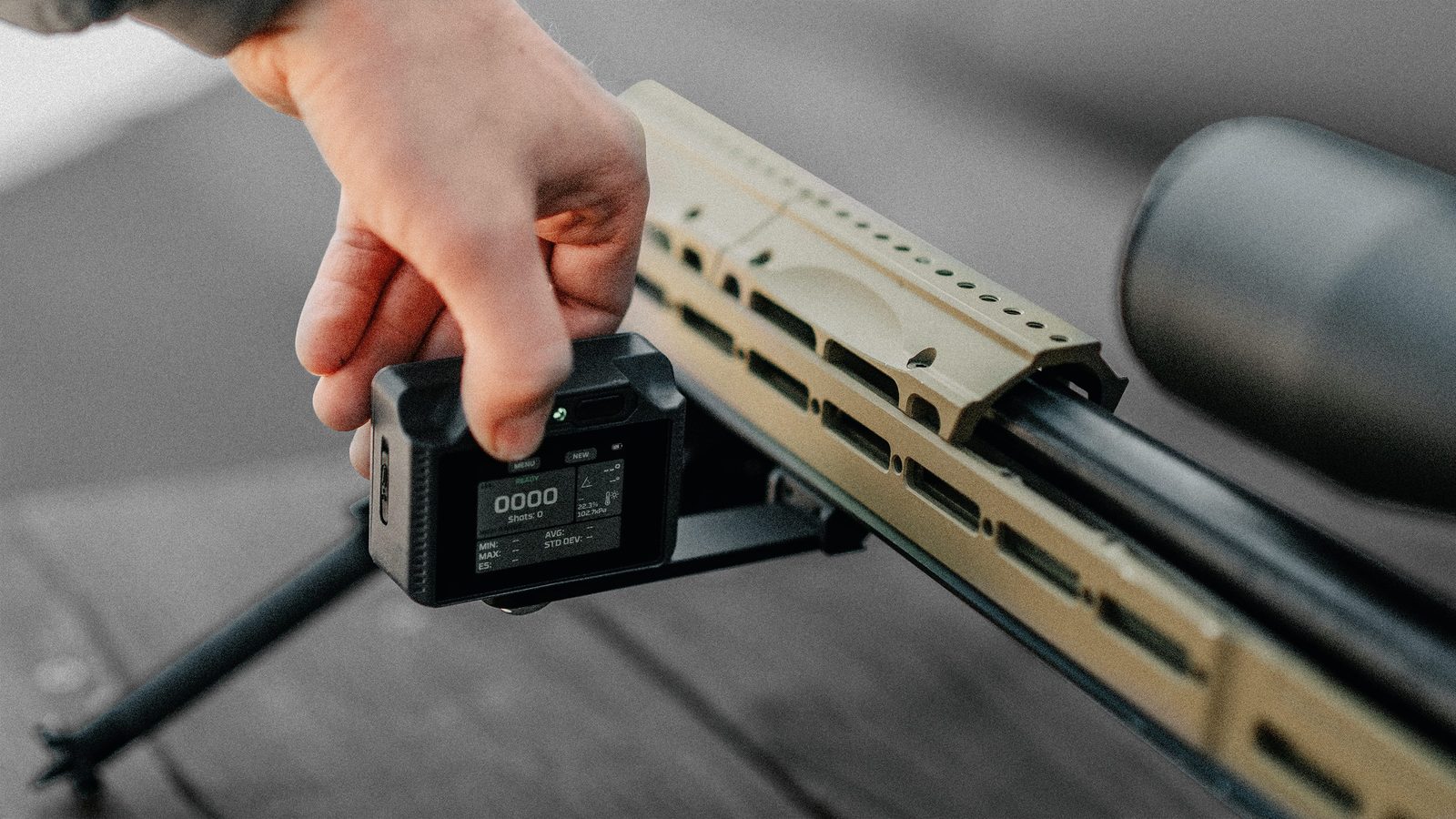
For many retailers, the FX Pocket Chronograph has become a proven add-on sale: compact, easy to stock and simple to recommend to customers looking for accurate velocity data without the size or complexity of a traditional chronograph.
The D1 combines radar-based velocity measurement with shot count, spread and average readings in a genuinely pocket-friendly package. Rated for air rifles and rimfire ammunition up to 1,250 fps, it has established itself as a standout accessory in the airgun market.
The original FX Pocket Chronograph has become a proven add-on sale for airgun retailers
Now FX has expanded the range with a bigger, more capable sibling – and one that could make a significant impact in the wider chronograph market.
What is the FX Pocket Chronograph Pro?
Designed for centrefire rifles and other applications involving ammunition travelling from 200 to 4,500 fps, the FX Pocket Chronograph Pro takes the compact radar chronograph concept into a new market.
For retailers, that means more than simply an upgraded version of the D1. The Pro opens the door to a broader customer base while retaining the characteristics that make the original such an attractive add-on sale: compact dimensions, extensive functionality and a premium product proposition.
Measuring just 75.5mm x 54mm x 30mm and carrying an RRP of £384.99, the Pro competes directly with the growing range of radar-based chronographs. Crucially, its pricing places it at least £200 below some direct competitors, giving retailers a compelling combination of specification and price positioning.
More than a chronograph
At its core, the Pro is an advanced ballistic chronograph, but velocity measurement is only part of the package.
The unit can also provide environmental information, cant and level data, while calculating ballistic coefficients for certain projectiles. Information is presented on a built-in, shooter-facing display, while Bluetooth connectivity allows the unit to communicate with a smartphone.
This connectivity significantly broadens the Pro’s potential. The FX Chronograph Pro uses an open platform, allowing users to connect with a range of compatible applications. FX currently highlights four apps on its website, ranging from straightforward data storage and shot-data recall through to field applications and ballistic calculators.
For retailers, this wider ecosystem gives the product a stronger proposition than a conventional velocity-measuring device.
Built for the clock: PRS mode
For the growing PRS market, the Pro offers another compelling layer of functionality.
In PRS mode, shooters have access to a built-in stage timer, split-time counter, level and cant indication, along with the all-important shot counter.
Combined with an eye-level Picatinny/Arca rail mounting solution, the Pro becomes a practical competition companion, helping shooters monitor time, position and shot consistency throughout a stage.
What comes in the box?
The Pro arrives as a complete package, with built-in environmental sensors, USB-C charging, a lightweight tripod and a padded travel bag.
For retailers, that complete package strengthens the product’s appeal as a premium accessory and provides a clear point of differentiation from more basic chronographs.
A bigger option: the FX True Ballistic Chronograph
For customers wanting a larger-format unit, the FX True Ballistic Chronograph remains a complementary option within the range. It offers many of the same core features, but adds a larger display, tactile controls and the ability to calculate ballistic coefficients at higher projectile speeds.
The larger FX True Ballistic Chronograph remains in the range, at £649.99
With the Pocket Chronograph Pro, FX has extended its chronograph offering well beyond the traditional airgun market. Its combination of broad application, compact design, extensive functionality and competitive pricing makes it a compelling addition to the retail shelf – and a potentially valuable cross-category sale.
FX chronograph prices
FX Pocket D1 Chronograph: RRP £199.99
FX Pocket Chronograph Pro: RRP £384.99
FX True Ballistic Chronograph: RRP £649.99
Frequently asked questions
How much is the FX Pocket Chronograph Pro?
The RRP is £384.99. The FX Pocket D1 Chronograph is £199.99 and the larger FX True Ballistic Chronograph £649.99.
What is the difference between the FX Pocket D1 and the Pocket Chronograph Pro?
The D1 is rated for air rifles and rimfire ammunition up to 1,250 fps. The Pro is designed for centrefire rifles and other ammunition from 200 to 4,500 fps, and adds environmental sensors, cant and level data, Bluetooth app connectivity and a PRS mode.
Who distributes FX chronographs to the UK trade?
SGC Group. Trade enquiries go to SGC on 01392 354870 or trade@sportsmanguncentre.com.
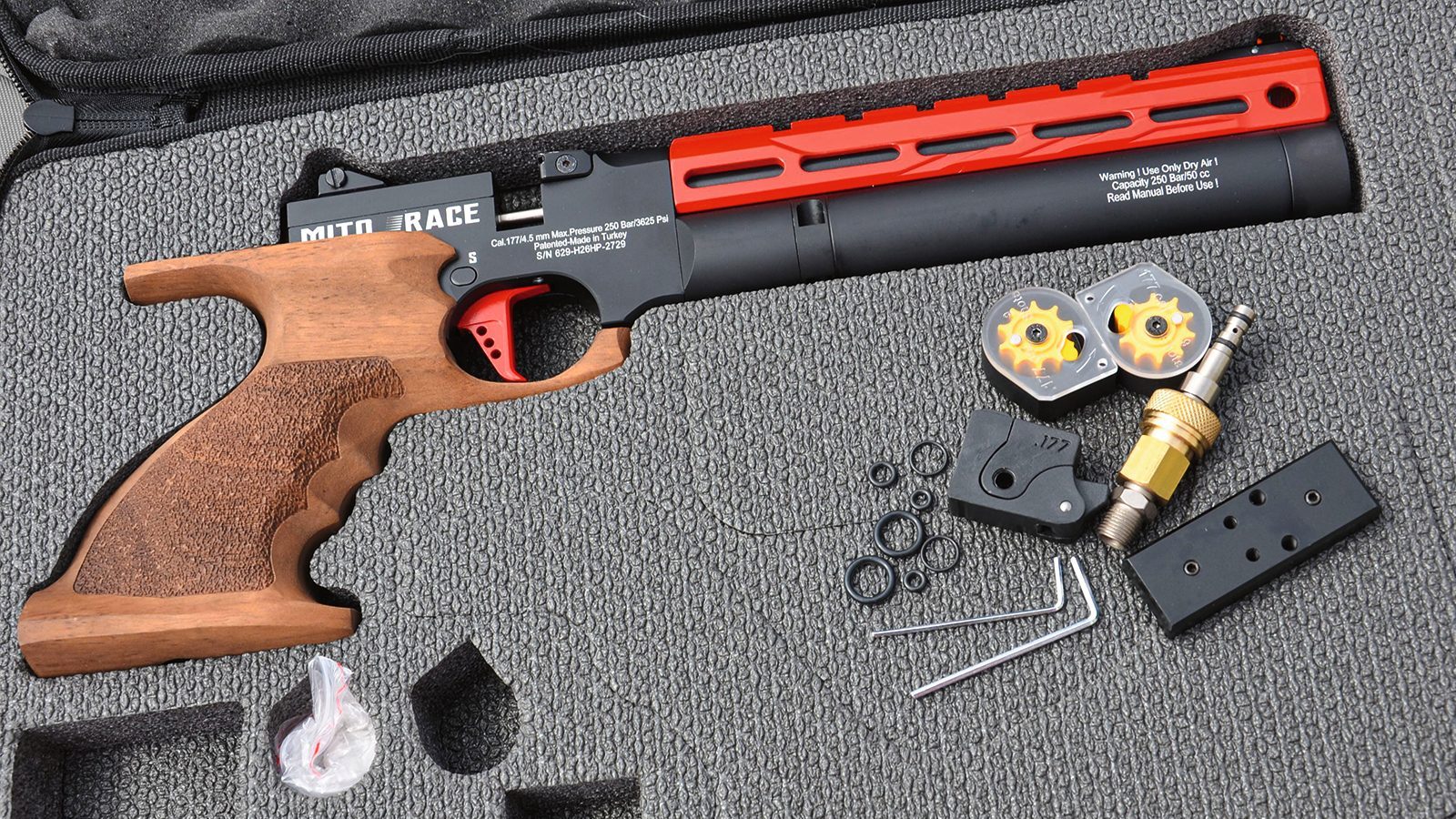
Charging the 50cc cylinder is made super easy, because Reximex utilises the probe stick. One end inserts into the gun’s inlet, just forward of the trigger, and the other snaps straight into a Foster connector. This means for anyone with the standard Foster airline fitting already in use, no other threads and components are needed. It’s the way to go, and well done Reximex!
Reximex specifies a maximum fill pressure of 250bar for this model, and it’s stamped on the action too, so I stuck to that for my test – insert the adaptor, fill, bleed and remove adaptor/airline. No dust cover is included for the valve, which is silly given how PCPs hate dirt, but a minor detail in the big scheme of things, and annoyingly a regular omission! A manometer is recessed into the front of the cylinder, and it’s nice and clear to read – green working zone and red danger zone – which is probably the most logical design. Let the needle drop to the lowest part of the green and you know it’s time for a refill.
Users can opt to utilise a single-shot tray or use the magazine, which is as it should be. I opted for the magazine for testing purposes, and the Reximex design certainly looks stylish with that yellow internal drum. These magazines are nine-shot in .177 (tested), and seven-shot in .22 calibre. Filling is pretty simple – just twist the cover anti-clockwise, then drop the first pellet into the first hole, twist and repeat until full. One mag on test was very tight to rotate but the other worked perfectly.
Sighting options: open sights, MOS plate and scope
The fibre-optic open sights fitted here are excellent, with the green dots of the rearsight combining perfectly with the red foresight element. The rearsight is adjustable for windage only, incidentally, via a small screwdriver, but with a super-long sight line afforded by the long body profile, the Mito Race is off to an impressive start.
A long sight line always helps
As mentioned earlier, this pistol comes supplied with an MOS plate, and for those unfamiliar with the term (that included me before this test), it stands for Modular Optics System. The small plate is designed to fix to the rail, and it can then accept various red-dot sights and the like. That’s attention to detail from Reximex for sure, and a measure of its thorough approach these days.
I’d already decided that this model deserved to be pushed, so I dug out my trusty 2x pistol scope, and since that only uses one ring mount, it easily bolted into place using the 11mm dovetail rails up top. OK, 2x magnification is super low, but it’s so user-friendly that it gives a good idea of any pistol’s potential.
Handling, side-lever and trigger
And so to the business end of this report. We referred to the new side-lever being larger on this version, and it works really well, being comfortable, easy and smooth to operate. With the lever withdrawn, a full magazine can be slid in using the guide groove from the right side. Incidentally, the same magazine that proved tight to fill was also an irritatingly snug fit in the breech. The other magazine, however, worked perfectly throughout; so if this were my gun, I would just get the other swapped out as a suspect item.
With the mag in position, close the lever, and we’re good to go for nine shots, just as fast as we can cycle the lever. That’s pretty fast and smooth since you asked, but of course, that’s hardly the point here. This pistol deserves methodical, deliberate aiming to make the most of the obvious potential on offer.
Anatomical grips are a huge benefit
The revised trigger looks the part, with that ventilated blade, and my test gun came perfectly set too – with just a small amount of movement on the first stage, then a little creep and a gentle release for the second stage. I favour a short first stage, so this worked well. That tasty Turkish walnut grip is technically ambidextrous, but despite being, in theory, all things to all people, the fact that a palm swell features on both sides and a shelf sits at the base means the hand is cosseted and supported perfectly. Handling, therefore, is hard to fault.
How does the Mito Race perform on test?
And so to those all-important performance figures. The Mito Race feels very crisp to shoot, and while it is fairly noisy, the air delivery feels quick and efficient, with no rasp to speak of.
From that 250bar fill, this regulated Mito Race recorded 117 shots, before residual pressure dropped to 80bar. I reckoned this must be near to the reg pressure, so called it a day. 5.5 ft/lb is pokey, given the air pistol power limit, and with a total spread of 40fps – not amazing consistency, I grant you – this is still a very usable tool. Like many regulated airguns, though, velocity started a bit lower and gently climbed before dropping, so charging to a slightly lower pressure is well worth experimentation and will increase consistency.
That said, accuracy was quite simply superb on test: a literal ragged hole at 10 yards was a great start, but over 20 yards, the hole only grew to a quarter inch, using quality Air Arms Diabolo Field ammo, admittedly. Basically, I can see why the Mito has been such a hit for Reximex, and with such a blisteringly accurate action, it’s a shame that the shoulder stock available with the synthetic-stocked versions doesn’t appear to be an option with the walnut. Looking closer, the synthetic grips have moulded recesses for the stock’s protrusions to snap into. Never mind – it’s a customisation project and many enthusiasts will consider it well worthwhile, I’m sure.
All neatly stowed in the case providedComprehensive – all this comes in the box
Strengths and weaknesses
Strengths
Probe-stick filling straight from a standard Foster airline
Clear, recessed manometer
Excellent fibre-optic open sights and a long sight line
MOS plate supplied for red-dot sights
Smooth, larger side-lever and a well-set trigger
Supportive Turkish walnut grip
117 shots from a fill and quarter-inch groups at 20 yards on test
Weaknesses
No dust cover for the fill valve
One of the two test magazines was tight to rotate and to load
Fairly noisy, with a 40fps spread from a full fill
The shoulder stock offered with the synthetic versions does not appear to be an option for the walnut model
Verdict on the Reximex Mito Race
As it stands, the Reximex Mito Race is a classy piece of kit. Smooth and easy to operate, and deadly effective. That shoulder stock omission apart, this new Mito Race is a pleasing evolution of a classy target pistol. No longer a cheap option, but operation and performance are hard to fault.
Frequently asked questions
Who distributes the Reximex Mito Race in the UK?
Reximex air pistols are distributed in the UK by Range Right.
How many shots does the Reximex Mito Race get from a fill?
On test, the regulated .177 pistol recorded 117 shots from a 250bar fill before pressure dropped to 80bar, at around 5.5ft/lb.
What magazine does the Mito Race use?
A rotary magazine holding nine pellets in .177 or seven in .22, loaded from the right-hand side with the side-lever withdrawn. A single-shot tray is also supplied.
Can you fit a shoulder stock to the walnut Mito Race?
The shoulder stock offered with the synthetic-gripped versions does not appear to be an option for the walnut model, because the synthetic grips carry the moulded recesses the stock clips into.
A shop floor has a limited amount of space, particularly in businesses that need room for secure gun displays, clothing, accessories, repair work and customer conversations.
Every area should therefore have a purpose. The way products are displayed can affect how easily customers find what they need, which items they compare and whether they notice useful additions to a purchase.
This does not require an expensive refit. Small, regular improvements to layout, displays and product grouping can make the shop easier to navigate and help staff begin more useful conversations.
Here are five practical ways to make every square foot count.
1. Group products around the customer’s task
Most customers do not think in terms of a retailer’s stock categories. They think about what they need to do.
Someone buying their first rifle may also need mounts, an optic, a sling, cleaning equipment and advice on a suitable case. A customer preparing for a day’s shooting may need cartridges, ear protection, glasses, clothing and other essentials.
Displaying related products together makes it easier for customers to see the complete purchase. It also gives staff a natural starting point for a conversation about what else may be required.
This does not mean placing every possible accessory next to every gun. Instead, identify the most common purchases made alongside key products and make those items easy to find.
A simple “new rifle set-up” or “day at the clay ground” display can be more effective than a wall of unrelated accessories. It helps customers consider what they need while also showing that the retailer understands how the product will be used.
2. Keep high-interest products visible and ready to handle
Products cannot sell effectively if customers do not notice them, or if a member of staff has to spend several minutes preparing them for demonstration.
The best locations should be used for products that are current, seasonal, commercially important or likely to prompt a conversation. These may include new lines, proven bestsellers, premium upgrades or items that work well alongside other purchases.
Display models should be clean, complete and ready to use. Optics need clear lenses, thermal units need charged batteries and guns should be presented safely and professionally. A neglected display can undermine confidence in the product and the business.
Review which products customers ask to see most often. If a line is repeatedly requested but difficult to locate, it may deserve more prominent positioning. Equally, a product that has occupied a prime display position for months without generating interest may need to be moved or replaced.
3. Use the counter for useful add-on sales
The counter is one of the most valuable areas in the shop because every purchasing customer will spend time there.
It should not become a dumping ground for paperwork, returns and miscellaneous stock. Instead, reserve a small, tidy area for lower-priced accessories that are useful, easy to understand and relevant to regular purchases.
Examples might include cleaning products, batteries, ear protection, gun socks, scope cloths, pellet tins or cartridge-related accessories. The right mix will depend on the shop’s customer base and principal categories.
The purpose is not to create pressure at the point of payment. It is to make useful products visible at the moment a customer is completing a purchase. A staff member can then ask a straightforward question: “Have you got what you need to look after that?” or “Would you like to add batteries for the thermal?”
Keep the selection disciplined. Too much choice or a cluttered counter makes the area less effective and can slow service during busy periods.
4. Refresh displays before they become invisible
Customers who visit regularly quickly stop noticing displays that never change.
A regular refresh does not have to involve replacing large amounts of stock. It can mean moving a product to a new position, creating a seasonal display, grouping a few related items together or using clear point-of-sale material to explain the benefits of a newer line.
Plan display changes around the retail calendar. Spring and summer may create opportunities to feature clay shooting, pest control, airgun and outdoor products, while the months before the game season can support different combinations of clothing, optics, guns and accessories.
Suppliers may be able to provide display material, product information or demonstration stock. Ask whether there are new-launch assets that can make a presentation more effective, particularly when investing in a significant range.
A fresh display gives existing customers a reason to look again and allows staff to introduce products they may otherwise overlook.
5. Measure what earns its space
Retailers do not need complicated systems to understand whether their display space is working.
Start by asking simple questions. Which products are customers picking up? Which displays generate conversations? Which items sell when placed together? Which areas are consistently ignored?
Staff feedback is valuable because they see how customers move through the shop and what questions they ask. Sales data can also reveal whether a change in positioning has improved the performance of a product or category.
Try one change at a time where possible. If a new counter display or product bundle performs well, keep it. If it does not, replace it with another idea. Small tests are more useful than assuming that a display is effective because it looks attractive.
What makes an effective shop floor?
An effective shop floor helps customers make decisions without making them feel sold to. It presents products clearly, makes related items easy to find and gives staff practical opportunities to offer relevant advice.
The strongest displays are not necessarily the largest or most elaborate. They are the ones that reflect how customers shop, support the business’s priorities and make each visit easier and more useful.
Frequently asked questions
Do I need a refit to improve my shop layout?
No. Small, regular improvements to layout, displays and product grouping can make a shop easier to navigate and help staff start more useful conversations, without an expensive refit.
What should go on the shop counter?
A small, tidy selection of lower-priced accessories that are useful and relevant to regular purchases, such as cleaning products, batteries, ear protection, gun socks, scope cloths, pellet tins or cartridge-related accessories. Keep it disciplined – a cluttered counter slows service.
How often should shop displays be changed?
Often enough that regular customers keep noticing them. Plan changes around the retail calendar – clay shooting, pest control and airgun products in spring and summer, and clothing, optics and guns in the months before the game season.
How can a retailer tell whether a display is working?
Watch which products customers pick up, which displays start conversations and which areas are ignored, ask staff what they see, and check sales data after a change. Test one change at a time and keep what performs.
The exercise, which closes on 1 November, will consider the positive and negative effects of rearing and releasing gamebirds, associated shooting and land-management activities. Ministers say it will examine impacts including biodiversity, protected sites and habitats, biosecurity and disease, animal welfare, natural-resource use and wider social effects.
No decisions have been taken on whether policy changes will follow. The government has said any future proposals would be subject to public consultation.
Why BASC says the sector must respond
The announcement follows continuing legal and policy scrutiny of gamebird release licensing. BASC has urged those involved in shooting and the rural economy to submit evidence.
Ian Bell, chief executive of BASC, said: “Our sector should be under no illusion that this announcement signals a fight for the future of shooting in this country.
“We already have the facts and figures that support the positive impacts of sustainable shooting. The government is well aware of those figures, because it often quotes them when talking about shooting.
“So, it is clear that our sector must work harder in the next two months to make sure our voice is heard louder than ever before.
“We must all do our part. The rural organisations will continue to do the work we are paid to do, but it should be obvious to all who love shooting that each and every one of us must step forward to protect our way of life. The government must be left in no doubt as to the value of shooting to rural communities and beyond.
“BASC will consider the full scope of the call for evidence in the coming days, and we will advise members and others of the steps we all need to take. But we must all be ready for a significant and lengthy fight. It should not be left to others.
“I will be asking every gamekeeper, every shoot, every beater and picker-up and every rural business to get their evidence in. The people who want to see shooting shut down will be mobilising right now – we must do better than them, voice for voice, fact for fact.”
What happens next?
BASC said it will publish practical guidance through its website and social-media channels to help people gather and submit evidence.
Frequently asked questions
When does the gamebird call for evidence close?
The government’s call for evidence on gamebird rearing, release and shooting in England runs for two months and closes on 1 November 2026.
What will the call for evidence look at?
It will consider the positive and negative effects of rearing and releasing gamebirds and of the associated shooting and land management, including biodiversity, protected sites and habitats, biosecurity and disease, animal welfare, natural-resource use and wider social effects.
Does the call for evidence mean the rules on gamebird shooting will change?
No decisions have been taken on whether policy changes will follow. The government has said any future proposals would be subject to public consultation.
Optics Warehouse has been a fixture of the trade since 2007. Why take the leap into selling airguns now?
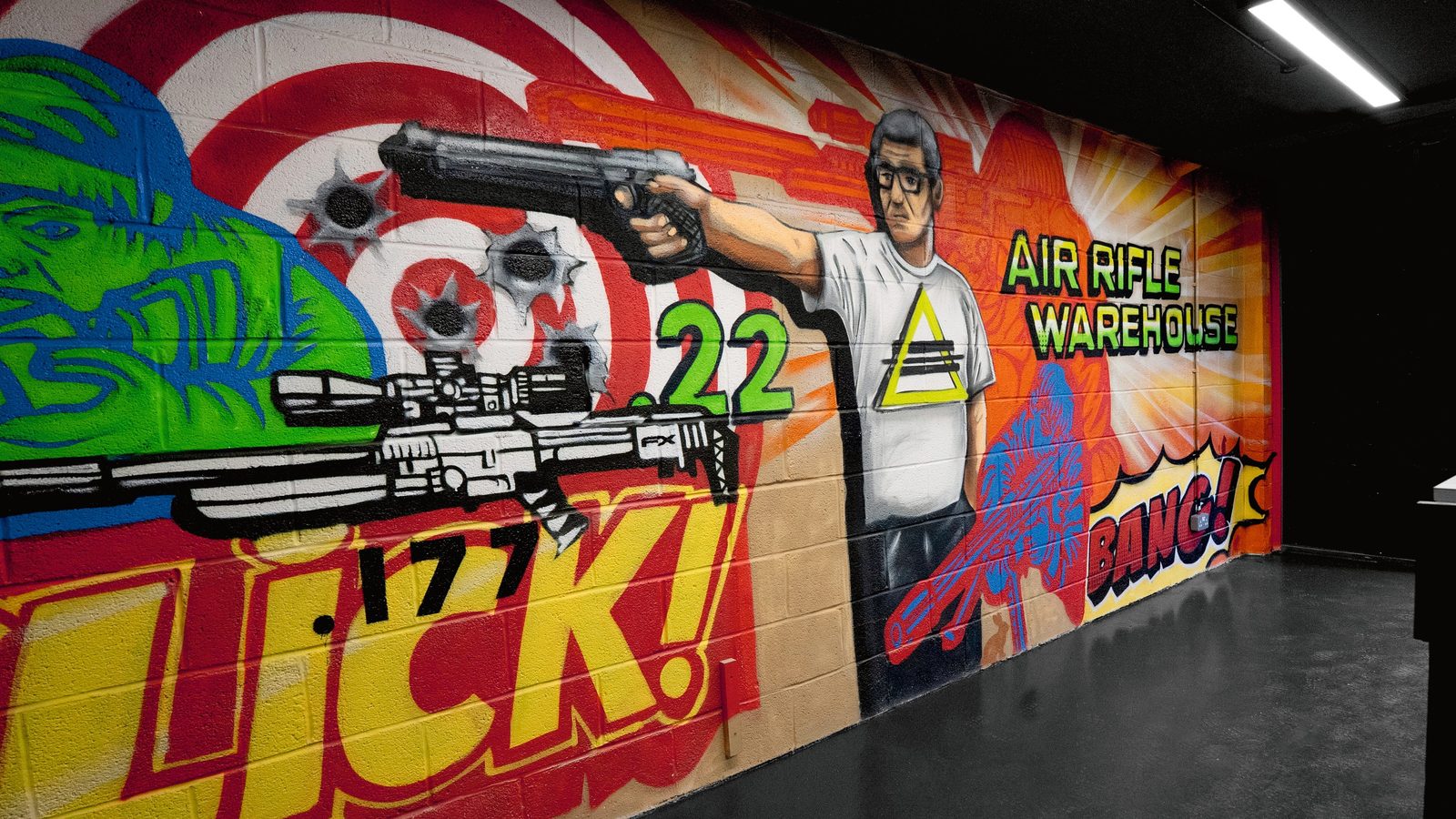
Lloyd Marshall: We’ve been wanting to launch Air Rifle Warehouse for some time – it’s been in the pipeline for the last 18 months to two years, but we’ve had other projects that kept skipping the queue. The premises we’re in, which we’ve occupied for two years now, has a basement, and when we moved in we simply never used it. So we’ve converted it into a dedicated airgun warehouse. We’ve built an armoury down there and installed a 20-metre range with a retail counter, so customers can handle the rifles and, if they decide to buy, we can set the gun up for them and zero it on the range before they leave.
An indoor range attached to the gun counter is quite a statement for a new venture. Is that the plan – service first?
LM: It’s not a unique selling point, because I know other retailers offer it, but it’s offering something that maybe some of the local shops around us don’t. We’re in Torquay, in Devon, and we’ve started off relatively small because we need to build the business. We didn’t expect to hit the ground running and be as big as we are with Optics Warehouse. But the foundations are all there for people to be looked after properly.
The 20-metre range lets customers try a rifle and have it zeroed before they take it home
Why does airgunning make sense as the first move into guns, rather than rimfire or centrefire?
LM: We’ve never shied away from guns, but we’ve always concentrated on what we know and what we’re well known in the trade for. We’ve deliberately kept away from rimfire and centrefire because of the licensing issues in this country – it’s just easier, and airguns are a better fit. A big proportion of our optics sales already goes into the air rifle market, so it made complete sense to follow that route into air rifles, CO2 rifles and pistols.
Which brands have made the cut for launch?
LM: We’ve got the main players – Weihrauch, Daystate, Brocock, BSA and FX – plus some Walther bits and pieces and Umarex CO2 pistols. You can probably see from the Air Rifle Warehouse website that our product range is fairly extensive for a new business, but it’s probably not as extensive as some of the competitors out there. That’s simply because we’re starting the ball rolling and getting things off the ground.
At the time of writing you’re collection only. Is that a deliberate choice?
LM: No, not out of choice at all. We’re waiting for our Royal Mail RFD account to be opened, which should be any time soon, from what we’re being told. Once that’s up and running we can offer RFD-to-RFD shipment across the country. In the meantime, for the local guys, we’re offering £30 cash back for anyone who collects.
What does the long-term vision look like for the site?
LM: We’ve only taken up part of the basement so far. When business allows, the plan is to open up the rest and put in a proper range – somewhere between 30 and 40 metres, with a few different lanes. We’ve also deliberately kept the entrance to Air Rifle Warehouse separate from the rest of the building. Because Optics Warehouse is predominantly internet-based, we don’t currently open at weekends, but with that separate entrance, when we get to the point where there’s plenty of footfall, we can open Air Rifle Warehouse on Saturdays and potentially Sundays as well.
Air Rifle Warehouse isn’t the only new string to the bow, is it? What else sits within the group these days?
LM: There’s always something going on – Shaun, our director, has his fingers in all sorts of pies. As well as Air Rifle Warehouse, we’ve recently launched our own clothing brand, MRAD, and we’ve got South West Optics, which serves the birding community with binoculars, spotting scopes and rangefinders, and another website called Tactical Scope.
The Optics Warehouse team in Torquay, where the basement is now Air Rifle Warehouse
MRAD sounds a long way from scopes and pellets. What’s the thinking there?
LM: The name is a nod to the shooting community, but Shaun has deliberately kept it far enough away from the shooting world that if somebody knows nothing about the sport, it’s still quite a cool brand to look at and wear.
How do you stop all those optics businesses treading on each other’s toes?
LM: We’re in a transition period. Tactical Scope is slowly becoming what the old-school Optics Warehouse used to be – the value end of the scope market, concentrating on the more affordable optics, because not everybody wants to spend £500-plus on a scope for their air rifle. That frees Optics Warehouse to concentrate on the premium brands we’re well known for, rather than the two competing with each other.
Optics Warehouse built its reputation on keen pricing. Has the positioning changed over the years?
LM: In the early days we were very price-led. That’s how JP and Shaun, the owners – father and son – started the business and got it to where it is now: buying sensibly in volume and passing the savings on to the customer. But we like to look at Optics Warehouse as more of a premium outlet these days. Years ago we’d take clearance stock to the shows with everything at £10 a go; now the shows are about taking products people actually want to buy, and about the service and advice that go with them.
And where do you fit into all of this at Optics Warehouse?
LM: I’m an assistant director – I muck in with anything and everything. The day-to-day running of the business is left to me and Tess Preston. We’re equals and work very closely together – Tess leads on the operations side, looking after the staff and keeping everything running, while I bring more of the shooting and product knowledge, so I lean towards the sales end of it. I’m a shooter myself too, though I’m more centrefire; I love my deer stalking. Customers come up to me at shows and say, “You’ve got the best job in the world – you can go out shooting whenever you want,” and then you tell them that by the weekend you can’t always be bothered, and they look at you a bit surprised.
NSSF-adjusted National Instant Criminal Background Check System (NICS) checks rose 8.5% year on year in July, according to the National Shooting Sports Foundation.
The adjusted figure reached 1,061,883, compared with 978,731 in July 2025. The unadjusted FBI NICS total was 2,057,967, up 6.3% from 1,936,621 a year earlier.
Virginia, Texas, Florida, California and Pennsylvania recorded the highest volumes of adjusted checks. Texas led FBI handgun checks, while Virginia recorded the most long-gun checks.
NSSF also reported 130,013 National Firearms Act checks covering Forms 1 and 4, a 108.8% increase on July 2025’s total of 62,271. Texas led NFA checks with 16,977, followed by Florida, Virginia, North Carolina and Georgia.
The association said the figures should not be treated as a direct measure of firearms sales, as a single check may cover different transaction types and may not correspond to one firearm sold. Its adjusted total removes permit checks and rechecks used by states for concealed-carry applications and permit databases.
Vesta Defense expands Canadian availability through Airgun Source
Vesta Defense has partnered with Airgun Source to expand the availability of its less-lethal products in Canada.
The agreement will see Airgun Source offer a selection of Vesta launchers, ammunition and accessories, providing the brand with a specialist retail channel as it continues to expand across North America.
Airgun Source will support customers with product knowledge and after-sales service. Vesta said the appointment reflected growing demand for reliable less-lethal products and its strategy of working with retailers that share its emphasis on quality, innovation and responsible ownership.
Mainland Europe
CZ to end production of three CZ 75 models
CZ will end production of the CZ 75 B, CZ 75 BD and CZ 75 Compact in 2026, bringing three long-running models in the CZ 75 family to a close.
The CZ 75 B is one of three long-running models CZ will stop making in 2026
The Czech manufacturer said the decision does not mark the end of the wider platform. The CZ 75 SP-01, CZ 75 SP-01 Tactical, CZ 75 P-01 and CZ 75 D PCR will remain in production.
“For generations, this platform has introduced shooters around the world to what CZ stands for: innovation, thoughtful engineering, and exceptional shooting characteristics,” said Chris Sprangers, director of marketing for CZ-USA.
The CZ 75 family has been central to the company’s identity for more than five decades. CZ said the three discontinued models had become established fixtures in its catalogue, valued for their balance, craftsmanship and proven design.
Down Under: Australia
SIFA condemns firearms buyback targeting licensed owners and dealers
The Shooting Industry Foundation of Australia (SIFA) has criticised the firearms buyback announced in New South Wales, arguing that it will affect licensed owners and dealers without addressing terrorism or the illegal firearms market.
The scheme applies to registered firearms affected by new ownership limits, reclassifications and citizenship requirements, as well as affected stock held by licensed dealers.
SIFA chief executive officer James Walsh said the government’s suggestion that the buyback would remove dangerous guns from the streets was misleading.
“These firearms aren’t on our streets. They are registered to licensed firearm owners, recorded by the NSW Firearms Registry and stored in locked safes,” Mr Walsh said.
Fixed payments range from $450 for an air rifle to $1,000 for a centrefire rifle or revolver. A separate process will apply to firearms valued above $3,000, but applicants will be required to pay a fee and compensation will be capped at $10,000.
Mr Walsh said the fixed payments failed to reflect the market value of many affected firearms.
“These fixed prices do not represent market value. Many affected firearms are worth substantially more than the amount being offered,” he said.
SIFA also criticised proposed support for dealers, which includes grants of up to $25,000 and $500 in licence-fee relief. Mr Walsh said businesses had purchased stock and invested in premises, employees and inventory under the rules applying at the time, and were now facing unsaleable stock, reduced turnover and falling business values.
“Across the NSW dealer network, businesses are already carrying millions of dollars in losses,” he said.
SIFA said it supported effective, evidence-based firearms regulation but maintained that the buyback would not improve public safety or address criminal access to illicit firearms.
Asia
Thailand suspends new gun permits after school shooting
Thailand has suspended the issue of new firearms permits following a school shooting in which a 14-year-old boy killed nine people before taking his own life.
The government said no new permits to buy or own guns would be issued until further notice. Existing purchase permits will not be renewed, although the effect on current firearm ownership permits remains unclear.
The measures follow the shooting at Debsirin Nonthaburi School, outside Bangkok. Authorities said the pupil first shot his grandparents with a handgun owned by his grandfather before opening fire on teachers and fellow students.
Thailand suspended permits to carry firearms in public in late 2023, requiring licensed owners to keep guns at home or use them only at shooting ranges.
Prime Minister Anutin Charnvirakul said the restrictions would remain while the government prepares tougher firearms legislation, including stronger controls and harsher penalties. Tighter ammunition controls, mental-health assessments and security screening at schools are also under consideration.
Thailand has one of South East Asia’s highest rates of civilian gun ownership, with an estimated 10.3 million firearms in private hands. The government is also considering measures to encourage owners of an estimated four million unlicensed guns to surrender them.
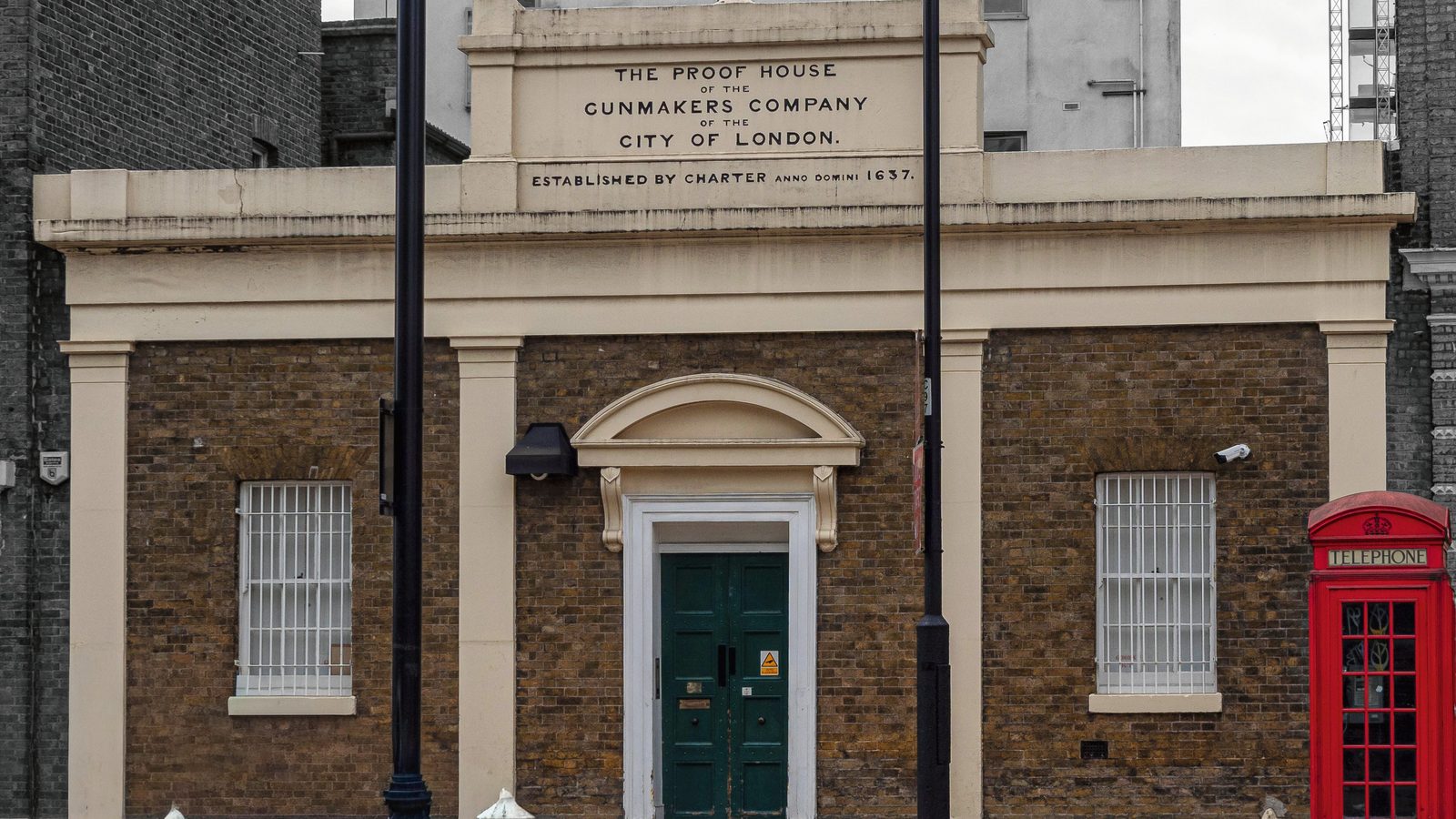
The London Proof House has launched a secure firearms storage service as part of a wider move to develop new revenue streams and introduce more certificate holders to the historic institution’s work.
While proofing and deactivation inspection remain the core of the Proof House’s business, David Miles, proof master, said the storage offer provides an opportunity to develop a business-to-consumer service alongside its established trade work.
The additional income, he said, could help fund investment in proofing facilities and equipment without increasing proof charges to the trade.
Who can use the storage service?
The service is based within a previously unused armoury at the Proof House’s Commercial Road premises in London. It is available to certificate holders, gunmakers and registered firearms dealers, although Miles said individual owners have so far accounted for most firearms placed in storage.
“We have offered our storage space to the trade, who are welcome to use it if they are running out of guns storage space themselves,” he said.
Storage for house moves, renewals and dealers short of space
The service responds to a range of practical circumstances. Customers have used, or enquired about using, storage while moving home, travelling abroad, going on holiday or awaiting certificate renewals. It also offers an option for people moving into rented accommodation where they cannot install their own cabinets, and for those who prefer not to keep firearms at home.
Dealers have also made enquiries when relocating premises, undertaking refurbishments or running short of capacity. Miles said the facility could be useful for businesses approaching the quantity or value limits of their insurance cover.
How does storing a firearm at the Proof House work?
For customers, the process is designed to be straightforward. They arrange a time with the Proof House to drop off or collect firearms, while new users sign a storage agreement. Firearms can also be shipped around the country with notice, including transfers to another RFD.
The Proof House can accommodate individual firearms and collections. Miles said it would not be practical to hold every firearm belonging to some of its largest trade proof customers, whose collections can run to tens of thousands of guns, but the facility offers substantial capacity for normal commercial and private requirements.
Security and a controlled climate in the armoury
Security is central to the service’s offer. The Proof House holds an RFD issued by the Metropolitan Police for the armoury and storage business, while its proofing and deactivation work is carried out under the Royal Charter and a Firearms Act exemption.
Miles said the armoury was located centrally within the building, in an area not accessible to regular visitors, adding another layer of security to the requirements applied to any RFD premises.
“The Armoury itself has all the security requirements of an RFD, but within the Proof House which itself has high security,” he said.
The firearms are stored in secure racks, rather than being crammed into a restricted space, and access to the armoury is limited to selected staff. Miles also highlighted the controlled environment as an important distinction for owners of valuable firearms and collections.
“We don’t just see security as an issue. The climate in the Armoury is also very important,” he said.
Temperature and humidity are monitored and controlled to prevent corrosion and mould, while the facility is protected from UV exposure and pests. Miles said the service was insured and confidential, with no access to the armoury for customers or other visitors.
Links with proofing and the trade
The Proof House’s existing role offers potential links with proofing, repair and onward transfer, although Miles said the two customer bases have largely remained separate so far. Most proofing work comes from the trade, while most storage customers are members of the public.
However, dealers have already asked about holding stock firearms or work in progress when they have run out of space, while repair work for storage customers can be outsourced to the trade. The Proof House keeps storage physically separate from proofing activities.
For those unable to collect firearms in person, the Proof House can use Parcelforce to send them to a local RFD or to an RFD close to a customer’s shooting location. Local collection and delivery can also be arranged in some cases, although Miles said the business was careful not to compete directly with specialist London storage providers.
The launch also provides an opportunity to explain proofing to a wider audience. Miles said new storage customers often ask about proof marks and whether their firearms remain in proof, helping to reduce the mystery surrounding the process.
With nearly 400 years of history, a central London location and established security arrangements, Miles believes the Proof House is well placed to provide the service.
“The Proof House is a trusted brand and secure building; we have been here for nearly 400 years and, God willing, we will be here for 400 years more to come,” he said.
Frequently asked questions
Where is the London Proof House firearms storage service?
It is in a previously unused armoury at the London Proof House on Commercial Road, London, held under an RFD issued by the Metropolitan Police.
Can a dealer use the Proof House to store stock?
Yes. The service is open to registered firearms dealers and gunmakers as well as certificate holders, and dealers have already asked about holding stock firearms or work in progress when they run short of space, are relocating or refurbishing, or are nearing the limits of their insurance cover.
Can firearms in Proof House storage be sent to another RFD?
Yes. With notice, firearms can be shipped around the country, including by Parcelforce to a local RFD or one close to the owner’s shooting location.
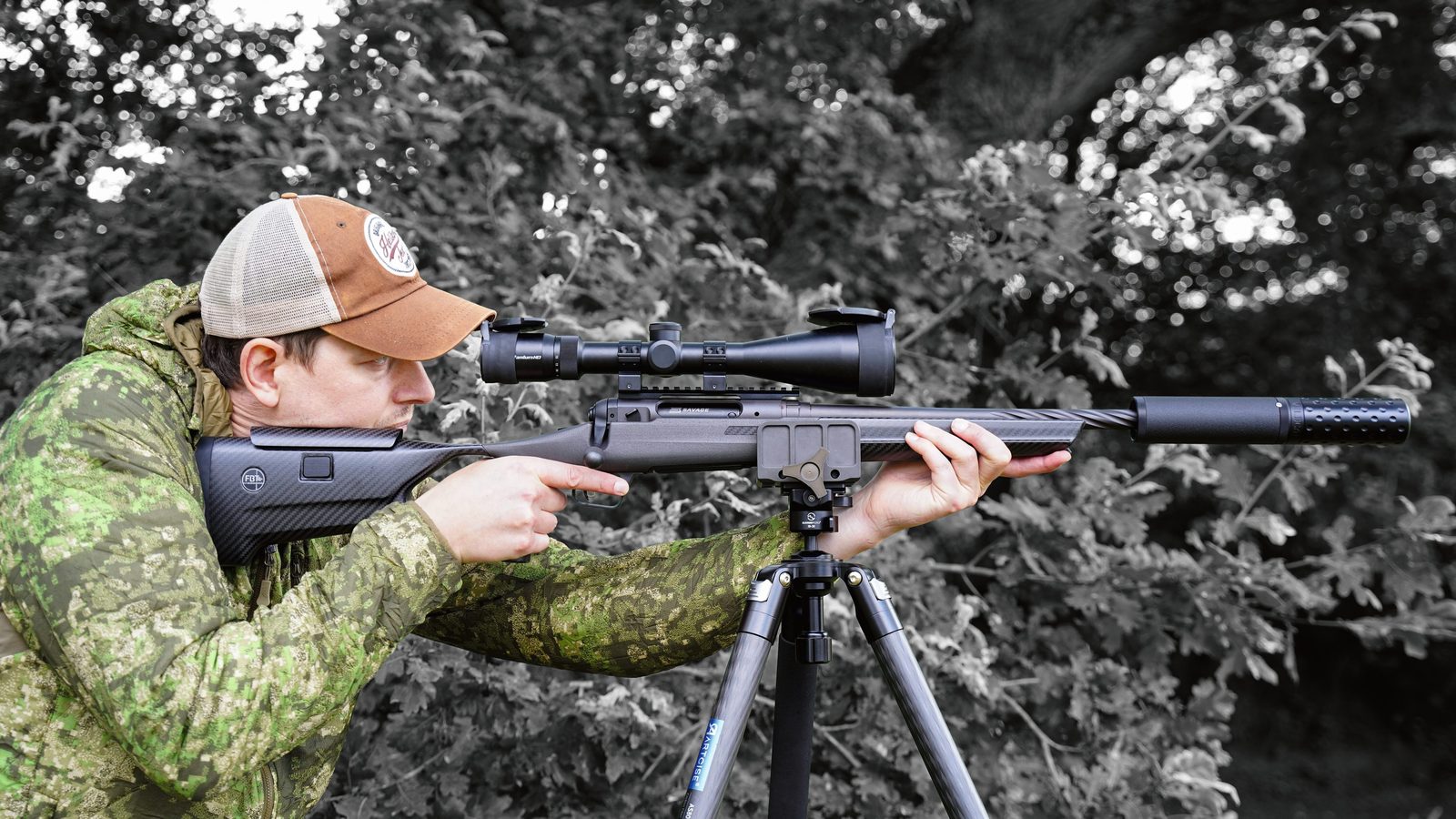
Viking Arms distributes Savage rifles in the UK, and I thought it a good idea to focus on a different stablemate: the 110 FBT Hunter. At a suggested retail price of £2,210, it is still a significant investment, but it brings Savage’s lightweight ambitions within much closer reach.
The Savage 110 platform has spent decades building a reputation for out-of-the-box accuracy and reliability. So, if you are in the market for a lightweight hunting rifle and fancy something a little different, let’s get stuck in.
The Klym’s headline feature was its featherweight build, tipping the scales at just 6.2lb (2.8kg). This was primarily down to two premium components: a Proof Research carbon-fibre-wrapped barrel and a carbon-fibre stock.
As the name suggests, the 110 FBT retains that high-end stock but swaps the carbon barrel for a conventional factory steel alternative. It is this sensible substitution that accounts for the welcome drop in price, making the rifle more accessible.
So, how much does the rifle’s weight increase with the steel barrel? Not much, actually. This rifle weighs 6.6lb (2.9kg), around 0.4lb more than the Klym. This has been achieved by reducing the barrel length from 22in to 18in and including spiral fluting to shave off a few more grams.
Naturally, a shorter barrel means a slight drop in muzzle velocity, but the review rifle was chambered in .308 Win, a calibre that is perfectly happy in a shorter tube. The Savage barrel is fully free-floated back to the reinforce and has a heavy sporter/semi-weight profile, with a 19mm muzzle diameter. It comes with a thread protector on a 5/8×24 thread, leaving the owner well placed to fit a suitable sound moderator.
The 18in spiral-fluted steel barrel, threaded 5/8×24
The reduced barrel length makes the rifle light, manoeuvrable and enjoyable to handle. Even when fitted with a scope, it avoids feeling top-heavy. However, it did become front-heavy once a sound moderator was fitted, highlighting just how light the stock is.
Action and floating bolt head
At the heart of the system is Savage’s signature floating bolt head. Rather than using a rigid, one-piece bolt design, the setup allows a small degree of self-aligning movement, ensuring both locking lugs square up for consistent lock-up.
The bolt uses a traditional 90-degree lift. Cycling is smooth, although closure is quite firm and induces a subtle twist of the rifle in the hands, meaning it does not feel quite as slick as some rivals at this price point. The rear shroud features a clear, tactile cocked-action indicator.
On the bolt face, the push-feed system uses twin plunger ejectors and a recessed extractor claw to throw spent cases clear with authority. The smooth bolt body features Savage branding when closed and is paired with a 55mm bolt handle with a rounded, lightly knurled 19mm knob.
In use, the handle runs quite close to the scope eyepiece, but it is long enough to provide a decent hold for efficient operation.
The receiver uses Savage’s long-established 110 action, constructed from carbon steel and featuring a gas-escape vent on either side. The metalwork has a hard-wearing matte-black finish. Rather than the skeletonised relief cuts found on some more expensive Savage models, the receiver retains a solid-walled profile.
A robust, one-piece Picatinny rail is fitted as standard. The ejection port is 80mm long and 16mm wide, making it easy enough to drop a loose round into the chamber for a quick follow-up shot.
Magazine, safety and AccuTrigger
Rather than a traditional hinged floorplate, Savage has equipped the rifle with a flush-fitting detachable box magazine, a feature likely to appeal to many shooters.
The hybrid polymer-and-metal magazine holds 4+1 rounds of .308 Win and is retained by an integral sprung button at the front. The release mechanism is somewhat exposed, however, leaving it potentially vulnerable to being tripped by branches or heavy foliage.
Instead of a receiver-mounted rocker safety, there is a bolt-release catch, while a three-position tang safety is operated easily with the thumb. Forward is ‘fire’, the middle position blocks the trigger and the rear position locks everything. However, it is easy to overrun the middle position.
Naturally, the rifle features Savage’s AccuTrigger, identified by the silver inner safety blade that gives it a pseudo-two-stage feel. The trigger is fully user-adjustable and, on the review rifle, the single-stage break was consistent and clean at 3lb 2oz.
I got on with it surprisingly well and became rather fond of it. Great job, Savage.
The carbon-fibre FBT stock
A significant proportion of the rifle’s cost can be attributed to the carbon-fibre FBT (Fine Ballistic Tools) stock. It has a generous thumbhole configuration and three-piece construction, comprising a carbon fore-end and butt section with a polymer centre.
At the rear is a 0.75in rubber recoil pad, providing a 14.5in length of pull. This is paired with a push-button adjustable cheekpiece, offering more than 1in of travel for correct scope alignment.
I did find a touch of play in the cheekpiece, but it is clear that FBT is walking the tightrope between ultimate light weight and rigidity.
The butt has a sling stud, bag-rider cut-out and a smooth vertical pistol grip with twin palm swells. These promote consistent hand and trigger-finger placement from a range of shooting positions.
The central polymer section has a textured surface and houses the polymer bottom metal, including a generous trigger guard and the magazine well. The carbon-fibre fore-end measures 16in from the trigger guard to its tip. The flush-fit magazine means all of this space can be used on shooting sticks.
While the angled sling stud at the fore-end tip cannot be used as a conventional bipod mount, the rifle has an integrated Magnaswitch system to accept a Spartan bipod or similar. On inspection, there was enough flex in the fore-end to cause intermittent contact with the free-floated barrel, although this did not cause any point-of-impact shift during testing.
A well-defined finger groove runs along each side, providing a decent leading-hand hold.
The Savage 110 FBT Hunter, fitted with a Delta Titanium scope and Wildcat Evo moderator for the test
How accurate is the Savage 110 FBT Hunter?
As this rifle is firmly aimed at the hunting market, I tested it with appropriate accessories: a Delta Titanium 2.5-15×56 riflescope and a Wildcat Evo sound moderator. Without a compatible bipod, I used a padded support.
My usual caveat when testing a lightweight rifle is that it can be difficult to shoot as well as a heavier counterpart. Less mass generally means greater felt recoil, exposing the shooter’s flaws. That’s me.
My aim was not to chase benchrest precision with match-grade ammunition, but to see whether the rifle could deliver sub-MOA performance with standard hunting ammunition. Happily, felt recoil was remarkably manageable, allowing me to get on with thorough testing without getting beaten up.
Accuracy with 150-grain Winchester Ballistic Silvertip ammunition was excellent. I fired three, three-shot groups, with an average group size of 0.609in at 100 yards. The ammunition recorded 2,760fps, an extreme spread of 24fps and 2,538ft/lb of energy.
The rifle did not like Hornady’s Precision Hunter 178-grain ELD-X, however, with each group measuring more than 2in. The figures were 2,493fps, an extreme spread of 17fps and 2,457ft/lb.
Keen to see how the Savage coped with non-lead ammunition, I tried 150-grain Hornady ECX. Again, the rifle performed very well, with an average group size of 0.660in. These rounds produced 2,770fps, an extreme spread of 11fps and 2,556ft/lb.
Strengths and weaknesses
Strengths
Only 0.4lb heavier than the carbon-barrelled Klym, at a lower price
Short, light and manoeuvrable, and not top-heavy with a scope
Sub-MOA groups with both lead and non-lead hunting ammunition
Felt recoil remarkably manageable for a light rifle
Clean, consistent AccuTrigger
Flush-fitting detachable magazine and threaded barrel
Weaknesses
Firm bolt closure twists the rifle slightly in the hands
Exposed magazine release could be tripped by foliage
Easy to overrun the middle safety position
A touch of play in the cheekpiece, and fore-end flex that made intermittent contact with the barrel
Front-heavy with a moderator fitted
Verdict
I will admit that, on first handling, the Savage 110 FBT Hunter does not feel quite as slick as several rivals at this price point. The firm bolt closure also induces a subtle twist in the hands during operation.
However, once on the range, the rifle proved a really good surprise. Its downrange performance delivered the confidence every stalker wants, printing sub-MOA groups with both traditional lead and modern non-lead ammunition.
The standout was that, for such a lightweight set-up, felt recoil was remarkably manageable. Paired with the crisp, intuitive AccuTrigger, it is a genuinely engaging rifle to shoot.
By opting for a short, fluted steel barrel rather than a carbon-wrapped tube, Savage has created a lightweight, highly manoeuvrable package that will appeal to carbon sceptics while bringing the price down. Any minor operational quirks are quickly forgiven when you see the group sizes.
Many thanks to Rose Hill Farm Rifle Range, Suffolk, for the use of its facilities for this review.
Frequently asked questions
How much is the Savage 110 FBT Hunter?
The suggested retail price is £2,210. It is distributed in the UK by Viking Arms.
How does the 110 FBT Hunter differ from the Savage Klym?
It keeps the Klym’s carbon-fibre FBT stock but replaces the Proof Research carbon-wrapped barrel with a shorter 18in spiral-fluted steel barrel. That brings the price down and adds only about 0.4lb, for a weight of 6.6lb (2.9kg).
Will the Savage 110 FBT Hunter shoot non-lead ammunition?
Yes. On test in .308 Win, 150-grain Hornady ECX averaged 0.660in groups at 100 yards, close to the 0.609in achieved with 150-grain Winchester Ballistic Silvertip.
Is the 110 FBT Hunter barrel threaded?
Yes. The free-floated barrel comes with a thread protector on a 5/8×24 thread, ready for a sound moderator.
Air Arms is currently the only airgun manufacturer represented on the GTA Council. What encouraged you to become involved, and why is it important for the airgun sector to have a voice at that level?
Claire West: I wanted to get involved because I felt it was important that the airgun sector had a direct voice within the GTA. Airguns are a significant part of the shooting industry, but we also face some unique challenges and it’s important those are understood when discussions are taking place.
If we are not in the room, we are relying on others to speak on our behalf. By being involved, I can help make sure the views of airgun manufacturers, distributors and retailers are represented and that the GTA has a good understanding of the issues that affect our sector.
What have you learnt about the GTA’s work since joining the Council, and how has your involvement changed your understanding of the challenges facing the wider gun trade?
CW: I’ve probably been most surprised by how much work goes on behind the scenes. The GTA spends a lot of time engaging with government, the police and many other organisations on behalf of the trade, often without most people realising it’s happening.
It has also made me realise that many of the challenges facing the wider gun trade have an impact on the airgun sector in one way or another. Whether it’s regulation, compliance, public perception or commercial pressures, we are all affected by many of the same issues.
Being involved has reinforced the importance of working together, sharing knowledge and presenting a united voice wherever possible. More than anything, it has shown me how important it is for all parts of the industry to be represented and engaged in the conversations that shape our future.
What prompted the formation of the GTA Airgun Focus Group, and what does the group hope to achieve for manufacturers, distributors and retailers?
CW: The Focus Group was created because we felt there was a need for airgun businesses and experts to come together and discuss the issues that specifically affect our sector more widely.
One of our biggest aims is preparation. We want to build a strong evidence base with reliable data, statistics and market information so that if legislation or regulation becomes a threat to the industry, we are not starting from scratch. We can respond quickly, with facts and evidence to support our position.
The group is also about improving communication across the sector and making sure the GTA has direct access to the experience and knowledge of businesses working in the airgun market every day.
Which regulatory, political and commercial issues affecting the airgun trade are currently receiving the greatest attention from the Focus Group?
CW: At the moment there isn’t one single issue dominating the agenda, which is actually why the work of the Focus Group is so important.
A key priority for us is making sure we’re prepared for any future regulatory or legislative developments that could affect the airgun sector. That means building a strong evidence base, gathering reliable market data and statistics, and ensuring we have access to accurate information when it’s needed.
Equally, it is important that we look at how we can improve understanding of the airgun sector among policymakers and other stakeholders, while keeping an eye on the commercial challenges facing manufacturers, distributors and retailers.
The main objective is to make sure we are prepared rather than reactive. If future legislation is proposed, we need robust data, market intelligence and evidence already available so we can respond quickly and effectively on behalf of the industry.
How can the GTA encourage more airgun businesses to become involved in its work and ensure that the Focus Group represents the different parts of the sector effectively?
CW: The best way is to show businesses that their involvement can make a difference. The more people who contribute, the better informed the GTA becomes and the stronger our voice will be.
It’s important that the Focus Group represents all parts of the sector, from manufacturers and importers through to distributors and retailers. Everyone sees different challenges and opportunities, and we need those different perspectives if we’re going to be effective.
What role should the GTA play in explaining the airgun trade to government, the police and other decision-makers, particularly when new legislation or regulation is being considered?
CW: I think the GTA has a vital role to play. It’s important that decision-makers understand how our industry operates and that any decisions are based on facts rather than assumptions.
The GTA can provide reliable information, evidence and industry expertise, helping government and regulators understand the likely impact of any proposed changes. Having those relationships in place before issues arise is incredibly important.
What tangible progress would you like the Airgun Focus Group and GTA Council to make over the coming year, and what message would you give to airgun businesses that are not currently involved?
CW: I’d like to see the Focus Group build a strong foundation of industry data and intelligence so that we are properly prepared for any future challenges and opportunities.
I would also like to see a broader understanding of the issues that matter most to airgun businesses, ensuring the sector has the evidence and insight needed to represent its interests effectively.
My message to businesses across the sector is simple: if you want the airgun trade to remain strong, protected and future-proofed, it is important to be part of the wider industry conversation. Becoming a member of the GTA is the first step. A strong and representative trade association depends on the support and engagement of the businesses it represents, and the more united we are, the stronger our collective voice will be when addressing challenges, influencing decision-makers and promoting the interests of the airgun trade. The more businesses that get involved, the better equipped we will be to safeguard the sector for years to come.
For a distributor carrying 21 Beretta Holding brands and a further seven from outside the group, the annual question is never whether to exhibit at the British Shooting Show. It is how much of the portfolio can reasonably be squeezed into the space available.
“We could probably take up half the hall with all the different brands that we do,” says Ali, who describes the breadth of the range as the business’s happiest problem when it comes to show planning. GMK has exhibited at the show from the beginning, and the reasoning has not shifted in the years since.
“The British Shooting Show has always been a key date,” he says. “Being in February, it kickstarts the year and gives us an amazing platform to engage with both consumers and dealers.”
That timing is doing more work than it first appears. February sits at the head of the year rather than the tail, so a product launched at the BSS has the rest of the season to build momentum, and a dealer conversation in the aisles has 11 months to convert. For a distributor whose brands span shotguns, rifles, ammunition, optics and clothing and accessories the show is the single fixed point around which the marketing calendar is arranged.
Two shows under one roof
Part of what makes that fixed point work is that the British Shooting Show is two shows in one. It is unusual in serving trade and consumer under a single roof, and GMK approaches it from both directions at once, launching to dealers while also taking the temperature of the buying public.
Beretta 500 and the best stand of the show
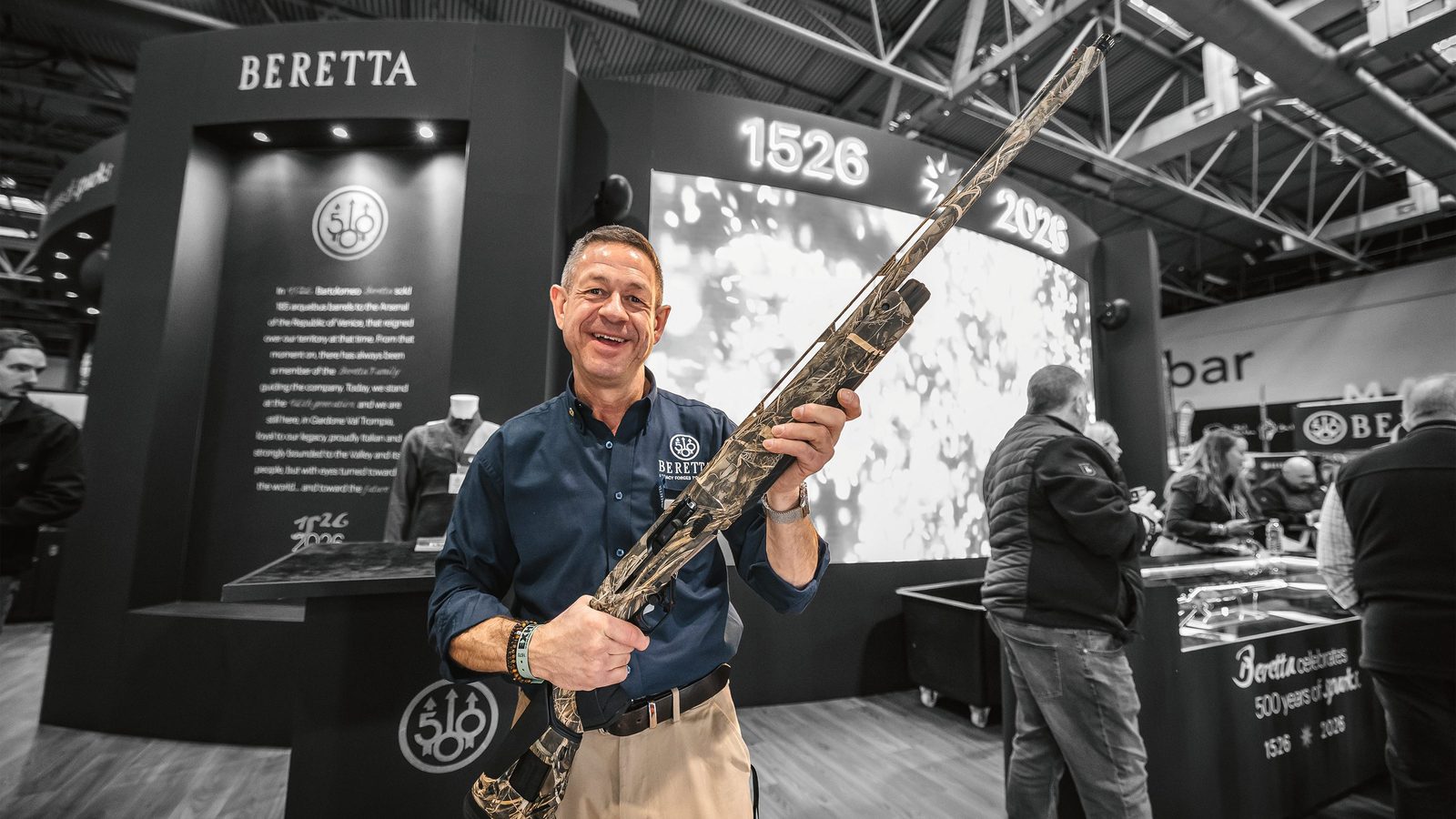
This year gave GMK an unusually strong hand. Beretta is marking 500 years, and GMK used the show to launch its limited-edition range of guns to trade and public alike. Half the stand was given over to the anniversary, with large screens carrying the story and a baseball cap giveaway that has since become the reference point for how the team measures engagement.
“We gave away 1,500 caps at different slots throughout the three days, and they were gone within minutes, with queues around the stand,” Ali says.
Queues around the stand: GMK gave away 1,500 caps in slots across the three days. Credit: Matt Kidd
The effort was noticed. The show’s exit poll of visitors voted GMK’s stand the best at the 2026 event, an accolade Ali is determined to defend rather than rest on.
Bringing overseas suppliers to the UK market
GMK brings a lot of our suppliers from abroad to attend the show. “It’s great for them to speak to the end user and understand where the UK market is going compared to other markets.”
That matters for a distributor answerable to manufacturers abroad. Bringing overseas colleagues to Birmingham lets them see the UK market first hand rather than through a sales report, and the show gives them a stage. In 2026 GMK brought representation from across the Beretta Holding group, and a senior Beretta figure spoke on the main stage about the company’s heritage and where it sees the market heading.
The venue does a good deal of the persuading. “The venue is superb in terms of location and ease of access,” Ali says. “Most people across the UK can attend the show.” He is equally clear about what the visitor gets in return. “If you’re an end user, you wouldn’t go anywhere else. You’ve got everything you need for your shooting needs, whether it’s guns, rifles, accessories or clothing, and to come to one venue and see all that is absolutely incredible.”
The 2026 stand also carried an activation that drew the biggest crowd Ali can recall at the show, when Vinnie Jones, now a Beretta ambassador, gave a talk to the public and then came onto the stand to meet visitors. “I think it was probably the biggest amount of engagement from the public,” he says. “It was absolutely packed out.”
The show also earns its place internally. GMK brings its marketing and sales teams along with back-office staff, and for a business spread across brands and functions the three days at the NEC are one of the few points in the year when most of the company is together. It is, in effect, the team-building exercise a distributor of this size cannot otherwise engineer, and it feeds the energy visitors see on the stand.
Balancing the trade and the public
The harder question is how to serve a consumer show and a trade show at the same time. GMK’s dealers attend in numbers, and Ali is frank that the balance takes managing. “It does have its challenges, trying to balance the two,” he says. “But it comes at a perfect time of year to really do that for us.”
The show’s extended trade hours for 2027 are, in his view, a sensible response. “It’s a great addition. To be able to have that more dedicated time,” he says, while acknowledging that pulling a sales team away from the public has its own cost. “You also want to engage with our dealers, which ultimately are selling to those end consumers. So it’s a great move.”
How the order book changed the calculation
What has genuinely changed the arithmetic is the order book. GMK launched limited edition Beretta 687 and 694 models to the trade alongside a semi-automatic, and Ali says the business sold around 92% of its allocation at the show. It was, he says, probably GMK’s best ever British Shooting Show for engagement from consumers and trade alike.
“We’ve always looked at the British Shooting Show as a consumer-facing show, and that’s our main priority,” he says. “But as a business, why would you not take that opportunity to really try and get some orders off the back of it? Which ultimately helps fund the stand and the costs that do come with trade shows.”
A new stand with meeting rooms for 2027
The consequence is a redesigned stand for 2027 with meeting rooms, so dealers can be dealt with privately. There will be another limited-edition launch, with further products GMK expects to show the trade shortly. Planning is already well underway with the company’s external stand designers.
For all the planning that goes into it, the calculation underneath stays simple. February gives GMK the year’s first and best conversation with the people who buy, and in more than a decade of exhibiting the distributor has yet to find a reason not to have it.
The Great British Shooting Show returns to the NEC Birmingham on 12, 13 and 14 February 2027.
Please be advised that the Defence Training Estate has announced, via the National Rifle Association, that with immediate effect (September 2026), all 6.5 mm ammunition types, including 6.5 mm Creedmoor, and.338 Lapua Magnum ammunition are now authorised for use on military ranges.
Registered Firearms Dealers (RFDs) may wish to take this announcement into account when planning future stock levels and are encouraged to pass this information on to their customers.
Best Regards
Paul Green Technical Director The Gun Trade Association
The central conclusion drawn by HMICFRS is that the current firearms licensing system is not fit for purpose, with its inspection revealing inconsistent firearms licensing processes and variable supervision across forces, resulting in inconsistent decision-making, risk management and overall service across England and Wales. From your own experience in the trade none of this will come as any surprise.
The report makes a total of 23 separate recommendations, the key elements being:
A single national firearms licensing authority, with locally based personnel to carry out suitability visits, to replace the 38 firearms and explosives licensing units currently servicing the 43 police forces in England & Wales.
A secure integrated online national firearms register and licensing system, including digital verification to supplement physical certificates, to replace the National Firearms Licensing Management System (NFLMS).
A national training scheme for all firearms licensing personnel.
Alignment of the licensing rules for shotguns with the licensing of section 1 firearms.
A complete overhaul of firearms licensing legislation to simplify and modernise this area of law.
A national firearms licensing tribunal for appeals.
All applications and renewals to require an in-person medical assessment.
A statutory requirement for all certificate holders to notify within seven days any relevant change to their medical circumstances.
A legally enforceable set of rules for firearms licensing, including greater powers to remove firearms from certificate holders.
Annual fees increases and no refunds for refused applications.
Which recommendations are already under way?
In relation to the first four recommendations above, the Government had already expressed at the very least an intention to implement such proposals. Indeed, the national training course for FEOs has already been rolled out by the College of Policing and it is now working on a course for more senior personnel and decision makers. Likewise, the government tender process has been completed and the contract awarded to Palantir Technologies, the company which will create a national firearms licensing system to replace NFLMS. Some of the key weaknesses in the system are therefore already being addressed.
It’s worth noting that many of the other recommendations now made by HMICFRS are not new. They were made before in their previous report “Targeting the Risk”, published in 2015, when HMICFRS found similar shortcomings in firearms licensing across England and Wales. It should not therefore be assumed that all of these recommendations will be approved and implemented by a government which currently has rather more pressing political priorities.
Where the inspection found police falling short
In compiling this latest report, HMICFRS inspected the work of the Firearms & Explosives Licensing Units (FELUs) in the following police force areas: Cheshire, Gloucestershire, Gwent, Kent, Northamptonshire, and finally the three force collaborated licensing unit for Bedfordshire, Cambridgeshire and Hertfordshire Constabularies. Case files were examined, FEOs and other firearms licensing and police personnel interviewed, as well as certificate holders and representatives of shooting bodies. In relation to the three force unit, HMICFRS was so unimpressed by the unit’s poor performance that it issued an accelerated cause for concern report to the three Chief Constables requiring urgent improvements to their processes, as detailed in my article for the February 2026 issue of this publication.
However, digging into the detail of their latest report, what their inspection revealed was often police failures to apply or follow existing rules and procedures as set out in the Statutory Guidance or elsewhere, for example, no home visit to the applicant, not contacting one or both referees, decisions made by staff without delegated authority etc. The underlying causes were shown to be inadequate training and supervision of FEOs and other decision-making personnel, and under resourcing of FELUs in terms of low staffing levels and obsolete IT systems. The fact that the administration of firearms licensing is still not working effectively over a decade after HMICFRS made a lot of these recommendations has far more to do with this continued lack of investment than the rules not being strict or precise enough.
Aligning shotgun licensing with section 1 firearms
The report also does not adequately explain how aligning the licensing of shotguns with the licensing scheme for section 1 firearms would achieve an improvement in public safety. A requirement to obtain authority for each shotgun before purchase would massively increase the administrative burden on FELUs and certificate holders, driving more people out of shooting, and leading to a drop in trade for dealers, yet without any clear evidence it would improve public safety. Either an individual is suitable to possess shotguns or they are not. The HMICFRS cites the Keyham shootings in Plymouth as an example of where a licensed shotgun was used by a certificate holder to shoot multiple people. However, there was ample information available indicating Jake Davison was inherently unsuitable to be a certificate holder.
Would a national licensing body work?
There is wide support amongst the shooting community for firearms licensing being removed from local police forces and transferred to a national firearms licensing body. I would broadly agree, but only if there is adequate investment in recruiting and training both the staff at national level who will be responsible for decision-making, and also the local staff who will carry out suitability visits. There also needs to be genuine scrutiny and evaluation at national level of the reports from local officers. To draw an analogy, responsibility for making decisions on the grant of Section 5 authorities, and also approval of rifle and pistol clubs, rests at national level with the Home Office, informed by a report from the local police force where the dealer or club is situated. In the vast majority of cases, this seems to be an exercise of the Home Office simply accepting and approving whatever recommendation the local force has made, with little sign of any independent or critical evaluation.
What the recommendations could mean for the trade
Some of these recommendations, if implemented, will undoubtedly bring practical benefits for the trade. The ability to check the validity of certificates in real time and to record the details of sales directly onto the national database will help to reduce fraud and administrative errors.
However, other proposals from HMICFRS would add to the downward pressure on the trade and the shooting community, without any clear evidence as to how it would actually improve public safety. No amount of tinkering with or tightening the legislation, Statutory Guidance, or other rules is going to ensure public safety and also a proper service to the shooting community without substantial investment in the administration of firearms licensing.
Frequently asked questions
What did the HMICFRS firearms licensing report recommend?
The report, published on 28 August 2026, makes 23 recommendations. The key ones include a single national firearms licensing authority, a new online national firearms register, national training for licensing staff, aligning shotgun licensing with section 1 firearms, a licensing appeals tribunal, in-person medical assessments for every application and renewal, and annual fee increases with no refunds for refused applications.
Who is building the replacement for NFLMS?
The government tender has been completed and the contract awarded to Palantir Technologies, which will create a national firearms licensing system to replace the National Firearms Licensing Management System (NFLMS).
Which police forces did HMICFRS inspect?
The inspection covered the firearms and explosives licensing units in Cheshire, Gloucestershire, Gwent, Kent and Northamptonshire, and the collaborated unit serving Bedfordshire, Cambridgeshire and Hertfordshire.
The sporting world has lost one of the last of the old-school greats with the death on 1 September of John Batley, shooting writer, pigeon shooter, fisherman, businessman, car enthusiast, wine connoisseur, former director of the Gun Trade Association, family man, friend and all-round bon oeuf.
I knew John for more than 30 years, having met him when I joined Shooting Times in the early 1990s. We had some tremendous adventures from decoying geese in Saskatchewan, an adventure that ended up in Worth Mathewson’s book Waterfowling; Best Days, to the hilarity of running the Shooting Times stand at The Game Fair for much of the 90s, an event that was hilarious and exhausting in equal measure. One memory in particular comes courtesy of filming the second Shooting Times Pigeon Shooting video in Herefordshire while murder squad detectives hunted for a serial killer’s victims in the adjoining field to our set-up.
Motor racing and a life of travel
John had a rich and adventurous life away from the shooting world. Born in 1940 to Charles Gurson Batley, a prominent solicitor and Grace Lucy Batley, one of the first female pharmacists in the UK, he began his working life at age 16 in the building trade, taking on a number of roles including bread van driver, wine delivery driver and work for an agricultural merchant in Essex. However, motorsports were to take up the next decade. Following a job as a garage hand in 1962, he joined racing engine manufacturer Holbay Engineering in Suffolk and worked there until 1964. After that came a year in France with Paris Rallye Autosport followed by a stint as an independent racing mechanic working around the world. He was with the legendary Frank Williams until 1967 and then took a detour into retail, opening a London shop selling decorative Portuguese marble. However, motorsport soon drew him back as builder and driver of car number 42 in the legendary 1970 London to Mexico World Cup Rally. John made a respectable showing at the event, making it to Peru.
Undaunted, he made a solo winter drive from Lima to Buenos Aires, under treacherous conditions, ending up working for Ford Racing in Buenos Aires until 1972. A series of travels followed with John arriving back in London teaching English, interpreting and managing a number of enterprises followed by a stint with Universal Video Games in Japan.
Pigeon decoying, Shooting Times and the Gun Trade Association
In 1979, he met Caroline Holt at a dinner party in Frant, East Sussex. Caroline remembers being charmed by John and then being disappointed a couple of weeks later when he telephoned her, not with a hoped-for dinner invitation, but with a job offer. Nonetheless in 1982 the couple married and together renovated a beautiful Cotswolds house. In 1984, John set up John Batley Crop Protection, and began writing about pigeon decoying for Shooting Times – he taught and wrote about the craft until 1999. In 1998, he spent three months travelling around the United States researching snow goose migration patterns and from 1999 to 2018 served as director of the Gun Trade Association.
Fishing, friends and family
In retirement, John took up fishing with his usual verve and could be found on the banks of the Wye almost every week with his good friend Peter Martineau. He adored Scotland and loved spending time with his friend Simon MacGillivray and fishing the Tay.
John brought a lot of fun and enjoyment into many people’s lives and our friend, the writer Worth Mathewson remembers: “I, along with my wife, Marge, feel fortunate to have spent time with John on several occasions. First was more than 30 years ago when we hosted John Gregson and John hunting geese in Saskatchewan. A few years later John came by himself and we hunted snow geese in Saskatchewan and Manitoba. Then there was a trip that John, Marge, and I took to Northern Ireland to hunt golden plover over decoys. Our last time together was when he joined me in the high desert of eastern Oregon for pheasant, quail, and chukar. We hunted on a large cattle ranch with real cowboys. John was in full British shooting attire, which the cowboys found more than just interesting, especially that he was wearing a tie. We always had very good times with John and we will miss him greatly.”
Above all of these adventures, John loved his family; wife Caroline, children James and Katie and grandchildren Elsie-Jean, Rex and Hugo; he was so looking forward to meeting granddaughter Penelope, due at the end of October.
I was proud to call John my friend as were so many other people; the world is not quite as bright without him.
A tribute from Edward King, GTA Council member
In 1999, John became Director of the Gun Trade Association, and continued the modernisation which had been started by his predecessor, Brian Carter. During his nearly 20 years in the role, John developed close links with the gun trade, both at home and abroad, as well as with numerous governing authorities, such as the Home Office, the Department of Trade and the Association of Chief Police Officers. He was known for his quiet manner and charm, but he was both uncompromising and determined when it came to defending and protecting the interests of the trade and sport. After retiring in 2018, John became a keen fisherman and would regularly be seen on the riverbank with a rod in his hand. He died peacefully on 1 September, having suffered for some years with cancer. The gun trade has lost one of its most passionate champions.
Frequently asked questions
Who was John Batley?
John Batley (5 April 1940 to 1 September 2026) was a shooting writer and pigeon decoying specialist who wrote for Shooting Times from 1984 to 1999, and served as director of the Gun Trade Association from 1999 to 2018. Earlier in life he was a racing mechanic and drove in the 1970 London to Mexico World Cup Rally.
How long was John Batley director of the Gun Trade Association?
He was director of the Gun Trade Association from 1999 to 2018, nearly 20 years, succeeding Brian Carter and continuing the modernisation Carter had started.

 Donate
 Basket
 Login
Login