The gamebird sector is to be measured before it is regulated. The Countryside Alliance says the Department for Environment, Food and Rural Affairs (Defra) is commissioning an independent economic assessment of the sector through a third-party consultancy, and expects that assessment and the report on its call for evidence on gamebird shooting and release to be in ministers’ hands by March. If ministers then press ahead with licensing, the Alliance expects a full consultation next year.
For game farms, dealers and the businesses that supply the season, the assessment is the part of the timetable to watch. It is an official attempt to put a value on the gamebird economy, and whatever figure it reaches will sit beside the 35,000 responses when ministers decide whether to consult.
What has Defra committed to, and when?
The Alliance’s account comes from a meeting with Defra’s gamebirds team to which organisations from the shooting sector and the anti-shooting side were invited. Two strands of work are under way: the responses to the call for evidence, which closed on Sunday, 1 November, are being analysed, and the economic assessment is being carried out by an outside firm. Both are expected with ministers by March. Defra has not published a timetable of its own, and the scope of the assessment, including whether it counts the trade in guns, cartridges and clothing that follows the season as well as the game farms and shoots themselves, has not been set out.
Roger Seddon, the Alliance’s shooting campaign manager, said experience of gamebird release licensing in Special Protection Areas showed that more widespread shoot and release licensing in England “would kill shooting for everyone”.
What would a 2027 consultation mean for the trade?
A consultation opened next year would run alongside the trade’s own calendar: the months in which game farms take orders for the 2027 release and dealers settle stock for the following season. Only after a consultation would any licence conditions, fees or thresholds be set out, so the present season and the orders already placed for it are unaffected. The uncertainty is the cost in the meantime, and it is the kind of cost an economic assessment is meant to count.
The sector’s own figures are already filed. The Game & Wildlife Conservation Trust (GWCT) said on Tuesday, 17 November that its submission ran to nearly 50,000 words across 179 documents, including 163 scientific papers and nine new summary reports, and that private investment in game management amounts to an estimated £500 million. GunsOnPegs’ 2026 Game Shooting Census, sponsored by Lycetts and published on Friday, 13 November, found predator control reported by more than 91% of responding shoots in every census year since 2020 and wild bird seed mixes on 7,517 acres across 379 shoots, up from 6,530 acres in 2024; fewer than 5% of owners expected their conservation work to increase if shooting ended. Those are figures a consultancy assessing the sector will have in front of it.
Where does the political argument stand?
BASC says more than 26,000 of the 35,000 responses were copied to it through its Be the voice of shooting campaign, and reports that Sir Geoffrey Clifton-Brown, the Conservative MP for North Cotswolds and co-chairman of the All-Party Parliamentary Group on Shooting and Conservation, has written to the environment secretary with 66 MPs’ signatures asking her to reassure them “that the Government supports sustainable shooting in line with best practice”. BASC also reports that a government spokesman told The Telegraph: “The Government has no plans to ban gamebird shooting.” In the Commons on Monday, 16 November, Sir Julian Smith, the Conservative MP for Skipton and Ripon, said jobseekers and local suppliers in his constituency “are already worrying about the consultation on shooting”.
What happens next
The two reports reach ministers by March, and a decision to license would open a full consultation next year. The trade’s other licensing file moves sooner: written questions from Joe Robertson MP on the recommendation from His Majesty’s Inspectorate of Constabulary and Fire & Rescue Services on shotgun licensing are due for answer on Monday, 23 November. The GWCT’s nine summary reports are on its website, and the Alliance has opened an e-lobby through which members can write to the Prime Minister and their own MP.
Useful links
Countryside Alliance – the Alliance’s account of the Defra meeting and the March timetable
GWCT – the trust’s summary of its evidence to Defra and its nine summary reports
BASC – the association’s report on the 35,000 responses and the MPs’ letter
GunsOnPegs – the 2026 Game Shooting Census findings on conservation
What is the Defra economic assessment of the gamebird sector?
According to the Countryside Alliance, an independent assessment of the sector’s economic value commissioned by Defra from a third-party consultancy, expected with ministers by March alongside the report on the call for evidence. Its scope has not been published.
When could shoot and release licensing be consulted on in England?
The Alliance says that if ministers decide to proceed after reading the two reports in March, a full consultation would follow next year; licence conditions, fees or thresholds would be set out only after that.
Does the review affect the current game season?
No. The call for evidence has closed, no proposal has been published and the 2026 to 2027 season runs under the present rules.
Area coroner Alison Longhorn told an inquest at Exeter on Monday, 16 November, that she would issue a Prevention of Future Deaths report to Devon and Cornwall Police and the College of Policing after hearing that the force renewed John Perkins’s shotgun certificate in 2023 despite a GP’s record that he had been referred to anger management in April 2010 for slapping his wife. Mr Perkins shot Kathryn Perkins, 67, dead at their home in Briar Close, Exmouth, on 7 May 2025 and then himself, and the coroner recorded conclusions of unlawful killing and suicide.
For the trade the report matters less for what it says about one force than for who receives it. The College of Policing sets the professional practice every licensing department in England and Wales works to, and a recommendation on domestic abuse scrutiny addressed to it reaches every counter in the country.
What did the coroner find about the renewal?
Peter Ellis, giving evidence for the force’s firearms licensing department, said the 2010 incident was more than a decade old and that there was no record of domestic abuse on the force’s database. The 2023 application was made online and checked through the force’s usual information-sharing processes, and officers who visited the home heard no concerns from Mrs Perkins.
Mrs Longhorn said it would be “too speculative” to conclude that more enquiries would have changed the outcome, and acknowledged “a balancing exercise” by the firearm licensing manager. Her concern was the process: “I remain concerned that where somebody is applying for or renewing a firearm or shotgun licence application, the consideration scrutiny of a domestic abuse history does not appear as thorough or considered, or indeed as carefully or accurately documented as it should be.” She spoke of “what appears to be a lack of professional curiosity about the nature and extent of the domestic abuse history between the two”.
The regulatory clock the report starts
Under paragraph 7 of Schedule 5 to the Coroners and Justice Act 2009 a coroner must report where an investigation reveals a risk of further deaths that action could prevent. Regulation 29 of the Coroners (Investigations) Regulations 2013 gives each recipient 56 days to set out the action it will take or explain why none is proposed, and the Chief Coroner publishes both the report and the responses. None had appeared by the morning of 17 November.
Devon and Cornwall Police told the court it is already changing how applications are considered where domestic abuse concerns are raised, work it said is not yet complete, and it made a voluntary referral to the Independent Office for Police Conduct after the deaths, in line with its practice on licensing matters. Its licensing was last under this kind of scrutiny after Jake Davison killed five people in the Keyham district of Plymouth in August 2021 with a legally held pump-action shotgun the force had returned to him.
Why the timing bears on the section 1 and 2 question
The Gun Trade Association has already warned that an inspectorate report in August revived the idea of bringing shotguns under section 1 of the Firearms Act 1968, ending the lighter section 2 certificate the shotgun trade has sold into for decades. A coroner’s finding that domestic abuse history is not scrutinised “as thorough or considered” as it should be on a shotgun renewal is exactly the kind of evidence that argument will cite, and the 56-day responses from a force and the college will be read in the Home Office as well as the coroner’s court.
The more immediate consequence is at the counter. The British Shooting Sports Council’s reading of the latest National Police Chiefs’ Council figures puts forces at 68.76% of applications decided within target. Each added check on household history, each further request to a GP and each enquiry officer told to ask more at the door adds days to a renewal already running behind, and a customer whose certificate lapses in the queue cannot take delivery.
What happens next
The report, once served, starts the 56-day clock for Devon and Cornwall Police and the College of Policing, and the responses will set out what either intends to change in practice. Dealers can watch for both on the Chief Coroner’s Prevention of Future Deaths pages. In the meantime a retailer taking a deposit against a renewal due in 2027 should allow for a longer process, and a customer with anything on an old record is better advised to raise it with the force, with its context, than to let an officer find it.
legislation.gov.uk – Regulation 28 of the Coroners (Investigations) Regulations 2013, the power behind the report
Frequently asked questions
What is a Prevention of Future Deaths report?
A report a coroner must make under Schedule 5 to the Coroners and Justice Act 2009 when an investigation reveals a risk of further deaths that action could prevent. Recipients have 56 days to respond under Regulation 29 of the 2013 Regulations.
Who will receive the Exmouth report?
Devon and Cornwall Police, which renewed John Perkins’s shotgun certificate in 2023, and the College of Policing, which sets licensing practice nationally.
Does the Exmouth inquest affect the section 1 and section 2 review?
Not directly, but the Gun Trade Association has warned that an August inspectorate report revived the idea of bringing shotguns under section 1, and a coroner’s finding on renewal scrutiny is evidence that debate will use.
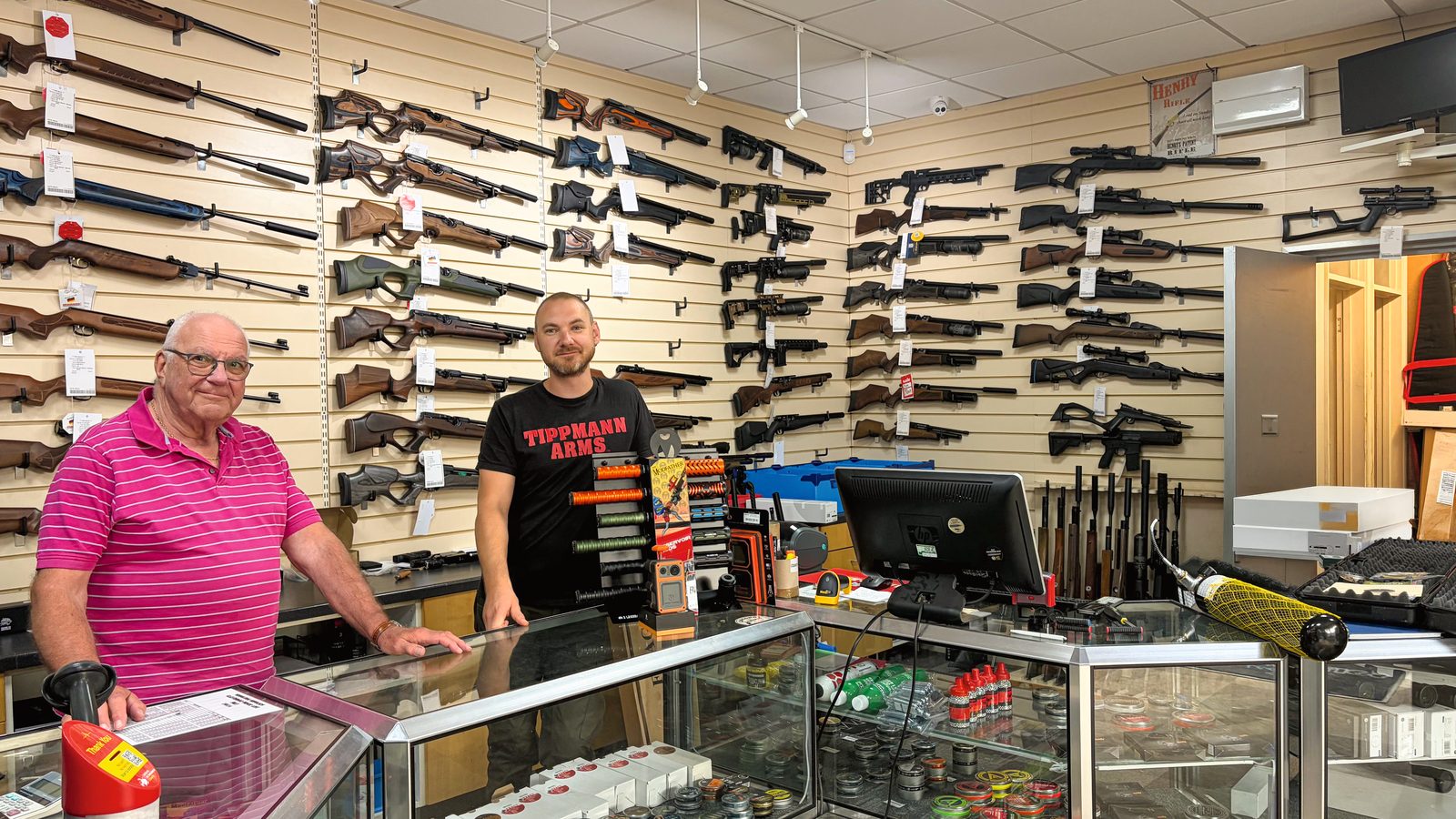
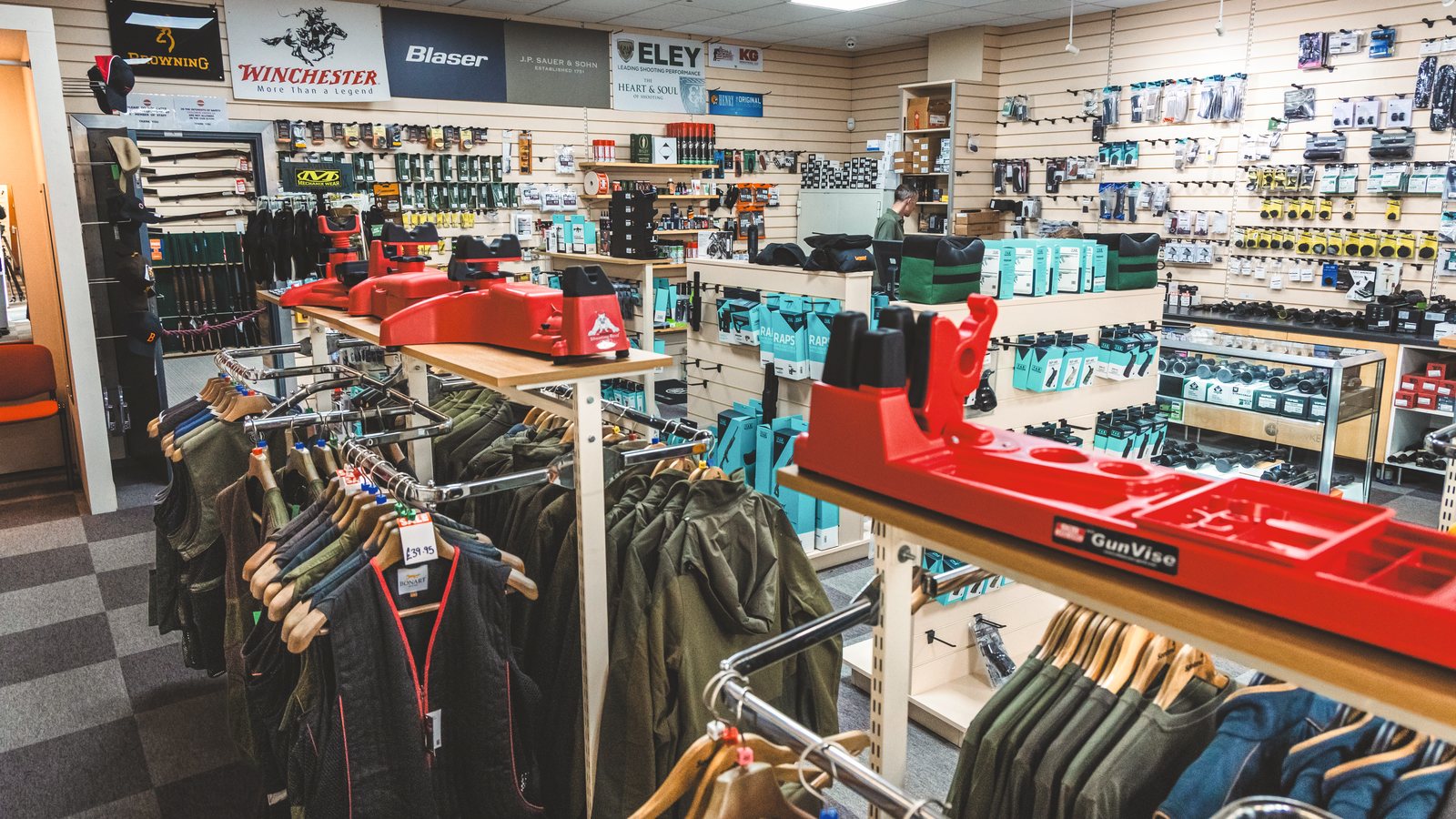
Shooting Supplies trades from an industrial estate a short run from the M42, which is not where most of the trade would site a gunshop – and that, says Antony Bill, is entirely the point. Two decades on from a tiny unit in a Worcestershire village, the business runs a retail counter, a national website and a UK import and distribution arm. We asked him how it was built, what is moving at the counter, and why nobody joins his staff without being a shooter first.
How did the business begin?
The business started in 2002. My dad had a change of circumstances and was looking for something to take on. There was a tiny gunshop at Dodford, just outside Bromsgrove – M&B Engineering, owned by Malcolm Baker – and he was looking to retire and get out of the game. It was a good opportunity to pick it up and do something with it, so Dad brought it into Bromsgrove High Street. I was 15 and working there on Saturdays while I was still at school, then in my gap year, then coming home from uni. That’s 24 years in the trade now, which is a strange thing to say out loud.
Why take a gunshop off the high street?
We were there four years and grew out of the place. But we’d also decided we didn’t need to be on a high street with a gunshop. It was more hassle than it was worth – the parking, and the business of carrying guns up and down a high street with the way things were changing. So in 2006 we moved to the unit we’re in now, and it grew from there.
Was it a retail decision or a shooting one?
A bit of both. Dad’s been shooting forever and I’ve been shooting since I was seven or eight – I got my first air rifle and joined the local club, so it was something we did together. When the opportunity came up the two went hand in hand, because he already had the knowledge. You can’t just walk into this as a retail business. The gun trade isn’t normal retail. It’s bespoke, it’s big, and it was that pairing that made it work from the start.
When did the handover to you happen?
Twelve years ago Dad decided to retire and I stepped in at the helm. He’s still involved, mind. We started the business together, effectively, so he’ll always be involved. He likes to see what’s going on, and it’s good to bounce ideas off him because we look at things from different angles. That, and nicking pellets and ammo out of the stores on his way out shooting.
How is the shop staffed?
There are four sales staff and me, plus an accounts lady and an IT guy, both full-time. When I employ anyone the main tick in the box is: are you a shooter? They all shoot, and they all shoot air rifles. We cater for rifle and shotgun customers too, but almost everybody has touched an air rifle on the way to something else. One of the guys is really strong on Field Target and Hunter Field Target – he used to compete. A couple are out in the field on vermin control. A couple plink in the back garden. Whatever a customer walks in doing, someone here has done it.
What do the premises give the business?
We’re on an industrial estate in a converted warehouse unit – 3,000sq ft, with a big showroom, offices above the front, a large gun room, and a warehouse at the back for ammunition, extra gun storage and overflow stock. There are five car parking spaces at the front, more down the side, plus road parking, and the estate isn’t busy. Importantly, nobody’s crossing a road carrying a rifle.
The converted warehouse unit has housed Shooting Supplies since 2006
How is the airgun range stocked?
Our stock range runs from bottom to top. We’ve got Turkish brands at entry level, the Spanish stuff like Gamo, and then all the way up through the prestige names – Air Arms, FX and so on. It isn’t just rifles, though. We carry a lot of pellets and a lot of scopes, we’ve got the bottles for filling PCPs and a compressor on site so we can fill them here. Gun rests, bipods, tripods, including the big stationary rests that are popular now. Then at the other end there are spring rifle packages and junior guns. Whatever stage of the journey somebody is at, we can slot them in and work out what they actually need.
What does the import arm bring in?
The big one is Tippmann Arms – American, AR-clone semi-auto .22s, in both .22LR and .22 Magnum, plus the accessories that go with them. Not air rifle orientated, admittedly. But we also import FAB Defense, which is furniture and accessories, UTG, and Grand Power for long-barrelled pistols.
How much of the import range sells into airguns?
More than you’d think. FAB Defense makes the grips, stocks and furniture that fit AR-pattern rifles, and a lot of modern air rifles have adopted that military look, so the same parts now fit the air rifles going with that trend. People like to personalise. They don’t want the same rifle as everybody else has got, and being able to switch a grip or a stock is a big part of that. UTG is similar – handguards now, depending on compatibility, plus bipods, mounts and add-ons. Those are our hot products at the moment. UTG has been in the UK a while, but we’re giving it a new lease of life.
What is moving in the market this year?
None of the markets in the gun trade move especially quickly, but there are some key new releases from the likes of FX. Honestly, though, the real energy is in the bits – the important pieces that fit everything else together, and that let somebody build the rifle they want rather than the one that came out of the box.
How important is the British Shooting Show to the business?
We have exhibited for the past seven years. The NEC is only 35 or 40 minutes away on a clear motorway, so it’s ideal for us, and we take a bigger stand every year. It’s a very successful show and I see it as the flagship of the year. There’s a limited number of retailers there, so we go with our brands in mind. We’re not just selling on the day, we’re showcasing them the way any distributor would – but we can sell direct off the stand as well, so it works both ways.
Where do you source new brands?
IWA – I wouldn’t miss it. A lot of my brands are there, or have a representative there, so it’s a great place to connect and see everyone under one roof. You also spot things that haven’t reached the UK yet. The smaller, up-and-coming brands use it as an entry way into the trade, so you get a heads-up on products that will hit Europe and America first. SHOT Show I do on a much longer cycle – it’s been about eight years. I was going to go in 2026 but couldn’t make it, so it’ll probably be the year after.
Where is the business going next?
I’d like to expand what we import. We do that job well – stock control, distribution, we’re efficient and we’re fast – but I’m not going to jump on any brand. I assess what I’m looking at properly, because the wrong one just doesn’t work. The website is a constant evolution too. It took the best part of six or seven years to get where it is, and with the pace of the digital world and AI, keeping up is hard work. The more you put in the more you get out, which is why the IT guy is on it full-time. And social media is its own nightmare in the gun trade.
And the retail side?
We’ve got people who’ve been using us for literally 24 years. There are a lot of other shops in the UK delivering really well, so I’m not going to claim we give something others don’t. The stronger shops seem to be getting bigger and the smaller ones are dropping away, so you have to cater for the whole of the UK. The website is our national shop front – it gives us reach to Scotland and Northern Ireland. We haven’t exported yet, because the laws make that another complication, but it’s definitely something I’ll consider.
Is there a succession plan?
My sister isn’t interested in guns in any way, so it’s just me. But I do have a daughter, so hopefully I can bring her up through the ranks to take over. She’s six at the moment, so it’s early days.
Frequently asked questions
Where is Shooting Supplies based?
On an industrial estate in Bromsgrove, Worcestershire, a short run from the M42, in a 3,000sq ft converted warehouse unit the business moved into in 2006 after four years on Bromsgrove High Street.
Which brands does Shooting Supplies import and distribute?
Tippmann Arms .22LR and .22 Magnum semi-autos, FAB Defense grips, stocks and furniture, UTG, and Grand Power long-barrelled pistols, with the import side the part of the business Antony Bill wants to grow.
Range Right’s Reximex NYX Tungsten Grey has had its first full test, in Airgun World, and the review gives a dealer most of a counter script and one honest caveat. Writing in Airgun World for the magazine’s December 2026 issue, Dave Barham tested the .177 version at an £885 RRP and concluded that “if you like your full-size rifles and fancy something that is going to hit the target time after time with an absolutely huge shot count, then the Reximex NYX Tungsten Grey is well worth having a look at”.
What is the dealer selling?
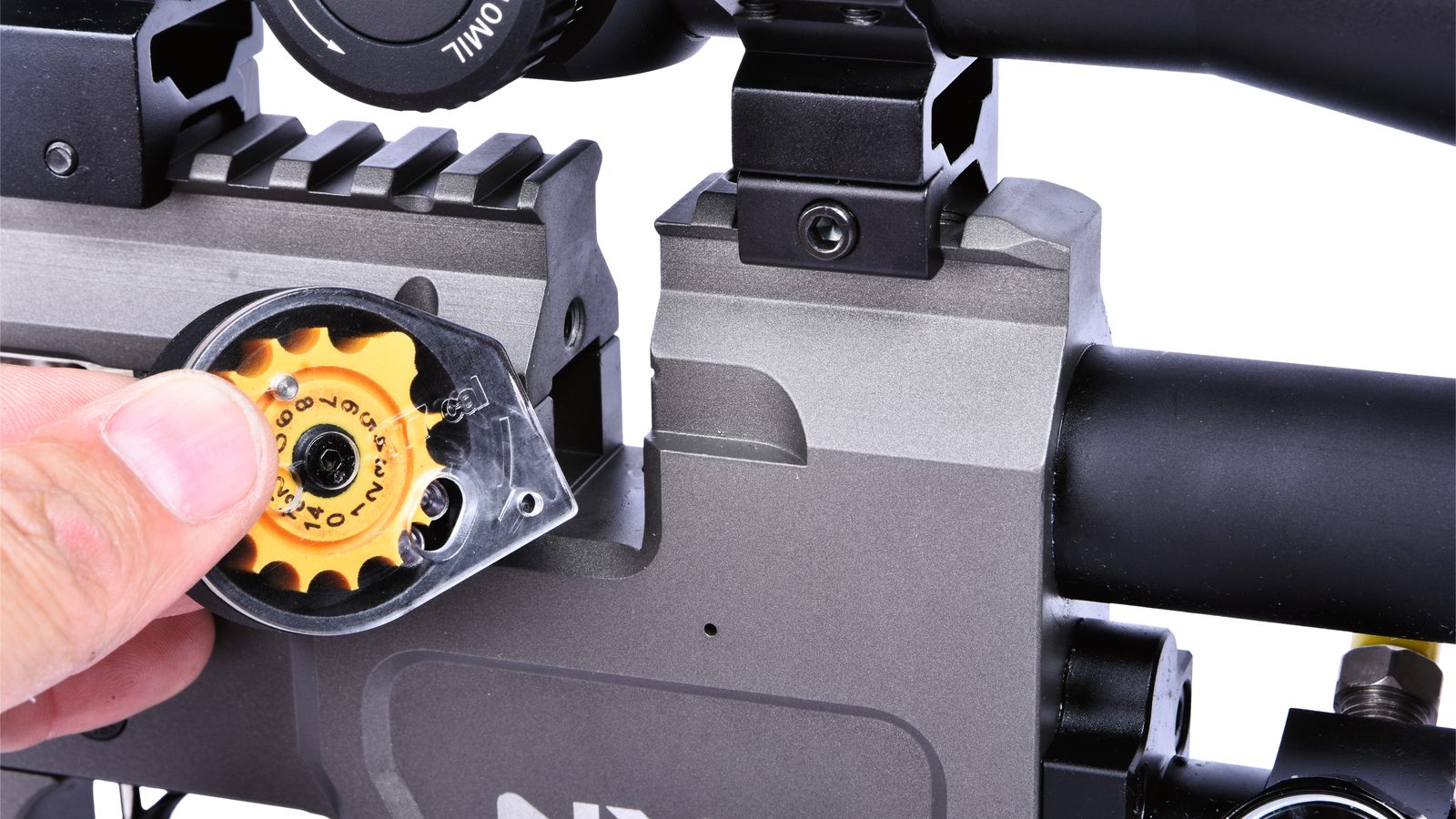
A Turkish-made, regulated, multi-shot sidelever PCP (pre-charged pneumatic) in .177, .22 and .25, distributed in the UK by Range Right, with a 700cc carbon bottle in place of the original NYX’s 500cc, an ambidextrous synthetic stock adjustable for length of pull and cheek height, a two-stage trigger adjustable four ways and a manual AR-15-style safety. It is 1,050mm overall with a 480mm shrouded barrel threaded ½in UNF under a removable end cap, and weighs 3.6kg (7.9lb) without a scope, almost 2lb less than the rifle it replaces. The box holds two rotary magazines, a single-shot tray, spare O-rings, Allen keys and a female fill probe adapter. The review records the RRP as correct at the time of publication and notes it may have changed.
The shot count, and the figure the maker has not given
The bottle is the selling point, and the review backs it. “The original NYX had a 500cc bottle, but this new 700cc carbon beauty gives over 500 shots in both .177 and .22,” Barham writes. “There is no official shot count as of yet, but I wouldn’t be surprised if the actual shot count was nearer 700 in .177.” The specification quotes 500-plus for .177 and .22 and no figure for .25, from a 250 bar fill. A dealer can quote the tester’s 500-plus with confidence; the 700 is his guess and should be sold as one, and the .25 count is unpublished.
What did the numbers show?
On the .177 test rifle the regulated action measured an average of 11.4ft/lb over 20 shots with a 6fps spread. “At my usual 30m zero on my local club range I was hitting 5mm groups using 10.4gr JTS Dead Center pellets in the .177 model sent to me for review, with very little effort,” Barham writes, before taking knockdowns and spinners out to 50m “without missing a beat”. The power adjuster on the left of the action takes the output from a maximum of 11.5ft/lb down to around 7ft/lb, which he calls “a handy feature for those shooting in their back garden or performing pest control in tight spaces such as barns”. That lever widens the customer base to the garden and barn shooter without a second rifle.
The counter talking points
Weight and balance come first, because the bottle invites the objection. Barham expected a rifle that was “front-heavy and possibly awkward” and found the opposite: “The point of balance is exactly where you want it to be, just in front of the block, a couple of inches in front of the trigger.” The stock gives 70mm of length-of-pull adjustment, from 325mm to 395mm, and 15mm of cheekpiece height, so one rifle fits a range of customers across the counter. The soft-touch AR-15-style grip “feels really comfortable”, the sidelever cocks with a 90-degree pull on a 35mm drop-down handle and, in his words, “it’s all very slick”. A split Picatinny rail on top and a second rail under the bottle for a bipod are fitted as standard.
Where the attachment sale sits
The review all but prescribes the moderator. The shrouded barrel is “surprisingly quiet” on its own, but Range Right sent Barham a 3 Legged Thing ModFather for the ½in UNF thread, and with it fitted he calls the NYX “one of the quietest rifles I have ever shot”. The ModFather is a £129.99 modular moderator supplied in five pieces for the owner to assemble, with two removable alloy baffles for tuning and a choice of colours and outer chassis designs, 12cm long and 45mm across. A dealer stocking both has a natural pairing, and the two Picatinny rails point to a scope and a bipod in the same transaction; Barham’s test scope was a Konus Wild 6-24×50.
What should a dealer be ready to explain?
Three things. The trigger’s first stage is short as delivered: “Straight out of the box I found the first-stage pull to be extremely short, way shorter than I am used to or prefer, but it was easy enough to predict the break after a few shots. If I owned this rifle, that’s pretty much all I would want to change, so that I had a longer first stage.” The unit adjusts four ways and the blade’s height and angle move on a small screw, so the fix is at the counter, not the factory. The AR-15-style safety flicks to fire easily but returning it to safe means shifting the hand slightly, “well it does for me anyway”, he writes. And the shot count is a tester’s figure, not the maker’s, until Reximex publishes one.
What happens next
Barham’s verdict places the rifle with “airgunners who like a full-size rifle for the field and club shoots and want a big shot count”, and he writes that he would have “absolutely no second thoughts about taking it into the field to hunt with as well as entering club shoots at the range”. The full review, with the specification table, is in the December 2026 issue of Airgun World and on its website, linked below, as are Range Right, the UK distributor, and 3 Legged Thing, the moderator’s maker.
The BASC Legacy Fund has donated £20,000 to support the development of specialist police training focused on crimes against birds of prey.
The funding will support the National Wildlife Crime Unit’s (NWCU) Digital Training Academy and the creation of a dedicated bird-of-prey crime course for police officers and enforcement partners.
Why raptor crime needs specialist investigation
Bird-of-prey crime remains a UK wildlife crime priority and includes offences such as the unlawful killing, taking or disturbance of protected species. Investigating these offences requires specialist knowledge of wildlife legislation and the evidence needed to support enforcement action and prosecutions.
The Digital Training Academy allows officers to access specialist wildlife crime training online and free of charge, helping overcome the staffing and financial constraints associated with traditional classroom-based delivery.
The latest contribution follows £40,000 previously provided by BASC to support the academy’s poaching training programme.
What BASC and the NWCU say the money buys
Glynn Evans, BASC’s head of game and wildlife management, said: “Wildlife crime has no place in the countryside and everyone with an interest in conservation has a responsibility to support efforts to tackle it.
“Providing officers with the right knowledge and resources is essential if they are to investigate offences effectively and bring offenders to justice. This funding reflects BASC’s commitment to partnership working and our determination to support practical measures that deliver real conservation outcomes.”
Chief Inspector Kevin Lacks-Kelly, head of the UK National Wildlife Crime Unit, said: “With great thanks to BASC, we have been able to complete our Digital Training Academy and ensure that we continue to train wildlife crime officers across the UK to the highest standards.
“The use of this funding is a great example of how policing and partnerships can flourish with a common aim. BASC is a key partner to UK policing and it is delivering on its commitments to work together in raising the profile of wildlife crime and ensuring our countryside isn’t a place for criminals to hide.”
The new course is expected to become available to police officers and staff across the UK in the coming weeks.
Frequently asked questions
How much has BASC now given to the Digital Training Academy?
£60,000 in total. The latest £20,000 funds the bird-of-prey crime course and completes the academy; an earlier £40,000 supported its poaching training programme.
What is the National Wildlife Crime Unit’s Digital Training Academy?
An online platform that gives police officers specialist wildlife crime training free of charge. Delivering it digitally gets round the staffing and financial constraints that limit classroom-based courses.
When will the bird-of-prey crime course be available?
It is expected to reach police officers and staff across the UK in the coming weeks.
The Nocpix NITE Pro D50R is a £999 digital day/night riflescope with an 8K detector and a laser rangefinder the customer can align to the reticle after zeroing, and it sits £200 above Nocpix’s own Nite D70R on the same shelf. In our test on muntjac and roe it gave superb low-light performance and clear identification to around 180m in the dark with an £80 850nm illuminator. For the dealer the pitch is simple: the customer gets more, but pays more, and at around 980g it is heavier than some rivals.
Digital day/night scopes have become a steady line for UK dealers because a single optic takes a customer from broad daylight, through dusk and, with an illuminator fitted, into complete darkness, which replaces two sales with one larger one. It is also a crowded category, so any newcomer needs to give the counter a clear reason to recommend it over the brands already in the cabinet.
Nocpix only moved into digital riflescopes this year, and with the NITE Pro D50R it appears to have thrown the kitchen sink at the category. Top of the specification is an 8K detector, which Nocpix bills as a world first for a digital riflescope, and the company is clearly keen to carve out a slot at the premium end of the range. What the trade needs to know is how it stacks up against the competition, and what a customer will ask about it.
At £999 the NITE Pro slips in just under the four-figure mark, but that still places it above some rivals, and £200 above the Nite D70R, so everything Nocpix has packed into it needs to be demonstrable at the counter.
Verdict at a glance
You get more, but you pay more – and the daylight image is the closest yet to a traditional scope
Best for: the deer-stalking customer who wants one optic from daylight through legal light and, with an IR torch, into the dark, and who will pay for the sharpest daytime picture.
Most impressed by: the crisp 8K daytime image, superb low-light performance and a rangefinder that lines up with the reticle.
Least impressed by: the fiddly screw-on battery cap and a zoom that is a touch slow to respond.
Price as tested: £999 (October 2026).
What the test measured in the field
Test
Result
Clear identification at night
Around 180m with an 850nm illuminator (around £80)
Hares among rabbits, at night
Identified at 170 to 180m
Muntjac sexed as a doe, at night
140m
Daylight ranging
Cock pheasant in hedge shadow ranged at over 400m, identified at 36x
Minimum focus
Around 1m
Battery
Five hours’ continuous use without trouble
Start-up
A little longer than the quoted one second
Field of view at 3x
Wide enough to show a 24in barrel’s moderator, blurred, at the bottom of the picture
How we tested
Tested by Ed Jackson, Group Reviews Editor at Time Well Spent Group
Ed mounted the NITE Pro on his 6.5 Creedmoor Bergara with a 24in barrel and moderator, zeroed it at 100m and used it from a high seat on his own ground over several hours of scanning, in daylight, through dusk and into full darkness with an 850nm illuminator costing around £80. He judged it against the Nocpix Ace 2 and the other Nocpix optics he has tested recently. Tested in September and October 2026.
Nocpix NITE Pro D50R specification
Specification
Detail
Name
Nocpix NITE Pro D50R digital day/night riflescope
Price (RRP)
£999 (checked October 2026)
Detector
8000×6000 (8K), 60Hz
Objective
50mm, F1.25
Magnification
3x to 36x
Field of view
8.8°x7.4° (15.4x13m at 100m)
Display
2560×2560 AMOLED, 1.03in
Eye relief / exit pupil
60mm / 6mm
Dioptre
-4 to +4
Zeroing clicks
0.3 MOA
Minimum focus
Around 1m (measured)
Start-up
One second (quoted); a little longer in our test
Laser rangefinder
Class 1, 1,200m, built into the objective bell, user-alignable to the reticle
Ballistics
Onboard ballistic calculator; profiles built in the Nocpix app over Wi-Fi
Power
3,850mAh internal battery plus replaceable 18650; at least six hours at 22°C (quoted); five hours’ continuous use in our test without trouble
Storage
64GB for photos and video, microphone support
Body
Magnesium alloy, IP67, -20°C to +50°C, rated to 7,000J of recoil
Prices are RRP at the time of publication and may have changed.
Inside the NITE Pro: the specification the customer will quote back to you
The NITE Pro is built around an 8000×6000 detector running at 60Hz, which is where Nocpix’s 8K claim comes from, behind a 50mm F1.25 objective. Magnification runs from 3x to 36x and the field of view is quoted at 8.8°x7.4°, or 15.4x13m at 100m. The image lands on a 2560×2560 AMOLED display that Nocpix lists at 1.03in, with 60mm of eye relief, a 6mm exit pupil and dioptre adjustment from -4 to +4. A Light+ algorithm is said to lift performance as the light fades. Zeroing moves in 0.3 MOA clicks, and Nocpix quotes a one-second start-up, though in my hands it takes a little longer.
The Class 1 laser rangefinder is built into the objective bell and rated to 1,200m. It feeds an onboard ballistic calculator, and drop profiles are built in the Nocpix app, which pairs over Wi-Fi, before being sent to the scope.
Power comes from a 3,850mAh internal battery backed by a replaceable 18650, with a quoted runtime of at least six hours at 22°C. There is 64GB of onboard storage for stills and video, with microphone support, and the magnesium-alloy body is rated IP67, for use from -20°C to +50°C, and to withstand 7,000J of recoil, which covers every centrefire a stalking customer is likely to bring in. It weighs around 980g, measures 402x93x81mm, and the 30mm tube takes standard rings, so the mount sale is a conventional one. No illuminator is supplied, which leaves an IR torch and a dive board as the natural add-on sale.
The NITE Pro’s traditional scope shape fits most rifles on standard 30mm rings. Leave room for a dive board to carry an IR torch
Can you align the NITE Pro’s rangefinder with the reticle?
Yes – once the rifle is zeroed you can move the laser onto the centre of the reticle yourself, which answers a long-standing gripe with integrated rangefinders. The laser is aligned at the factory, but zeroing shifts the reticle, so the two rarely end up in the same place, and on some scopes the gap is wide enough for the laser’s aim point to disappear off screen at higher magnification. Here, once you have zeroed with your chosen load, you remove a cover on top of the objective bell, slot the supplied tool into the recess beneath and walk the laser onto the centre of the reticle.
I forgot to do it at the start of my test, which was a useful reminder of how irritating it is to aim off for a reading, and of how much the scope gains once the two are aligned. It is safer, and much faster, and it is the feature to show a customer who has owned a rangefinding scope before, because it answers the complaint they will already have.
The 50mm objective with the built-in 1,200m laser rangefinder beside itRemove this cover after zeroing and use the supplied tool to align the laser with the reticle
Controls and handling: the Ace 2 layout with a central focus
Anyone who has handled Nocpix’s Ace 2 thermal will recognise much of the layout, which shortens the demonstration. The top turret carries the menu button, with a collar beneath for navigation. Because focus is handled centrally, with a removable plastic throw lever to help, the NITE Pro suits a left-handed customer as readily as a right-handed one. The USB-C port sits in the right-hand turret behind a rotating cover, while the left-hand turret houses the battery behind a screw-on cap rather than the sprung push-button lid of the Ace 2. Magnification is set on a traditional, stepless zoom ring with a small raised fin. In the field the central focus was quick and forgiving, and dividers between the power, photo/video and rangefinder buttons on top of the eyepiece mean you rarely press the wrong one. The menus are logical, so a new owner is never hunting for a setting, and the bellowed eyecup screws in and can be removed.
Top turret: menu button, navigation collar and central focus, with a removable throw leverRaised dividers between the power, photo/video and rangefinder buttons
The USB-C port sits behind the rotating right-hand turretThe 18650 battery goes in either way round, behind a screw-on cap
The bellowed eyecup screws in and can be removed
How good is the NITE Pro in daylight and low light?
Very good. The 8K detector gives a crisp daytime image and a beautifully clear reticle, and the low-light performance is superb, letting a stalker use every minute of legal light, which is the point a customer comparing it with a 4K scope will want proved. With deer stalking in mind, I wanted to see how the NITE Pro coped across a stalker’s day, so it went onto my 6.5 Creedmoor Bergara and, as with the other Nocpix kit I have tested recently, I settled into a familiar high seat in the hope of a muntjac or two.
Zeroing at 100m was made easier by that crisp image and reticle, which is becoming a Nocpix trait. Both help the shooter achieve a precise zero, the foundation of confidence in the field, and for me this is where the extra definition pays off and the 8K detector earns the premium.
I spent hours scanning every square inch in front of me, working through the magnification range, the settings and the image modes, which include “Auto”, “Day”, “Dusk”, “Moon” (night), “Yellow” and “Green”. My rifle wears a 24in barrel and a fairly large moderator, and I know a scope has a low base magnification and a wide field of view when I can see the moderator, blurred, at the bottom of the picture, as I could here. Field of view matters to me because I shoot a lot of muntjac at close range in woodland, usually picked up first through a thermal monocular or a multi-spectrum binocular. They rarely give you more than a fleeting moment, so anything that slows the move from thermal to scope costs you the shot. Close work is no problem either: it would focus down to around 1m, which is remarkable.
In daylight the rangefinder, which proved accurate and easy to use, put a pheasant lurking in the shadow of a hedge to my left at over 400m, and with the magnification wound to 36x I could identify it as a cock bird. The roe does came out in force, seemingly aware they were off the menu, and I spent much of my stint watching them, with detail and colour still showing as the light went. As so often with digital optics, I used “Day” mode with my own brightness and contrast settings to get the most from the image.
Cock pheasant ranged at 417m at 3x. The blurred moderator at the bottom shows how wide the field of view isTwo roe does at 5x as the light fades
Which image mode to use as the light fades
Cleverly, in “Day” mode the NITE Pro changes its processing at 12x to deliver a sharper picture. As the light goes, that step comes with a noticeable drop in brightness, but switch to “Dusk” or “Moon” and the drop does not happen, so it is simply a matter of picking the right mode for the light you have.
“Day” mode“Dusk” mode“Moon” mode“Yellow” mode
The same scene a minute apart in four of the NITE Pro’s image modes. As dusk arrives, just pick your mode
How far can a customer expect to identify deer at night with the NITE Pro?
With an 850nm illuminator costing around £80, I would put clear identification at around 180m, which is the honest figure to give across the counter. Animals are visible well beyond that, but I picked out hares among rabbits at 170 to 180m and could tell a muntjac was a doe at 140m without difficulty. As always, the illuminator makes a big difference, and I found myself fine-tuning its brightness regularly to get the best from the image, so the torch sold alongside it matters.
Muntjac doe identified at 132m in full darkness, “Moon” mode, 7xThe level of detail at 12x adds hugely to the enjoyment of using it
NITE Pro D50R or Nite D70R: which Nocpix day/night scope to recommend
The NITE Pro costs £200 more than Nocpix’s other digital day/night scope, the Nite D70R, and the extra buys a higher-resolution detector, a lower starting magnification with a wider field of view, a much closer minimum focus and a lighter body. The D70R keeps the sprung push-button battery lid that the NITE Pro swaps for a screw-on cap. The customer who shoots at distance in open country may lose nothing with the D70R; the woodland stalker working close is the one the NITE Pro’s 3x and 1m minimum focus are for. The figures below come from our own tests of both scopes.
Nocpix NITE Pro D50R
Nocpix Nite D70R
Price (RRP)
£999
£799
Sensor
8000×6000 (8K)
3536×3536 (4K)
Magnification
3x to 36x
5x to 40x
Field of view at 100m
15.4x13m
10m
Display
2560×2560 AMOLED, 1.03in
1920×1200 AMOLED, 0.72in
Minimum focus
Around 1m (measured)
10m
Rangefinder
1,200m, user-alignable to the reticle
1,200m
Recording
Photos and video
Video only
Battery access
Screw-on cap
Sprung push-button lid
Weight
Around 980g
1,055g
Which customer the NITE Pro suits, and which one to steer elsewhere
Recommend it if the customer
stalks deer and wants the daylight image as close to a traditional scope as digital currently gets
shoots muntjac at close range in woodland, where the wide field of view at 3x and the 1m minimum focus count
ranges a lot of shots and wants the rangefinder lined up with the reticle
Steer them elsewhere if
budget matters more than the extra resolution: the Nite D70R carries a 1,200m rangefinder too, for £200 less
weight is their priority, at around 980g
they expect an illuminator in the box, as none is supplied, which is the add-on sale to raise before they leave
Nocpix NITE Pro D50R strengths and weaknesses
Strengths
Excellent build quality
Crisp 8K daytime image and a beautifully clear reticle for a precise zero
Laser rangefinder can be aligned with the reticle after zeroing
Central, ambidextrous focus and a traditional zoom ring
Superb low-light performance
Wide field of view at 3x, and focuses down to around 1m
Battery goes in either way round
Weaknesses
Screw-on battery cap makes battery changes a bit of a fiddle
No spring-loaded objective cover
Zoom is a touch slow to respond
Zeroing profiles cannot be permanently named in the app
At around 980g, heavier than some rivals
No IR illuminator supplied
Verdict: more resolution and more control, at a higher price point
Nocpix has clearly thrown everything it has at the NITE Pro. Build quality is excellent, the 8K detector packs in all the resolution the format allows, and the company appears to have listened to shooters, with central, ambidextrous focus, a traditional zoom collar and a built-in rangefinder that let it handle like a conventional scope. Regular software updates suggest it is still listening, which matters to a dealer standing behind the sale. After five hours of continuous use I have no doubt the battery will meet most customers’ needs. The app did its job, with a few quirks, and above all it is a thoroughly enjoyable scope to use, which is what brings a customer back for the next one.
The niggles are minor. I am not sure why Nocpix swapped the Ace 2’s quick push-button battery lid for a screw-on cap, which is more secure, perhaps, but turns a battery change into a bit of a fiddle. On the plus side, the battery goes in either way round, a real bonus in the pitch black. A spring-loaded objective cover would speed things up in the field, and the zoom is a touch slow to respond, though that is common to digital scopes. I also could not permanently name my zeroing profiles in the app, which a future update will hopefully fix.
So, where does it sit in the cabinet? Nocpix has made it simple: the customer gets more, but pays more, and the counter’s job is to find out which of the two Nocpix scopes their shooting actually needs. For me, any digital scope that brings the daylight image closer to a traditional riflescope’s is the direction the category is heading, and the one worth stocking.
Frequently asked questions
How much does the Nocpix NITE Pro D50R cost?
The NITE Pro D50R has a retail price of £999, checked in October 2026. Nocpix’s Nite D70R costs £799.
Does the Nocpix NITE Pro come with an IR illuminator?
No. An illuminator is not supplied, so budget for an external IR torch and a dive board to mount it if you want to use the scope in full darkness. Ed Jackson used an 850nm illuminator costing around £80 for this test.
What accessories does a Nocpix NITE Pro sale lead to?
An IR illuminator, because none is supplied: Ed Jackson used an 850nm torch costing around £80, and a dive board is the usual way to carry one on the rifle. The 30mm tube takes standard rings, and the replaceable 18650 battery is a common cell, so both are conventional stock lines.
When is it legal to shoot deer in England and Wales?
Under section 3 of the Deer Act 1991, it is an offence in England and Wales to take or kill deer at night, which the Act defines as the period from one hour after sunset to one hour before sunrise, unless a licence or one of the Act’s exceptions applies. A day/night scope helps the stalker make the most of legal light at dawn and dusk. Scotland and Northern Ireland have their own deer legislation, so check what applies where you shoot.
Where can I buy the Nocpix NITE Pro D50R in the UK?
Details of the NITE Pro and UK stockists are available from Nocpix at nocpix.uk.
Registered firearms dealers end the year with the shotgun licensing threat on hold rather than gone, a coalition standing against it and their own trade body about to rebuild its systems. The Gun Trade Association’s chairman, Oskar Waktare, told members in his report to the association’s annual general meeting, published on 10 November, that it had been one of the busiest years on record and that the proposal to review Section 1 and Section 2 licensing had consumed much of the first half of it.
What did the Section 2 threat cost the trade?
The review, which would move shotguns closer to firearm-certificate controls, used a great deal of the association’s time and resources before it “may have been kicked into the long grass by the current Home Secretary”, Mr Waktare said. He thanked members who contributed to a research project showing the damage such reforms could do to the trade and the wider UK economy.
The threat galvanised the sector. Working with the Shooting Industry Fund, the association took a leading role in bringing 16 organisations together under the British Shooting Sports Council (BSSC) to oppose changes to shotgun controls that it says cannot be justified on public safety grounds. The chairman called it regrettable that the August report on police firearms licensing from His Majesty’s Inspectorate of Constabulary and Fire & Rescue Services (HMICFRS) “saw fit to resurrect this proposal”, and said the association understood the report had met a muted response from Home Office officials.
The help desk year, from private sales to Parcelforce
The help desk was busier than ever and the association’s registered firearms dealer training courses were oversubscribed. Members brought questions on the new Home Office guidance, licensing delays, the proposed ban on private sales of firearms, continuing lead restrictions, an import-control testing regime for blank-firing guns, the Online Safety Act and the new public-facing National Firearms Licensing Portal.
The association also walked members through changes to Parcelforce’s systems and the removal of sound moderators from licensing, for which it and the BSSC drafted the official guidance the Home Office published. Looking ahead to the Home Secretary’s police reform plans, it is arguing with its sister organisations for a single national firearms licensing agency in place of the police forces’ separate departments.
What will dealers be asked next?
Technical director Paul Green has extended the association’s training to Section 5 providers and is working towards continuing professional development accreditation for his courses. A survey due in the new year will test members’ appetite for further training, including professional qualifications for dealers’ staff and a customised pre-renewal audit product for registered firearms dealers.
A legal column published by the association on the same day adds a customer-facing warning: forces often reach refusal and revocation decisions on adverse information without giving the applicant the opportunity to comment that paragraph 3.16 of the Home Office statutory guidance requires, and it advises anyone called to a so-called suitability review interview to ask what it will cover and to take someone with them. A customer whose renewal stalls on that road is a customer who cannot take a gun home.
A virtual association with new systems
The association is now fully virtual, with operations manager Elaine Gallen running the website and membership database, and membership stands at well over 400. It is exploring growth overseas and in the defence sector. Over the next few weeks members will see a new IT system, a new customer relationship management system, a new website and refreshed branding, with enhanced financial reporting and improved workflow systems behind them.
At the council table, David Stapley stepped down during the year and Sean O’Driscoll of Rothery’s steps down at the meeting, while Alex Levett-Scrivener of Shooting Star has been co-opted. The report mourns John Batley, the association’s former director, as one of the trade’s great champions.
What happens next
The systems and branding land over the coming weeks and the training survey follows in the new year. The licensing question sits with the Home Office: whether it adopts the inspectorate’s recommendation to align shotgun certification with Section 1 in the firearms legislation signalled for this Parliament, and whether police reform delivers the single licensing agency the trade wants. The chairman’s report is published in full on the association’s website.
How many members does the Gun Trade Association have?
Well over 400, according to the chairman’s report to the 2026 annual general meeting. The association is now fully virtual and is exploring membership overseas and in the defence sector.
Who is in the coalition opposing shotgun licensing changes?
Sixteen organisations brought together by the Gun Trade Association and the Shooting Industry Fund under the British Shooting Sports Council. The report does not publish the full list.
When will the dealer staff qualifications survey go out?
In the new year, the report says. It will test appetite for professional qualifications for dealers’ staff and for a customised pre-renewal audit product for registered firearms dealers.
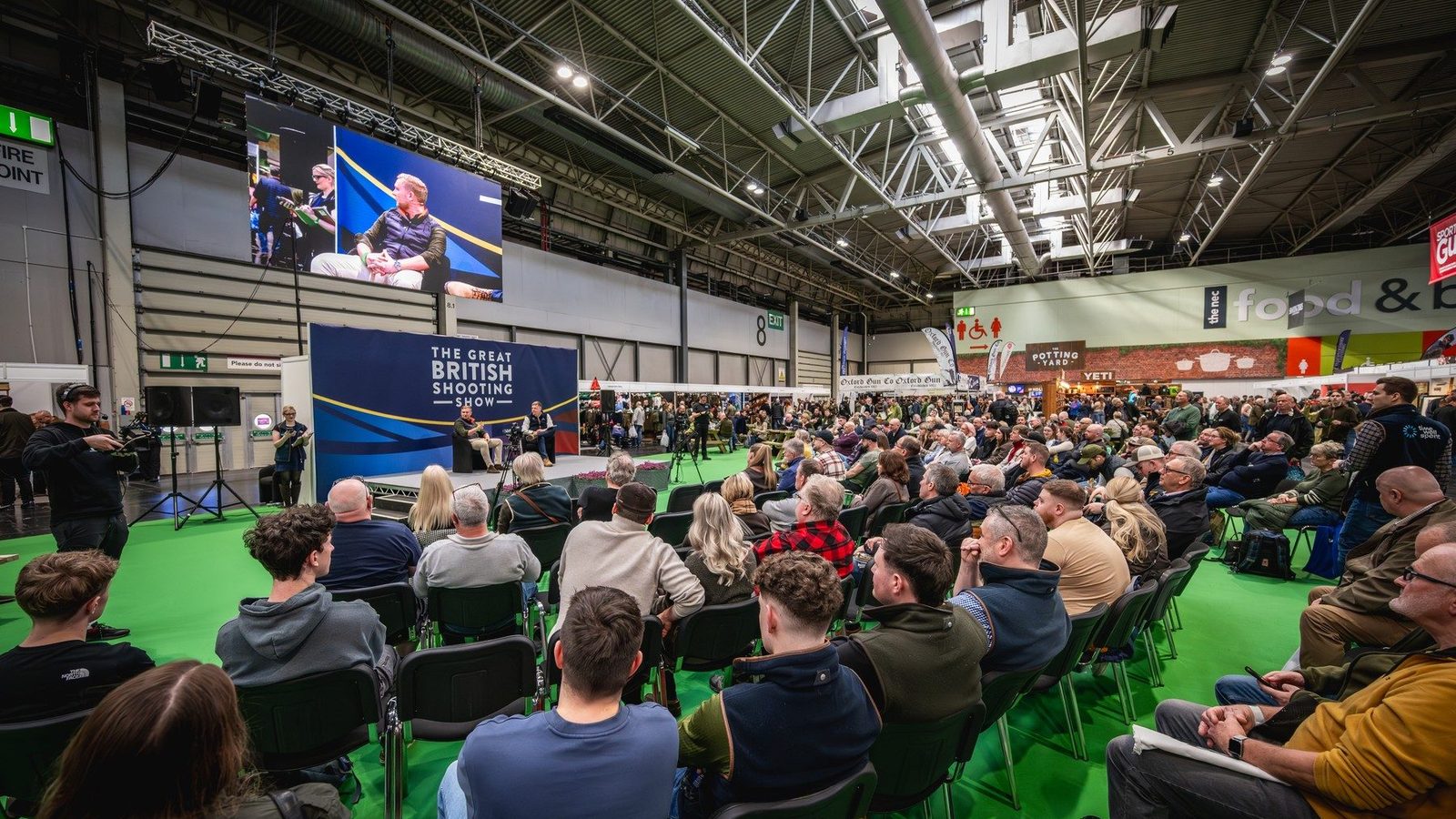
A full house for the main stage in 2026. Next year it gets two sister stages. Credit: Sarah Farnsworth
The Great British Shooting Show is tripling its stage line-up for 2027. Last year’s show ran a single main stage; next year’s event at the NEC Birmingham, from 12 – 14 February, will have three, and for exhibitors each one is a fixed point around which footfall will gather.
Alongside the main stage, rifle shooters and airgunners will each get a dedicated stage of their own, hosting chat show-style interviews with famous faces. Guests for the new stages have yet to be confirmed, but the show says to expect plenty of well-known names. A rifle or airgun exhibitor now has a stage speaking directly to its customers, and a reason to ask where it sits relative to the stand.
Who has appeared on the main stage before?
The main stage has already shown it can pull a crowd. Last year it drew packed audiences for Vinnie Jones, multiple world clay shooting champion George Digweed and Olympic gold medallists Richard Faulds and Nathan Hales, and a session that fills like that moves the crowd around the halls for its duration. Stands near the new rifle and airgun stages can expect the same rhythm, and can plan demonstrations and appointments around the programme once it is published.
The rugby trio and the awards on Friday
On Friday afternoon, Mike Tindall, James Haskell and Alex Payne – the trio behind the podcast The Good, The Bad and The Rugby – take over the main stage for interviews with famous faces from television and the shooting world. All three are keen shots, so expect big laughs and real passion for the sport. Friday also sees the winners of the Great British Shooting Awards announced, which gives any shortlisted exhibitor a stand story for the rest of the weekend.
The show is open from 9am to 4pm on all three days. Tickets are at britishshootingshow.com.
Will there be an airgun stage at the British Shooting Show 2027?
Yes. Airgunners and rifle shooters each get a dedicated stage alongside the main stage, hosting chat show-style interviews. Guests for the new stages have yet to be confirmed.
When are the Great British Shooting Awards announced?
The winners are announced on Friday 12 February 2027, the first day of the show, the same afternoon Mike Tindall, James Haskell and Alex Payne host the main stage.
What are the British Shooting Show 2027 opening times?
The show runs at the NEC Birmingham from 12 – 14 February 2027 and is open from 9am to 4pm on all three days.
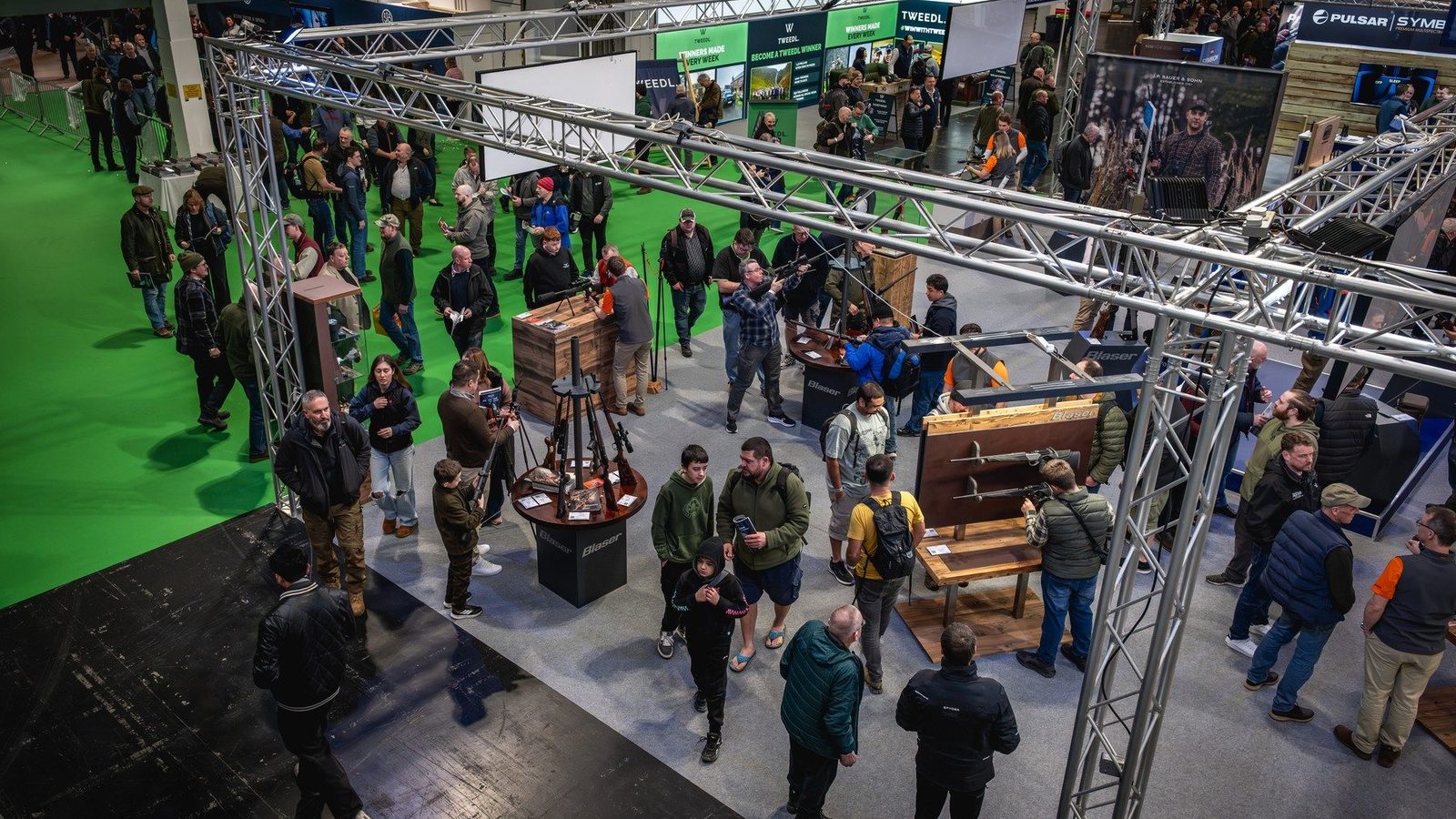
Rifles to handle on the Blaser stand in 2026, one of hundreds of stands to get round. Credit: Sarah Farnsworth
For the first time, visitors to the Great British Shooting Show can buy multi-day tickets, and the price difference is large enough to change how they use the halls. The show returns to the NEC Birmingham from 12 – 14 February 2027, and its own message to visitors is that the best value by far is to come for the whole weekend. For an exhibitor, a visitor who comes back on Saturday is a different proposition from one working the halls against the clock on a single day.
How much do multi-day tickets save?
An adult ticket for all three days works out at £21.65 a day, against £34.95 for a one-day ticket. A two-day pass brings the daily cost down to £24.97. A visitor who buys the three-day ticket saves up to £39.90 on the price of three separate days. For an exhibitor the arithmetic matters less than the incentive: the show has priced the return visit to be the obvious choice.
Seeing more of the show over two or three days
The pitch is aimed at anyone who has left the show feeling they missed something, and the trade will recognise the visitor it describes. With more than 2,000 brands across four heated halls, plus ranges, stages and hundreds of stands, even seasoned regulars struggle to see everything in a single visit. A multi-day ticket lets a visitor handle the shotguns on Friday, test airguns on the ranges on Saturday and compare thermals at leisure on Sunday.
For a stand, that means the customer who handled a gun on Friday can come back for the second conversation on Saturday rather than deciding under time pressure or not deciding at all. Staffing rotas, demonstration stock and follow-up notes now need to be planned for a returning visitor as well as a passing one.
Opening times and what every ticket includes
The show is open from 9am to 4pm on all three days. Free parking and a showguide are included with every ticket, and children under 8 go free. Tickets are at britishshootingshow.com.
How much do British Shooting Show 2027 multi-day tickets cost per day?
A three-day adult ticket works out at £21.65 a day and a two-day pass at £24.97 a day, against £34.95 for a single day. Buying the three-day ticket saves up to £39.90 against three separate days.
What do multi-day tickets mean for exhibitors at the British Shooting Show?
Visitors who buy them can return to a stand on a second or third day, so a Friday conversation can be finished on Saturday. Staffing, demonstration stock and follow-up should assume a returning visitor as well as a passing one.
When is the British Shooting Show 2027 open?
From 12 – 14 February 2027 at the NEC Birmingham, 9am to 4pm on all three days. Free parking and a showguide are included with every ticket, and children under 8 go free.
I should like to begin my address by thanking those who have served as Members of Council over the course of the past year. During the year, David Stapley stepped down, and I should like to thank him for his voluntary service. Sean O’Driscoll of Rothery’s is stepping down at this AGM. Sean, our grateful thanks for the contribution you have made. Alex Levett-Scrivener of Shooting Star joined Council by co-option.
Over the past 12 months, the Gun Trade Association (GTA) has experienced one of its busiest years on record.
The threat to Sections 1 and 2 licensing
The Government’s proposed review of Sections 1 and 2 licensing may have been kicked into the long grass by the current Home Secretary, but the existential threat it posed consumed a huge amount of our time and resources during the first half of this year. A particular thank you to those of you who contributed so generously to our research project, which demonstrated the enormous damage such reforms could inflict not only on the trade, but on the wider UK economy.
The threat posed by proposed changes to Sections 1 and 2 has also helped galvanise the sector. The GTA took a leadership role, working with the Shooting Industry Fund to establish a coalition of 16 organisations which, under the umbrella of the British Shooting Sports Council (BSSC), are now united in opposition to proposed changes to shotgun controls that, in our view, cannot be justified on public-safety grounds.
It is therefore regrettable that, in its August report on national police firearms licensing, His Majesty’s Inspectorate of Constabulary and Fire & Rescue Services (HMICFRS) saw fit to resurrect this proposal. It is our understanding that the report received a muted response from Home Office officials.
A record year for the GTA help desk
The GTA is a lean organisation with an influence and workload far greater than its size might suggest. This year, our help desk has been busier than ever, our RFD training courses have been oversubscribed, and we have been heavily involved in an extraordinary range of issues. These have included new Home Office guidance, licensing delays, a proposed ban on the private sale of firearms, ongoing lead restrictions, an import-control testing regime for blank firers, implementation of the Online Safety Act, and the introduction of the new public-facing National Firearms Licensing Portal. We have also committed significant time to helping members struggling with changes to Parcelforce systems and to the removal of moderators from licensing – an issue on which the GTA and BSSC ultimately had to draft the official guidance for the Home Office to publish.
Looking ahead, all eyes are on the Home Secretary’s plans for police reform. Together with our sister organisations, we continue to argue vigorously for the formation of a single national firearms licensing agency.
Expanding GTA training for RFDs
The GTA’s technical director, Paul Green, continues to work hard to expand our training offer, developing and delivering tailored courses for individual businesses and organisations around the UK. He has recently extended our provision to Section 5 providers, and we are working to introduce Continuing Professional Development (CPD) accreditation for Paul’s courses. Expect a survey in the New Year to gauge your appetite for further training, including professional qualifications for RFD servants and a customised pre-renewal audit product for RFDs.
Modernising the association
The GTA is now a fully virtual organisation. We have continued to bear down on costs, while our operations manager, Elaine Gallen, has led the drive to streamline and improve our office procedures. Elaine manages our website and membership database, assists members with subscriptions and processes new membership applications. We now have well over 400 members and are beginning to explore opportunities to expand our membership overseas and within the fast-growing defence sector.
Our programme of modernisation will also come to fruition over the next few weeks. This includes a new IT system, a new customer relationship management (CRM) system, a new website, refreshed branding, enhanced financial reporting and improved workflow systems.
Speaking with a unified voice for the trade
As another year passes, I should like to take this opportunity to thank you for your continued support of the Gun Trade Association during what remain challenging times. Inevitably, the sadness of losing former GTA director John Batley, one of the trade’s great champions, has cast a shadow over our work.
Nevertheless, you can be assured that we will continue to protect, promote and represent your businesses. It is only by working together, and by speaking with a strong and unified voice, that we can sustain a strong gun trade now and into the future.
Frequently asked questions
Who is chairman of the Gun Trade Association?
Oskar Waktare is chairman of the Gun Trade Association. He gave the chairman’s report at the association’s AGM.
How many members does the Gun Trade Association have?
The GTA has well over 400 members and is exploring opportunities to expand its membership overseas and within the defence sector.
What does the GTA want from firearms licensing reform?
Together with its sister organisations, the GTA is arguing for the formation of a single national firearms licensing agency.
Stock is essential to a firearms retailer. Customers expect to see products, compare options and, where possible, take a purchase away that day. But every item on the shelf also represents cash tied up in the business.
The challenge is to carry enough stock to meet demand without filling the shop, storeroom and gun racks with products that remain unsold for months. This is particularly important where retailers carry a broad range of guns, optics, ammunition, clothing, accessories and parts.
Good stock control does not mean simply buying less. It means understanding what sells, why it sells and when it should be replenished. Here are five practical ways to make stock work harder.
1. Know the age of every line
Most retailers can identify their bestsellers quickly. The greater opportunity often lies in identifying the items that have sat unnoticed for too long.
Run a regular report showing stock by age, value and recent sales. The exact periods will vary by category. A premium rifle or high-end optic may take longer to sell than pellets, cleaning products or ear protection, while seasonal clothing may have a clear selling window.
The purpose is to distinguish between stock that is simply awaiting the right customer and stock that has lost momentum. A product that has been in the business for 12 months without generating enquiries needs attention, particularly if several similar items are held.
Give each ageing line a clear status: retain, promote, reduce or stop buying. This prevents slow-moving products from becoming part of the furniture.
2. Look beyond the individual product
A line can appear slow-moving when viewed in isolation but still serve an important purpose within a category.
For example, a retailer may sell only a small number of premium riflescopes, but those products can help establish the business as a serious optics destination and provide a useful upgrade option during a larger sale. Equally, a specific clothing size may sell infrequently but remain necessary to make a range credible.
Ask whether each product earns its place by generating direct sales, supporting related purchases or giving customers confidence in the breadth of the offer.
This is different from keeping stock because it might sell eventually. The question is whether the line has a defined commercial role. If it does not, the money may be better used on faster-selling alternatives, demonstration models or stock that supports the retailer’s core customer base.
3. Reorder from evidence, not instinct
Supplier launches, show conversations and product reviews can all create excitement. They should not be the only reason to place an order.
Before reordering, look at what has actually sold over the previous three, six or 12 months. Check which colours, sizes, calibres and price points move quickest. A range may be popular overall, but one configuration could account for most sales.
Use that information to set sensible minimum and maximum levels. Fast-moving essentials should be replenished before they become a missed sale. Slower items may be better ordered only when demand is proven or when a customer commits to a purchase.
Staff input matters here. Sales data can show what sold, but staff will often know why a customer chose another product or left without buying. That information can help a retailer avoid repeating an unproductive order.
4. Give slow-moving stock an active plan
Discounting should not be the first response to slow stock. Before reducing the price, make sure customers have had a fair chance to see, handle and understand the product.
Move it to a better display position, add clear product information or place it alongside relevant accessories. Ask staff to familiarise themselves with the line and identify the customer for whom it may be a suitable choice.
Bundling can also create value without immediately cutting margin. A rifle, mount and cleaning package, or an optic supplied with the appropriate batteries and a lens-care kit, can give a customer a clearer reason to choose a particular product.
If these steps do not improve interest, act decisively. A controlled reduction is usually preferable to allowing stock to continue ageing. The cash released can be reinvested in a better-selling line.
5. Review the buying process
Buying decisions should be reviewed as closely as sales performance. Look at where stock has come from, whether supplier terms remain appropriate and how much flexibility the business has if demand changes.
Suppliers may be able to support a retailer with demonstration stock, smaller initial orders, display material or access to products at short notice. Those conversations are especially valuable when considering a new category or a premium line with a longer selling cycle.
Avoid placing an order simply to reach a supplier threshold or because a product is newly available. The best purchase order is one with a clear reason behind every line: a proven seller, a known customer requirement, a gap in the range or a deliberate test.
What does effective stock control achieve?
Effective stock control protects cash, improves availability and makes the shop easier for both customers and staff to navigate. It does not require a retailer to remove choice or stop trying new products.
It requires regular attention. By reviewing ageing stock, understanding each line’s purpose and buying from evidence, retailers can keep more of their capital focused on products that support sales, margin and customer service.
Frequently asked questions
How should a gun shop track ageing stock?
Run a regular report showing stock by age, value and recent sales, then give each ageing line a clear status: retain, promote, reduce or stop buying.
Should a retailer keep a line that sells slowly?
Only if it has a defined commercial role – supporting related purchases, providing an upgrade option or making a range credible. If it does not, the money may be better used on faster-selling alternatives.
What should you do with slow-moving stock before discounting it?
Move it to a better display position, add clear product information, place it alongside relevant accessories, brief staff on it or bundle it. If interest still does not improve, a controlled reduction is usually better than letting it age.
How should reorder levels be set?
Look at what has actually sold over the previous three, six or 12 months, including which colours, sizes, calibres and price points move quickest, and set sensible minimum and maximum levels from that.
A decade ago, night vision meant a heavy, fragile, eye-wateringly expensive tube that lived in a drawer for all but a few nights a year. Today a shooter can walk into a dealer and leave with a single digital scope that runs from midday to midnight for the price of a mid-range glass optic. That shift has been one of the fastest-moving categories on the counter, and for good reason. But as someone who develops projectiles for a living – and who runs a HIKMICRO Alpex Pro on my own rifle – I think it’s worth the trade understanding not just why these scopes sell, but where they still fall short. The dealers who can speak to both will sell more of them, and to better customers.
The case for going digital
The headline advantage is obvious: one optic, day and night, with no swapping and no separate dedicated NV unit. For the foxer or the ratter that alone justifies the purchase. Underneath it sit a stack of features glass simply cannot offer. Onboard recording and stills – invaluable for content, for evidence of humane dispatch, and increasingly for customers who want to share their sport. Integrated laser rangefinding tied to a ballistic calculator, so the scope ranges the target and offers a firing solution. Multiple selectable reticles in various colours, none of which can be damaged or lost. And, crucially, firmware that can be updated, meaning the scope a customer buys can genuinely improve after it leaves the shop.
Updatable firmware means the scope can improve after it leaves the shop
There’s a neat technical bonus too, one worth knowing when a customer raises it: digital scopes have no parallax in the optical sense. The reticle is drawn electronically on the display over the sensor image, so it cannot shift against the target with head position the way a second-focal-plane glass scope’s can. That removes a whole category of aiming error that trips up less experienced shooters.
And then there’s value. The capability-per-pound has collapsed in the buyer’s favour. Detection ranges and image quality that were flagship-only three years ago are now mid-tier. For a trade managing customers who’ve always assumed NV was out of reach, that’s a powerful conversation.
Where the maths gets awkward: drag models and ballistic coefficients
Here is where my professional interest kicks in, and where the category still has homework to do. The ballistic solvers built into these scopes are a genuine selling point – but they inherit assumptions from the centrefire world that don’t always survive contact with the airgun and rimfire shooters who buy them.
Take drag models. Most solvers – the Alpex Pro’s included – offer G1, G7 and sometimes a spherical coefficient. Those reference projectiles – a flat-based ogive bullet, a long boat-tail spitzer, a round ball – are fine for the rifles they were derived for. But a great many digital scopes end up on sub-12 air rifles, and a diabolo pellet looks nothing like any of them. It’s a wasp-waisted, hollow-skirted, high-drag shape whose drag signature is a poor match to those models, which means the effective ballistic coefficient drifts wildly as the pellet slows. Feed a single G1 number into the solver and it will look right at the muzzle and lie to you downrange, precisely where holdover matters most. The fix exists – a diabolo-appropriate drag model – and the manufacturers who adopt it will own the airgun market.
The same theme runs through BC handling more broadly. A single coefficient, however carefully chosen, is a compromise across the velocity band. The better answer, well established in serious ballistic software, is to let the user true the curve from their own verified drop data at multiple ranges, shaping the model to the projectile rather than forcing the projectile onto a model. Very few onboard solvers allow it. They could.
There’s a common trap worth warning customers away from here, because it quietly wrecks accuracy. Faced with a solver that won’t quite match their drop, many shooters “fix” it by winding the muzzle velocity up or down until the numbers agree – all while running an incorrect BC. It works at the range they tuned it to and falls apart everywhere else. Velocity is the one input you can actually measure: put a chronograph on the rifle, take a real average, and enter that. Then true the BC, which is the figure carrying the genuine uncertainty. Correct the unknown, not the known, and you’ll hold far less error across the whole trajectory. And don’t get anchored to the projectile manufacturer’s stated BC – those figures rarely correlate with what a low-to-mid-price digital optic’s solver actually does with them, so treat the printed number as a starting point, not gospel.
Reticles deserve a mention too. A hash-marked reticle is only useful for rapid holdover if the shooter knows what each mark subtends – and on a surprising number of digital scopes, mine included, it is simply not documented whether the graduations are mils, MOA, or an arbitrary spacing. For a customer trying to build a dope card, that’s a real obstacle, and an easy one for makers to remove: state the subtension, at a stated magnification, in the manual. On a variable digital zoom that reference magnification matters, and it’s rarely made clear.
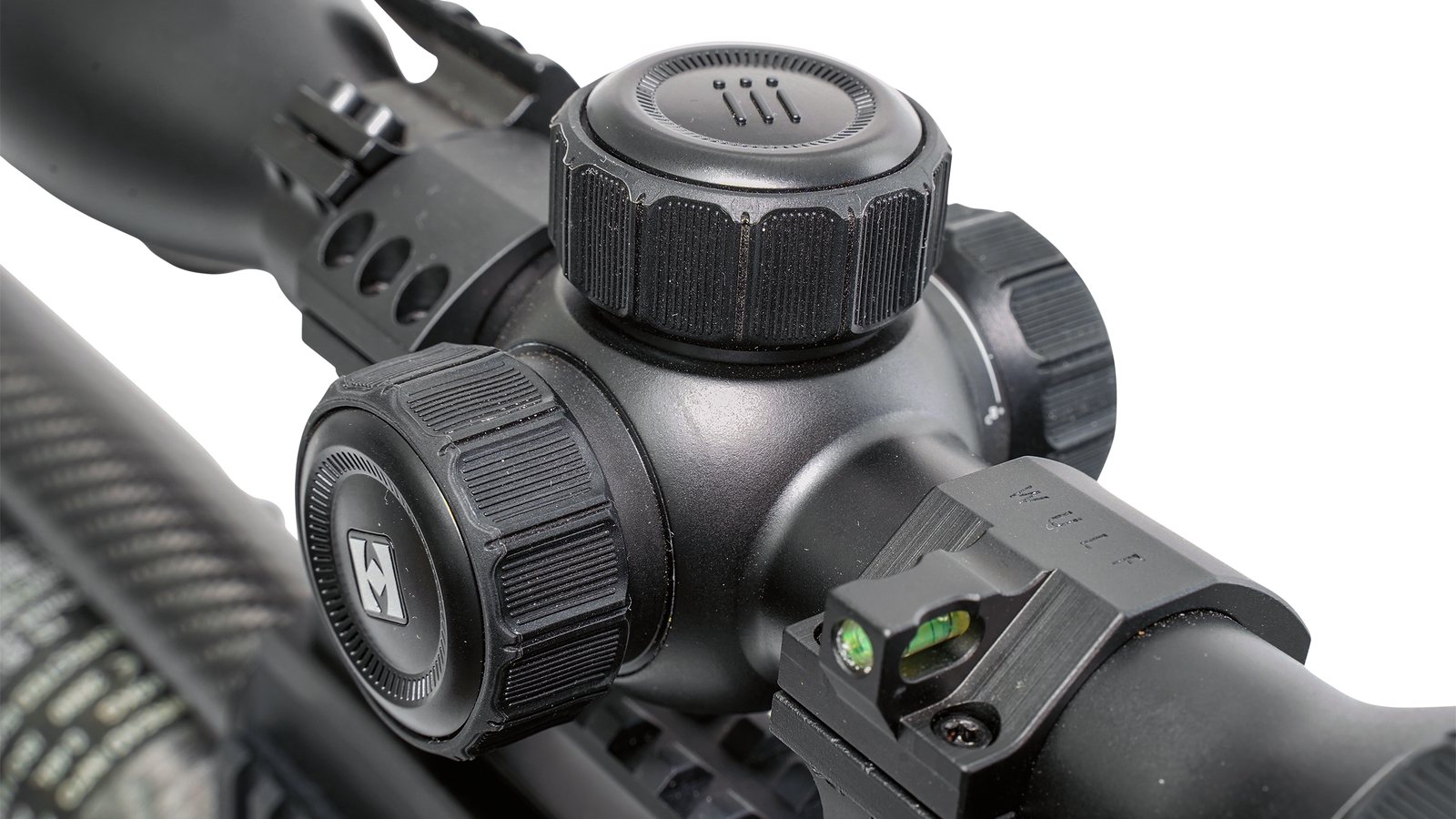
The HIKMICRO Alpex Pro, which Bradley runs on his own rifle
The practical caveats of digital riflescopes
Beyond the ballistics, the trade should set expectations honestly. These are electronic devices: a flat battery is a dead scope, where glass always works. Image quality in good daylight still trails a quality glass optic, and there’s an important distinction between detecting something and positively identifying it – worth spelling out to a customer who imagines daytime clarity in the dark. Digital zoom degrades the image, so the useful magnification is anchored to the base optical power. Zeroing is electronic, shifting the reticle within a finite window on the sensor, which can occasionally catch out an unusual mount height or a big cant. None of these is a dealbreaker. All are worth a customer knowing before they buy, not after.
There’s also a segment the current designs quietly exclude: the shooter who works to their own dope and wants to dial. Police, military and serious target users often don’t want an automated firing solution at all – they want manual elevation and windage they can trust and repeat. Digital scopes that offered proper manual adjustment alongside the clever automation would open a door that’s currently shut.
Paul Bradley is a professional ballistician within the Beretta Group, developing projectiles in service with NATO militaries, and a regular contributor to the shooting press. He runs a HIKMICRO Alpex Pro.
Frequently asked questions
Do digital riflescopes have parallax?
Not in the optical sense. The reticle is drawn electronically on the display over the sensor image, so it cannot shift against the target with head position as a second-focal-plane glass scope’s can.
Why do digital scope ballistic solvers struggle with air rifle pellets?
Most offer G1, G7 and sometimes a spherical drag model, none of which matches a high-drag diabolo pellet. The effective ballistic coefficient drifts as the pellet slows, so a single G1 figure can look right at the muzzle and be wrong downrange.
Should you change muzzle velocity to make a ballistic solver match your drops?
No. Measure velocity with a chronograph and enter the real average, then true the ballistic coefficient, which is the figure carrying the genuine uncertainty. Tuning velocity to fit only works at the range it was tuned to.
John Rigby & Co. will preview a new production model, the Highland Stalker Jim Corbett Man-Eater in .275 Rigby, at the Mallards and Double Rifle Society Safari Classic Shoot in Crystal River, Florida, on Saturday, 14 November 2026, with the official unveiling to follow at the safari hunting shows in early 2027. The announcement, published on 15 October, names the model, the calibre and the lineage and nothing else: no specification, no production number and no price, UK or otherwise, has been released.
For the UK trade the preview is worth reading for what it says about how the premium end of the bolt-action market is being worked. Rigby is launching a rifle built on its best-known story to an American audience first, at a paid event built around big-bore shooting and a dinner, and holding the detail back for the show season.
What is Rigby launching?
The Man-Eater is a variant of the Highland Stalker, the company’s working bolt-action stalking rifle, chambered in .275 Rigby, the firm’s name for the 7x57mm cartridge it introduced to the British market. The name is Jim Corbett’s: the original .275 Rigby presented to him after he killed the Champawat man-eating tigress in 1907 sits in the company’s London museum, and managing director Marc Newton will bring it to Florida and speak at the evening dinner. Two examples of the new model will be shown beside it.
The rest of the display is the firm’s established range: a Big Game Vintage in .416 Rigby and a Big Game Lightweight in .375 H&H, both in double square bridge configuration, a Highland Stalker Magnum in .300 Winchester Magnum, and a Big Game SSB on the hosts’ 25-yard and 100-yard indoor ranges for guests to shoot.
What does the launch signal for the premium bolt-action market?
Three things a retailer or distributor can take from it. First, that at this price point the story is the product: the Man-Eater is a Highland Stalker with a name, a calibre and a museum piece attached, and the company is spending its launch on the association rather than on a feature list. Second, that the United States remains the first market for the heritage London houses on big-game and tribute models, and that the safari show circuit, not a UK show, is where the specification will land. Third, that a maker which has just moved into a purpose-built London headquarters with its museum at the centre of the showroom is using that museum as a product pipeline: the Corbett rifle already sits beneath the table on which every new Rigby is presented, and now it has a model named for it.
None of that needs a UK dealer to do anything yet. The company has said the official unveiling comes in early 2027, and until the specification and price are published there is nothing to stock, quote or list. What the trade can do is watch how the Highland Stalker line is being extended, because a working stalking rifle carrying a tribute name is a different proposition from a bespoke double, and the customer for it is the stalker who already owns the standard rifle as much as the collector.
What happens next?
The official unveiling of the Highland Stalker Jim Corbett Man-Eater is at the safari hunting shows in early 2027, when Rigby is expected to publish the specification and pricing. Gun Trade Insider will report the UK position, including whether the model reaches the trade through the company direct or through dealers, when the company confirms it.
Useful links
John Rigby & Co. – the announcement of the Florida preview in full
Frequently asked questions
What is the Rigby Highland Stalker Jim Corbett Man-Eater?
A new production model from John Rigby & Co., a variant of its Highland Stalker bolt-action stalking rifle chambered in .275 Rigby and named for Jim Corbett’s original .275, which the company keeps in its London museum.
Has Rigby published a price or specification for the Man-Eater?
No. The 15 October announcement names the model, the calibre and the lineage only; the specification and pricing are expected at the official unveiling at the safari hunting shows in early 2027.
Where is the Man-Eater being previewed?
At the Mallards and Double Rifle Society Safari Classic Shoot in Crystal River, Florida, on 14 November 2026, where two examples will be shown beside Jim Corbett’s original rifle.
Readers will now be well aware that police licensing departments conduct suitability checks on new applicants and on existing certificate holders and RFDs at every renewal. This exercise is largely ‘paper based’ – the police simply make a decision on the documentation and information that is available to them. Up to now this has been how most forces would reach their decision.
In our experience the majority of forces continue to operate in this way. Often no opportunity is given to the applicant or existing certificate holder to address or explain adverse information that is being used against them as a basis to refuse a certificate.
What the statutory guidance says about untested allegations
“3.16 Where information has not resulted in a conviction, chief officers should consider the credibility of the information, recognising the potential for malicious, but unfounded, allegations being made about the applicant. The applicant should be given the opportunity to comment on information about them which has not been tested by the courts, unless doing so may compromise an ongoing investigation, give rise to a risk of retribution, disclose confidential information about an individual other than the applicant, or reveal the identity of someone who has given information in confidence.”
In simple terms, the police do not need to ask further about previous convictions, but if there is other information they are relying on to refuse an application or renewal, they should give you an opportunity to explain it. This section of the Guidance is not new; the same wording appears in the first edition published in 2021 (then in 3.14).
When police may not seek an explanation
There will be situations when there is justification for not seeking an explanation. The most common being where it is a partner or another person close to the applicant who has made a complaint, and the police revealing such information might place that individual in potential danger. There are, however, many other situations where giving the applicant an opportunity to explain past events might result in the concerns no longer being valid.
An abiding complaint from applicants going to appeal can be summarised as ‘This decision has been made by someone who I have never met, they do not know me, and I have never been asked about any of this by anyone’. It is now required for all new applicants to be interviewed at home by an FEO, and usually on renewal. All concerns should be discussed. The FEO will sometimes record this interview. There is no reason for the applicant not to do the same. It saves disputes about what was said.
Refusal letters must give full reasons
Those forces which continue to take into account unproven allegations without seeking an explanation are failing to comply with the Statutory Guidance. The only valid grounds for not giving the applicant that opportunity are set out in the paragraph quoted above.
This ties in with another widespread failure to provide detailed reasons in the refusal letter: paragraph 3.48 of the Guidance provides: “in all cases the applicant must be notified of the reasons in the case of a refusal or revocation with as much detail given of the reasons for the decision as is possible to reasonably provide.”
If an applicant receives a refusal or revocation letter and it does not provide full reasons, they should be requested promptly. It is worth pointing out that a failure to do so could result in the police being ordered to pay costs. If reasons are provided, and they include untested allegations on which the applicant has never been asked for an explanation, similarly the police should be invited to discuss the concerns with the applicant and review the original decision. In our experience it is common for both of these failures to occur, often in the same case.
Suitability review interviews: a decision already made
We have also noted another practice being adopted which we believe may be unlawful. One police force has taken to reaching a decision to refuse or revoke without seeking any explanation from the applicant. However, the applicant is then invited to a ‘suitability review interview’ in a police station. The interviews are recorded, apparently because of the bad handwriting of the officers conducting the interview. The applicant then has put to them concerns which the police have about them. On the face of it, this might sound like this police force are actually following the Guidance. So why is this unlawful?
It is because at the end of the interview the applicant is handed a pre-prepared refusal or revocation letter, often dated the day before the interview. In reality, the decision had already been made. We are aware of half a dozen or so cases where this has been done. Police have a statutory duty to consider applicants fairly and in accordance with the Guidance.
It appears that the actual purpose of these interviews is not to allow the applicant to provide an explanation for any concerns, it is simply to establish if more evidence can be gathered to bolster what might be considered weak reasons for the decisions that have already been made. Applicants who ask to bring a friend or a legal representative along are discouraged from doing so. Given the formal nature of these interviews, that is also unfair.
What to do if you are asked to a suitability interview
If you are asked for such an interview, ask what subjects are to be covered; seek advice from a shooting organisation or a lawyer, take someone with you or make sure you record it yourself.
Frequently asked questions
Do police have to let firearms applicants respond to allegations?
Under paragraph 3.16 of the statutory guidance, applicants should be given the opportunity to comment on information that has not been tested by the courts, unless doing so may compromise an investigation, risk retribution, disclose confidential information about someone else or reveal a confidential source.
What must a firearms refusal letter contain?
Paragraph 3.48 of the guidance says the applicant must be notified of the reasons for a refusal or revocation, with as much detail as is reasonably possible. If full reasons are not given, they should be requested promptly.
Can I record my interview with a firearms enquiry officer?
Nick Doherty says there is no reason not to. The FEO will sometimes record the interview, and recording it yourself saves disputes about what was said.
Nebraska bullet and ammunition-machinery manufacturer Mead Industries has filed for Chapter 11 bankruptcy protection, seeking to reorganise while it addresses disputed lawsuit and contract claims.
The Wood River-based company filed its voluntary petition in the US Bankruptcy Court for the District of Nebraska on 2 September. The filing lists more than $7.1m in assets and more than $6.4m in liabilities.
Named creditors include Kentucky’s Best Hemp Inc., which holds a disputed lawsuit claim exceeding $1.85m; Hiawatha National Bank, owed more than $1.3m; FNBO, owed more than $544,000; and Gunwerks LLC, which has a $346,000 contract-dispute claim. Debts to company owner Gregory A. Mead and AMDG Enterprises are also listed.
Founded by Greg Mead in 1977, Mead Industries manufactures precision hunting bullets, plus machinery, equipment and components for ammunition makers. Its 15,000 sq ft Wood River facility includes a ballistics laboratory, welding shop and machine shop. The company says its equipment supports production of more than 50 million bullets a month across the shooting industry.
The petition records gross revenue of more than $2.4m in 2024, falling to more than $1.3m in 2025. By the filing date, it had generated more than $1.1m during 2026.
Garmin acquires Applied Ballistics
Garmin has acquired Applied Ballistics, a provider of ballistic research, projectile data and integrated solver technology for the long-range shooting market. Financial terms were not disclosed.
The acquisition expands Garmin’s capability across its tactical, hunting and shooting-sports businesses. Applied Ballistics develops ballistic solvers and radar-validated projectile models for hunters, competitive shooters and other long-range users.
Brad Trenkle, Garmin Co-Chief Operating Officer, said: “Applied Ballistics is a natural complement to Garmin’s outdoor and tactical product portfolio. By bringing our teams together, we can accelerate innovation and deliver even more capable, integrated solutions to customers who depend on accuracy.”
Based in Howard City, Michigan, Applied Ballistics’ portfolio includes the Quantum app, a ballistic solver and ecosystem-management platform.
Mainland Europe
Steiner adds PromoBoxx dealer platform
Steiner Optics has partnered with US retail marketing platform PromoBoxx to give authorised dealers access to ready-made, brand-approved digital campaigns.
The platform supplies content for email, social media and websites, helping retailers promote Steiner products without producing assets from scratch. Campaigns will be updated to support launches, promotions and product features.
Dave Paskenski, Steiner Optics’ Director of Sales, said: “Our dealers are experts at serving hunters, shooters and outdoor enthusiasts, but marketing can often compete with the demands of running a business.”
Daniel Technologies has appointed Paul Connolly as Business Development Manager – Defence, strengthening its capability in the defence and security sector.
Connolly joins following a 24-year career with the Irish Defence Forces, including senior technical, operational and command appointments. From 2019 to 2024, he served as Brigade Ordnance Officer and Officer Commanding of 2 Brigade Ordnance Groups, before becoming Senior Staff Officer Procurement within the Directorate of Ordnance.
His experience covers the design, specification, inspection, maintenance and procurement of defence equipment. He is also an experienced explosive ordnance disposal officer, with more than 17 years of active EOD service and overseas deployments in Liberia, Kosovo, Chad and Lebanon.
Connolly said: “The move to Daniel Technologies just simply made sense. It feels like a very natural move to go from being an Ordnance Officer involved in the design, specification, inspection, maintenance and procurement of defensive equipment to a company that is at the cutting edge of the sourcing and supply of defensive equipment and services.”
In his new role, he will focus on matching changing defence requirements with products and services suited to operational use.

 Donate
 Basket
 Login