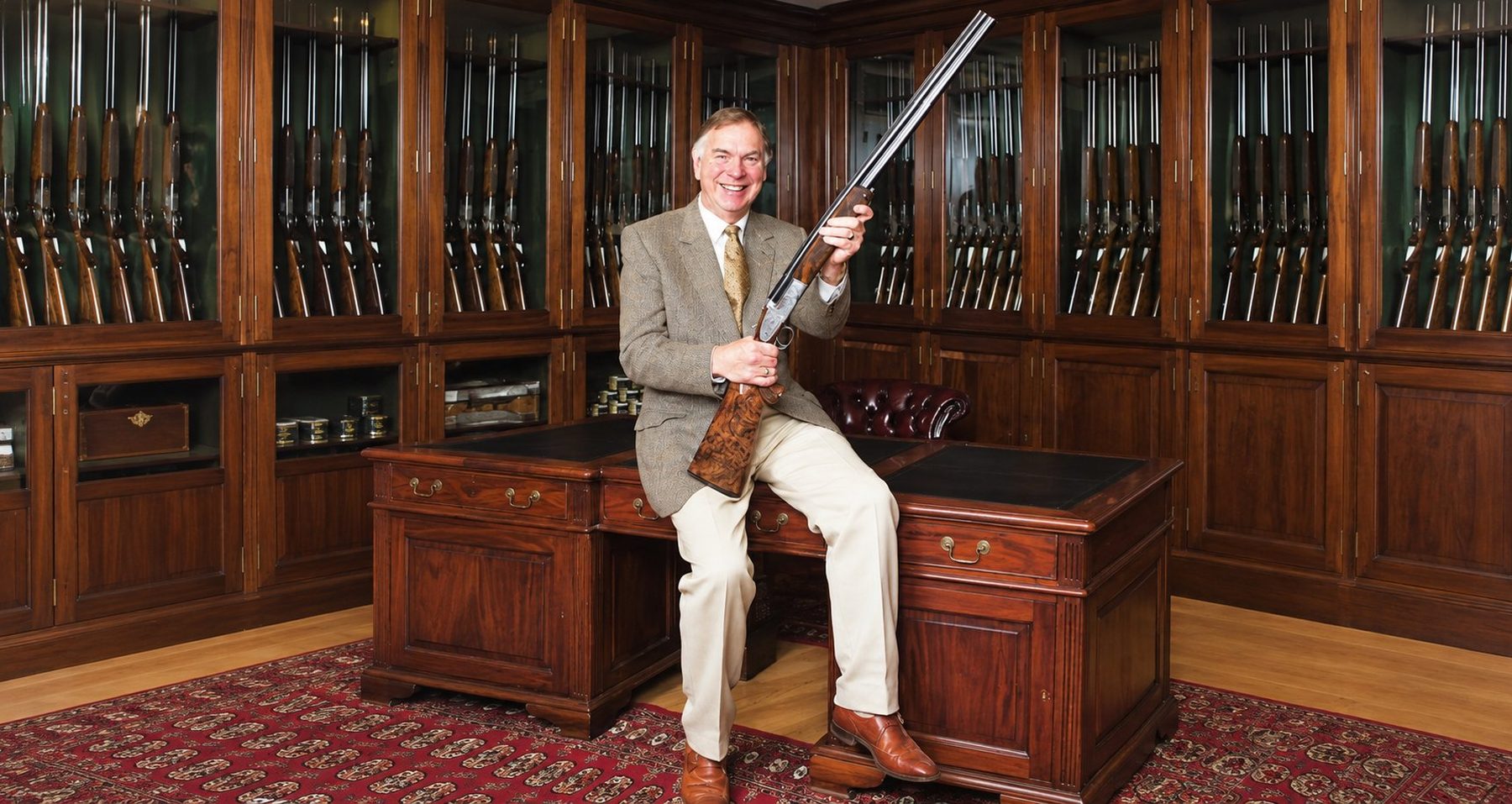
Tony Kennedy, the Cornish gunmaker who built a Bisley business and sold it to William Evans, dies

Back to blog

Tony Kennedy, the Cornish gunmaker whose career ran from a start at Leslie Hewett’s to his own name over the door at Bisley, has died after more than 50 years in the trade. The Clay Pigeon Shooting Association (CPSA) announced on 18 September that he died in June, and its notice sets out a working life that many in the UK trade will recognise as their own industry’s story in miniature.

Fifty years in the trade, in four moves

The notice gives the career in outline. Mr Kennedy began at Leslie Hewett’s, then opened his own gun shop in Launceston in 1977, running it alongside a pheasant shoot: the West Country model, in which the shop, the shoot and the customers were one community. In 2000 he moved onto the national stage with Kennedy Gunmakers at Bisley, and in 2007 he sold the business to William Evans, the London gunmaker. He did not stop: the notice records that he kept working from home under the Kennedy Gunmakers name to the end.

What does the 2007 sale tell the trade?

For any independent weighing succession, the shape of the Kennedy deal is worth noting. The name went to a buyer with the retail reach to use it; the man kept the bench. A gunmaker’s brand has a value separate from its founder’s hands, and selling it while the founder is still working, rather than when he stops, is the version of the transaction that leaves both sides with something. Nearly two decades on from the sale, Mr Kennedy was still turning out work under the name he had sold, which says something about the terms and more about the man.

The Bisley move itself is the other lesson. A Launceston shop serves the customers who can drive to it; a Bisley address puts a maker in front of the national shooting community every weekend of the year. Moving the name to where the shooters were, after 23 years in Cornwall, is the kind of decision the trade talks about and seldom makes.

The gunmaker who shot

Mr Kennedy was not only a tradesman. He won many Cornish county championships and co-founded North Cornwall Gun Club with Dick Bray in the early 1990s, and his grandson William has just made the Cornwall down-the-line team. For the trade the point is commercial as well as personal: a maker who competes is his own best demonstration, and a club built by a dealer creates the customers who come through his door. That was true in Launceston in the 1990s and it is true of every shooting ground with a gun room today.

What happens next

The Clay Pigeon Shooting Association’s notice, linked below, carries no funeral or memorial details. Trade colleagues with recollections of Mr Kennedy’s time at Hewett’s, in Launceston or at Bisley are welcome to share them with Gun Trade Insider for the record.


Useful links

Clay Pigeon Shooting Association – the association’s notice of Tony Kennedy’s death, published 18 September 2026


Frequently asked questions

Who was Tony Kennedy?

Tony Kennedy was a Cornish gunmaker who spent more than 50 years in the trade. He began at Leslie Hewett’s, opened his own gun shop in Launceston in 1977 and founded Kennedy Gunmakers at Bisley in 2000.

When was Kennedy Gunmakers sold to William Evans?

Tony Kennedy sold Kennedy Gunmakers to William Evans in 2007. He continued to work from home under the Kennedy Gunmakers name until his death in June 2026.

When did Tony Kennedy die?

He died in June 2026. The Clay Pigeon Shooting Association announced his death on 18 September 2026.


Related articles

John Batley obituary – the Gun Trade Association’s director for 19 years, who died in September aged 86

BASC introduces 4,186 young people to clay shooting – the next generation of customers, coached over six days at the Poacher 2026 jamboree

Daniel Marwood wins NGO Golden Grouse clay shoot 2026 – the gamekeepers’ clay competition at Thimbleby Shooting Ground

Other News Posts

William Powell seeks gunroom manager in Banbury

Back to blog

William Powell has seen very significant growth over the last ten years, and the gunroom has been central to that success.

A growing gunroom in Banbury

As well as selling a full range of new and second-hand shotguns and rifles, together with gun accessories, optics, cartridges and bullets, William Powell majors on an extensive range of shotguns built specifically for the company.

The forthcoming ban on lead shot has driven increased demand for these high performance steel shot proofed guns, and William Powell believes this will continue.

What does the gunroom manager role involve?

William Powell is now looking to recruit a gunroom manager to lead this side of the business. The successful candidate will have the task of developing the range further, handling the inventory, including buying in guns and other stock, dealing with customers, assisting with the marketing and running a small team.

The gunroom manager will very much be in charge, reporting to the directors.

Hours and package

The role is a five-day week, including three out of four Saturdays, with a day off in lieu.

William Powell offers an exceptional remuneration package in a very pleasant working environment, for caring employers.

Apply for the gunroom manager job

Please apply with a detailed CV to J.M. Osborne, at jmopa@jmosborne.co.uk.

Email your CV

Frequently asked questions

Where is the William Powell gunroom manager job based?

The job is based at William Powell in Banbury, Oxfordshire.

What hours does the gunroom manager work?

The role is a five-day week, including three out of four Saturdays, with a day off in lieu.

How do I apply for the William Powell gunroom manager role?

Apply with a detailed CV to J.M. Osborne, at jmopa@jmosborne.co.uk.

Other News Posts

Licensing overhaul goes on record: what the Chief Inspector’s report means for the trade

Back to blog

The finding that firearms licensing in England and Wales “isn’t fit for purpose” is now the Chief Inspector of Constabulary’s formal assessment of the policing year, laid before the Home Secretary. Michelle Skeer’s State of Policing report, published on 8 September, is her statutory report under section 54(4) of the Police Act 1996, and it carries the conclusions of the inspectorate’s thematic licensing inspection of 28 August into the record the Government must answer. For the trade, three of its lines matter most: the call for a national authority, the call for enforceable rules in place of guidance, and the confirmation that the licensing database is already being replaced.

What does the statutory report say about licensing?

The 56-page assessment gives licensing its own section, headed “The legal framework and governance arrangements for firearms licensing need a complete overhaul”. It says the system “should be clear, consistent and robust” and that the 2026 inspection “found that the system was none of those things”. Policing “hadn’t adequately addressed” the recommendations of the inspectorate’s 2015 inspection, and the legislation itself “needed major changes”: the original Acts were “developed in a very different social and policing environment” and successive amendments have made the framework “increasingly complex over time”, so that “forces across England and Wales interpret and apply the law differently”.

The statutory guidance introduced in 2025 has brought “some improvements”, the report says, “but the guidance isn’t clear enough”, producing “different interpretations and variation instead of firm and enforceable rules”. The inspectorate repeats its recommendation that “clear, legally enforceable rules for firearms licensing should be introduced”.

What would a national licensing authority mean for registered dealers?

The report restates the inspectorate’s central recommendation: “Because of the scale of the problems we found, we recommended that the government removed responsibility for firearms licensing from chief constables and placed it with a new national firearms licensing authority for England and Wales.” The authority would take over applications, renewals and ongoing monitoring from the 38 firearms and explosives licensing units the forces run, with central control over decision-making, risk management, training, governance and performance.

For a registered firearms dealer the arithmetic is simple. Every sale of a Section 1 firearm or a shotgun waits on a certificate or a variation, and every delay in a licensing unit is a sale that cannot complete, a deposit held and, increasingly, a gun sitting in dealer storage for a customer whose renewal has not come back. Dealer registration itself, under sections 33 to 35 of the Firearms Act 1968, is decided by the same units under the same variable reading of the law. One authority would mean one standard for certificate processing, one contact for the trade’s queries and one performance measure, instead of 38.

It is a long road. Bill Harriman, BASC’s director of firearms, said when the thematic report landed that it “should settle any remaining argument about the direction of travel of firearms licensing in England and Wales”, while warning that a new authority “will take years to deliver and will only succeed if the new authority is properly resourced and staffed with well-trained, specialist personnel from day one”. The National Gamekeepers’ Organisation, which gave evidence to the inspection, said the report carried through would be “the biggest shakeup of firearms legislation and licensing since 1968”.

Where does the Section 2 recommendation stand?

The August inspection recommended aligning Section 2 shotgun certificates with Section 1, which BASC rejected while welcoming the single authority. The annual assessment does not revisit that recommendation; its licensing section is about the legal framework, the guidance and the governance of the system. The Home Office has so far said only that it will consult “in due course” on the shotgun recommendation, in a written answer of 8 September, and has given no timetable for a response to the wider package of 23 recommendations. For the trade that means the shape of the shotgun market, and of the first-gun sale in particular, stays undecided for the foreseeable future.

What about the three-force collaboration?

The report records that, for the first time in a thematic inspection, the inspectorate issued an accelerated cause of concern, over “serious concerns with aspects of a collaboration between three forces on firearms and explosives licensing”: the tripartite arrangement between Bedfordshire, Cambridgeshire and Hertfordshire, served in January. The chief constables accepted the findings in full and the inspectorate will revisit the forces. Policing minister Sarah Jones told Parliament on 9 September that shotgun certificate delays across the three counties were a matter for the three chief constables and their action plan, and that the Government expected the plan to bring continued improvements. Dealers in those counties will judge that by their own order books.

What happens next

Nothing changes at the counter today. Certificates, variations and dealer registrations are decided by the same units under the same law. Two things are already moving. Palantir Technologies was selected in June as the supplier to replace the National Firearms Licensing Management System, the database behind every certificate in England and Wales, and the system the trade’s transfer notifications ultimately land in. And the inspectorate has committed to revisiting Bedfordshire, Cambridgeshire and Hertfordshire against its accelerated cause of concern.

The trade should watch for the Government’s formal response to the 23 recommendations, for any consultation on a national licensing authority, and for the shotgun consultation the Home Office has promised without a date. The full report, State of Policing: The Annual Assessment of Policing in England and Wales 2025–26, can be read on the HMICFRS website.


Useful links

HMICFRS – the State of Policing 2025–26 report in full

GOV.UK – the report as laid before Parliament, with the PDF

BASC – the association’s response to the thematic licensing inspection

UK Parliament – the Home Office’s “in due course” written answer on shotgun controls


Frequently asked questions

Does the State of Policing report change dealer registration or transfers now?

No. It is the Chief Inspector’s statutory annual assessment to the Home Secretary and makes recommendations. Registration under sections 33 to 35 of the Firearms Act 1968, certificates and variations are still decided by the police licensing units under the current law.

What would a national firearms licensing authority replace?

The 38 firearms and explosives licensing units run by police forces in England and Wales. The inspectorate recommends one authority with central control over decisions, training and performance and locally based staff for visits.

Is the licensing database being replaced?

Yes. Palantir Technologies was selected in June to replace the National Firearms Licensing Management System, the database behind every certificate in England and Wales.


Related articles

Chief Inspector takes licensing overhaul call to Home Secretary – the full ShootingUK report of the annual assessment

Firearms licensing not fit for purpose, says police watchdog – the thematic inspection of 28 August and its 23 recommendations

BSSC calls for a national approach to firearms licensing – the umbrella body’s case for one authority and real-time certificate verification

Home Office non-statutory firearms guidance – the guidance the inspectorate says is not clear enough

Palantir wins national firearms licensing contract – the replacement of the database behind every certificate

Other News Posts

Police advice points customers at RFD storage this season

Back to blog

A police security reminder issued at the start of the game season has put registered firearms dealers (RFDs) into the answer, and dealers should expect the phone to reflect it. Police Scotland asked certificate holders to review how their guns are stored after a series of residential break-ins in England in which firearms, shotguns and ammunition were stolen, and for extended absences it suggests lodging guns with an RFD or another certificate holder rather than leaving a full cabinet in an empty house. The message was circulated to members by the Scottish Gamekeepers Association (SGA) on Friday 28 August.

The force is explicit that there is no specific increased threat in Scotland. The English thefts are a reminder that legally held guns remain a target wherever they are kept.

Why does this reach the counter?

Storage enquiries are seasonal and this is the season. From now until February customers travel: shooting holidays, lets taken at distance, weeks away between drives. A police message naming dealer storage as the sensible option, arriving in the same week as an inspectorate report on licensing, is the sort of prompt that converts a vague intention into a phone call. Dealers who can quote a rate, a booking window and a receipt process will take that business; dealers who have to think about it will hear the customer go elsewhere.

What else is the customer being told?

The bulk of the advice is domestic and it shapes what people will ask about in the shop. Cabinets correctly anchored, locks fully functional, keys kept secure and hidden well away from the safe. Ammunition stored in a separate, locked container. Alarms and cameras tested rather than assumed to work. Discretion when carrying guns to and from the house, no social media posts that advertise an empty property, timer switches on lights and an arrangement to stop post gathering at the door.

For the trade that is a demand signal as much as a safety notice: anchoring kits and fixings, separate ammunition boxes, replacement cabinet locks and keys, and the security cords and cupboard hardware that suit air weapon owners in Scotland. It is low-margin stock that sells on advice rather than on price, and it brings certificate holders through the door in the weeks when they are also buying cartridges.

What is the wider regulatory picture?

The reminder landed in the same week the police inspectorate for England and Wales declared firearms licensing there not fit for purpose and recommended a single national licensing authority, digital certificate verification at the point of transfer and the alignment of shotgun and section 1 rules. Security and oversight of legally held guns are back on the political agenda, and a trade that can show its storage, transfer and record-keeping arrangements are in order is better placed for whatever consultation follows.

What happens next?

Police Scotland asks owners to remain vigilant and to report suspicious activity on 101, or 999 in an emergency. For dealers the practical step is smaller: make sure the shop’s storage terms are written down, that capacity is known before the enquiries arrive, and that counter staff can explain the process without going to find somebody.


Useful links

Scottish Gamekeepers Association – the full Police Scotland security message as circulated to members

Police Scotland – the force’s firearms and explosives licensing pages for dealers and certificate holders


Frequently asked questions

Is dealer storage what the police are recommending?

For extended absences, yes. The force suggests lodging guns with a registered firearms dealer or another certificate holder rather than leaving them in an empty house.

Is there an increased threat in Scotland?

No. Police Scotland says there is no specific increased threat there; the reminder follows residential break-ins in England in which firearms, shotguns and ammunition were stolen.

What should a shop have ready before the enquiries arrive?

Known capacity, written storage terms including rates and booking windows, a clear receipt and release process, and counter staff who can explain all three without escalating the question.


Related articles

BSSC calls for a national approach to firearms licensing – the umbrella body’s position on the structure under review

Parcelforce firearms transit guidance – the other place custody and paperwork meet in a dealer’s week

Home Office non-statutory firearms guidance – the guidance framework behind day-to-day compliance

Other News Posts

GTA RESPONDS TO HMICFRS REPORT ON FIREARMS LICENSING

Back to blog

Dear GTA Member

Last Friday, His Majesty’s Inspectorate of Constabulary and Fire & Rescue Services (HMICFRS) published its long-awaited report Firearms licensing: An inspection of firearms licensing across police forces in England and Wales.

While the GTA welcomes HMICFRS’ central recommendation to create a “single firearms licensing authority for England and Wales”, it believes some of the report’s 23 recommendations overlap with work already under way or with developments begun since the inspection was conducted. Furthermore, in most cases, the recommendations made lack evidential support. They are expressions of opinion rather than of facts.

With caution and subject to detailed issue-by-issue consideration, the GTA offers its conditional support for the rollout of the new National Firearms Licensing Portal (NFLP) after a comprehensive consultation with stakeholders. It also supports the full inclusion/integration of Police Scotland data into national firearms licensing performance data as well as within the new national firearms licensing operating framework. In particular, we are pleased to see the inclusion of functionality for RFDs mentioned within this section of the report.

The GTA is frustrated to see HMICFRS resurrecting the discredited idea of an alignment of Section 1 and Section 2 firearms licensing. This was a proposal roundly rejected by Parliamentarians early in the year. GTA’s own research suggests such an alignment would have a calamitous impact on the trade and shooting more generally. We have staunchly opposed any such ill-judged measure and will continue to do so.

Other measures that might be expected to have a negative impact on the trade include mandatory assessment for competence for shotgun applicants, costly and time-consuming in-person medical assessments, restrictions placed on visitor permits, a further tightening of guidance and its enforcement on a statutory basis. The UK is already acknowledged to have some of the strictest firearms licensing in the world. There is no evidence presented in the report to demonstrate that these measures would enhance public safety sufficiently to justify their likely impact on the trade and legitimate firearms users.

If the creation of a firearms licensing tribunal could help bring an end to lengthy and expensive court proceedings, then such a tribunal would be welcome. However, we would expect to see the trade represented on that panel along with other key expert stakeholders.

The most effective way to reform England and Wales’ broken firearms licensing system is for the Home Secretary to take forward HMICFRS’ central recommendation for a national firearms licensing agency. The GTA looks forward to playing its part in the design and delivery of such an agency.

Stephen Jolly, Chief Executive The Gun Trade Association

Other News Posts

Former GTA Director John Batley

Back to blog

Dear GTA Member

It is with great sadness that we announce the death of John Batley on Tuesday, 1 September 2026.

John was director of the GTA between 1997 and 2018 and dedicated much of his life and career to shooting.

His funeral will take place at Saint Bartholomew‘s Church, Much Marcle, HR8 2LY, at 1 pm on Wednesday 23 September.

A full obituary will follow.

Stephen Jolly, Chief Executive The Gun Trade Association

Other News Posts

One licensing authority: what it would change for dealers

Back to blog

A registered firearms dealer with customers either side of a force boundary runs two versions of the same business. Guidance is interpreted differently, service standards differ, and the wait a customer faces for the certificate that lets them complete a purchase is set by geography. BASC’s response to Friday’s police inspectorate report backs ending exactly that, and the trade consequence deserves stating plainly.

The association issued its response within hours, welcoming the recommendation for a single national firearms licensing authority to take over the functions currently delivered by 43 police forces, and rejecting the separate recommendation to bring shotgun certificates into line with Section 1 rules.

What would change in a dealer’s week?

Three things, if the authority is built. One interpretation of the guidance, which removes the variation an RFD currently absorbs when explaining to a customer why a neighbouring county did something differently. One service standard, which makes a delivery date something a shop can talk about rather than guess at. And one counterparty for queries, transfers and the referrals that presently go to whichever of the 38 licensing units is involved.

The revenue point sits underneath all of it. A grant delayed is a sale deferred, and BASC’s own report last year found some forces delivering a timely, proportionate service while others left certificate holders waiting more than a year. That variation is a working capital problem for the trade as much as an inconvenience for the customer.

What has BASC actually said?

Bill Harriman, the association’s director of firearms, said: “We welcome this report’s conclusion that firearms licensing cannot continue to be delivered through 43 separate police forces, each interpreting the same guidance differently, each resourced differently and each producing wildly different outcomes for applicants and certificate holders.”

The inspectorate’s backing “carries real weight”, he said, and the report “should settle any remaining argument about the direction of travel of firearms licensing in England and Wales”. The realism followed: “This will take years to deliver and will only succeed if the new authority is properly resourced and staffed with well-trained, specialist personnel from day one.”

On alignment the association was unequivocal, saying no proper evidence had been presented that moving shotgun certificates onto Section 1 rules would improve public safety, and that nothing had changed for shotgun certificate holders in the meantime.

Where does verification fit?

The British Shooting Sports Council backs a single professional licensing authority with real-time certificate verification, the digital check that would sit at the point of transfer and replace an assessment made by eye across a counter. For a dealer that is the recommendation with the most direct operational consequence: a genuine certificate confirmed in seconds, a forged one refused with confidence, and a defensible record of the check either way. No specification has been published.

The council also cautions that administrative failures “should not be confused with evidence that firearms law itself is fundamentally flawed”, which is the argument for separating the structural reform from the legislative package around it.

What happens next?

BASC is reviewing all 23 recommendations before publishing detailed analysis. The National Gamekeepers’ Organisation, which gave evidence to the inspection, warned that “simply changing the name above the door will not be enough” and that “new legislation is not a substitute for administering the existing law properly”. Any change needs a government decision, a consultation and legislation, and the consultation is where the trade’s operational evidence, transfer volumes, delay costs and counter experience, carries most weight.


Useful links

BASC – the association’s response to the inspectorate’s report in full

HMICFRS – the firearms licensing inspection report and its 23 recommendations

British Shooting Sports Council – the umbrella body’s position on the authority and real-time verification


Frequently asked questions

Would a national authority replace force licensing units?

That is the recommendation: one authority taking over applications, renewals and monitoring from the units run by 43 police forces. BASC supports it and says delivery would take years.

What would real-time verification mean at the point of transfer?

A digital check confirming a certificate is genuine, replacing an assessment made by eye. The British Shooting Sports Council backs it; no specification has been published.

Is the shotgun certificate regime changing?

Not currently. Alignment with Section 1 is a recommendation, rejected by BASC, with no consultation published and no legislation introduced.


Related articles

BSSC calls for a national approach to firearms licensing – the umbrella body’s earlier position on the same structure

Home Office non-statutory firearms guidance – the guidance framework the variation arises from

Moderator deregulation under the 2026 Act – the last legislative change to reach the counter

Other News Posts