Daystate launches Quantum high-capacity air rifle magazine

Back to blog

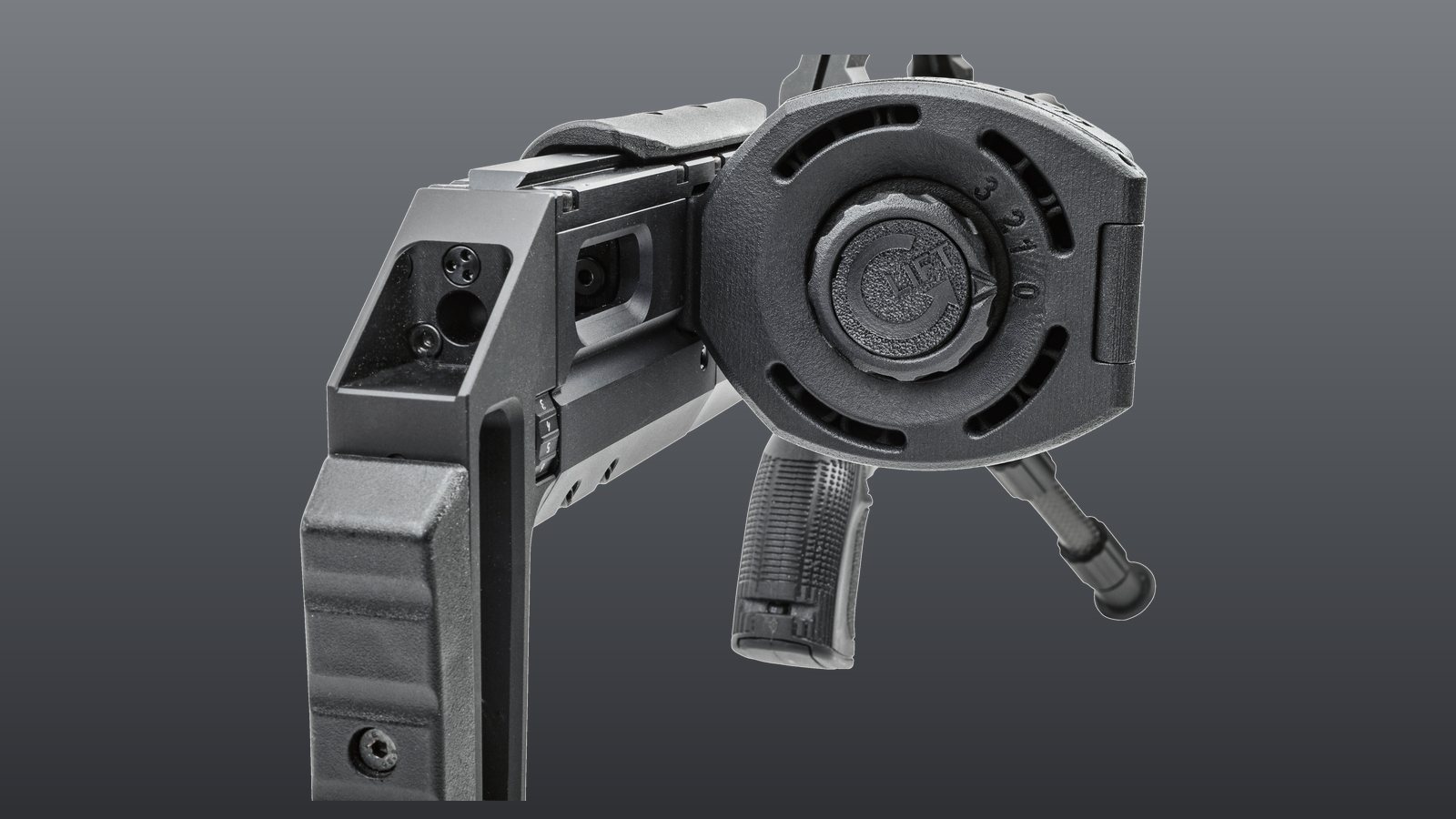
Daystate said the Quantum more than doubles the shot capacity of its standard magazine, allowing users to engage multiple targets without stopping to reload as frequently.

How many shots does the Quantum magazine hold?

The magazine is available in .177, .22, .25 and .30 calibres. Capacity is 30 rounds in .177, 26 or 28 rounds in .22 depending on the rifle model, 24 rounds in .25 and 22 rounds in .30.

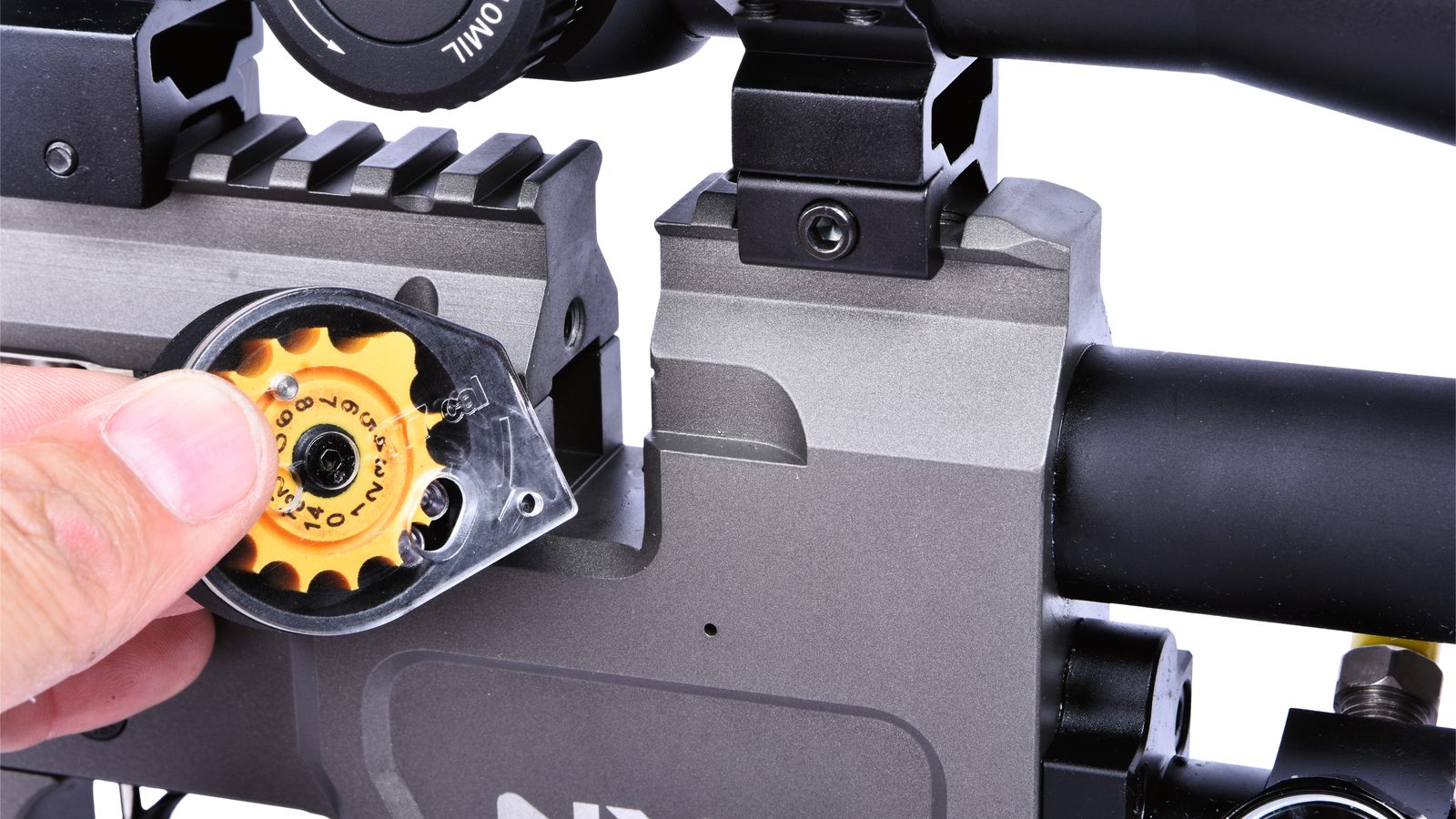
The Daystate Quantum High Capacity Magazine opened to show its rotor and remaining-shot counter
The rotor and remaining-shot counter

Quantum magazine features

The new magazine uses a feed system with rotor bearings and includes a visible remaining-shot counter. Other features include an empty-magazine hold-open function, lightweight construction and a protective storage case.

Which Daystate and BRK rifles does the Quantum fit?

It is designed to fit the Alpha Wolf, Delta Wolf, Black Wolf, Ghost, Pathfinder, Ranger, Sniper, Commander and Magnum models. Daystate said it also fits all BRK models.

The company has positioned the product for pest control, speed shooting, benchrest and other applications where a higher ammunition capacity may be useful.

Price and trade availability

The Quantum High Capacity Magazine has a recommended retail price of £190. Daystate said launch quantities are limited and advised trade customers to contact the company for pricing and availability.


Frequently asked questions

How much is the Daystate Quantum High Capacity Magazine?

It has a recommended retail price of £190. Trade customers are advised to contact Daystate for pricing and availability, as launch quantities are limited.

How many pellets does the Quantum magazine hold in .22?

In .22 it holds 26 or 28 rounds, depending on the rifle model. It holds 30 in .177, 24 in .25 and 22 in .30.

Does the Quantum magazine fit BRK air rifles?

Yes. Daystate says it fits all BRK models, as well as the Daystate Alpha Wolf, Delta Wolf, Black Wolf, Ghost, Pathfinder, Ranger, Sniper, Commander and Magnum.


Related articles

Daystate launches Alpha Wolf Shadow for UK hunting market – One of the rifles the Quantum is built to fit.

Daystate Blackwolf wind test: the HFT question dealers get asked – What the trade should know about the Black Wolf.

From GBSS to IWA, Daystate’s high-stakes February – Daystate’s show season and launches.

Other News Posts

Thomas Jacks brings Pulsar Thermion 3 LRF to UK dealers at two prices

Back to blog

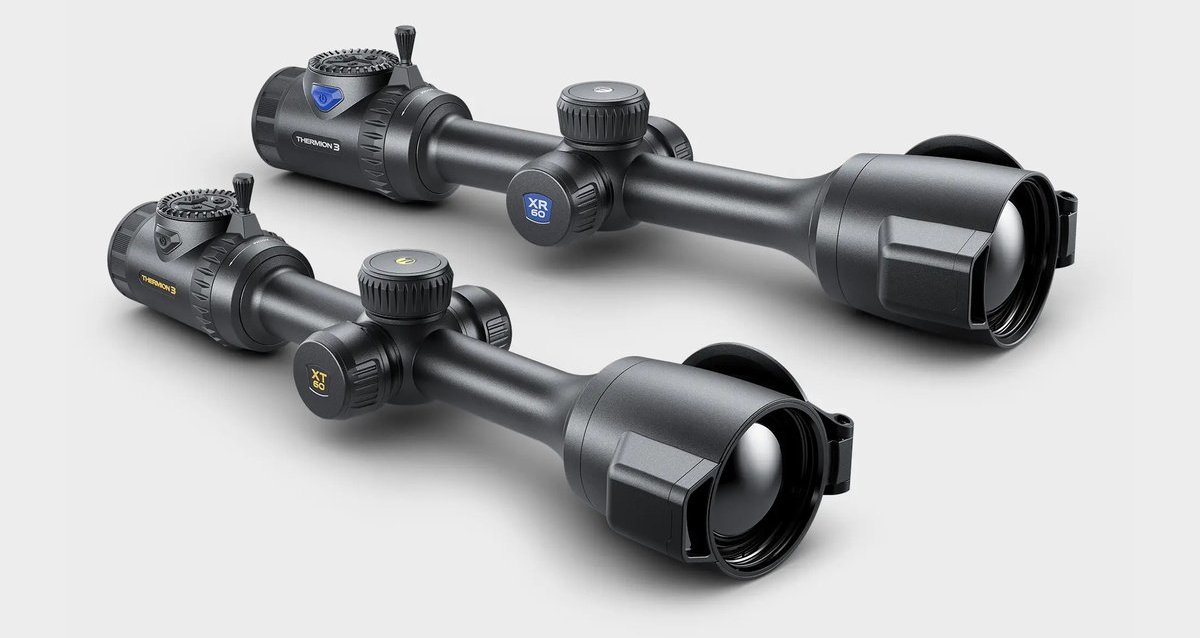
Thomas Jacks has put Pulsar’s Thermion 3 LRF into its UK retail network with two suggested retail prices: £3,599.95 for the XR60 and £5,599.95 for the XT60. The embargo lifted on Wednesday, 28 October, and both models are listed on the distributor’s product pages with full specification sheets and a dealer finder. Neither listing prints an availability date, so delivery timing is a conversation between the dealer and the distributor rather than a published promise to the customer.

What is the dealer selling at each price?

Both models sit behind the 60mm f1.0 lens Pulsar introduced with the Thermion 2 LRF 60 series and share a 1,200m laser rangefinder, a 2560×2560 display at 50Hz, 128GB of internal memory, a built-in ballistic calculator, 10 reticle shapes in nine colours, an IP67 rating, a 6,000J recoil rating and a working range of -25°C to +50°C, in a 1,030g magnesium alloy body measuring 391mm by 76mm by 96mm. The XR60 carries a 640×480 sensor at 12 microns with sensitivity better than 18mK, runs from 4x to 40x and is quoted at up to 14 hours a charge; Thomas Jacks positions it for close- to medium-range hunting. The XT60 carries a 1280×1024 sensor at 12 microns with sensitivity better than 20mK, the image quality first shown in the Symbion DXT50, runs from 2x to 16x with a wider 14.6-degree field of view and is quoted at up to 8.5 hours; the distributor positions it for long-range precision. The £2,000 step between them is the sensor and the field of view, paid for in running time and top-end magnification, which is the trade-off a counter conversation will turn on.

What changes for stock and fitting?

Less than a new generation usually means. The Thermion 3 keeps a conventional profile and mounts in standard 30mm rings, so existing ring and mount stock, and every rifle already set up for a Thermion 2, carries over. The handling changes are what the dealer demonstrates: stepless zoom from an eyepiece ring with a removable throw lever that can be digitally reversed for a left-handed customer, in place of stepped digital magnification; a focus control moved to the middle turret; a slimmer rangefinder set beside the objective rather than inside it, which Thomas Jacks says protects the lens under heavy recoil; a proximity sensor on the eyepiece that sends the scope to standby off the glass; and a hinged battery cover. Recordings download over the Stream Vision 2 app, where AI Shot Detection marks each shot on the footage automatically. Thomas Jacks bills the family as “designed to build on the form factor hunters already know and trust”.

What does the counter need to know about export control?

Both models are export-controlled items. Thomas Jacks states that the International Traffic in Arms Regulations (ITAR) and UK export licensing regulations apply, which matters to any dealer with overseas or online enquiries: a Thermion 3 leaving the country needs a licence, not a parcel label. The launch also lands in a crowded fortnight for UK thermal, in the same week as Nocpix UK set out what its Ace 2, Omni and Nite Pro generation changes, so a dealer carrying both brands has two new ranges to position against each other and against discounted Thermion 2 LRF 60 stock.

What happens next

Dealer orders go through Thomas Jacks’s retail network at the prices above, with delivery timing confirmed by the distributor. The specification sheets for both models are on the product pages linked below.


Useful links

Thomas Jacks – the XR60 listing, specification and dealer finder

Thomas Jacks – the XT60 listing and specification


Frequently asked questions

Who distributes the Pulsar Thermion 3 LRF in the UK?

Thomas Jacks, which lists the XR60 at a suggested retail price of £3,599.95 and the XT60 at £5,599.95 through its UK retail network.

Does the Thermion 3 need new mounts?

No. It keeps a conventional profile and mounts in standard 30mm rings, so existing mount stock carries over.

Is the Thermion 3 LRF export-controlled?

Yes. Thomas Jacks states that the International Traffic in Arms Regulations (ITAR) and UK export licensing regulations apply to both models.


Related articles

Pulsar Thermion 3 LRF launches in the UK in XR60 and XT60 forms – the consumer telling for stalkers and foxers

No lead ammunition derogation for historic firearms, says Defra – the ammunition regime the same counter is working to

Sussex firearms licensing backlog leaves hundreds waiting months – the certificate delays holding up sales

Other News Posts

John Wilkes guns at auction: what the trade can read from the sale

Back to blog

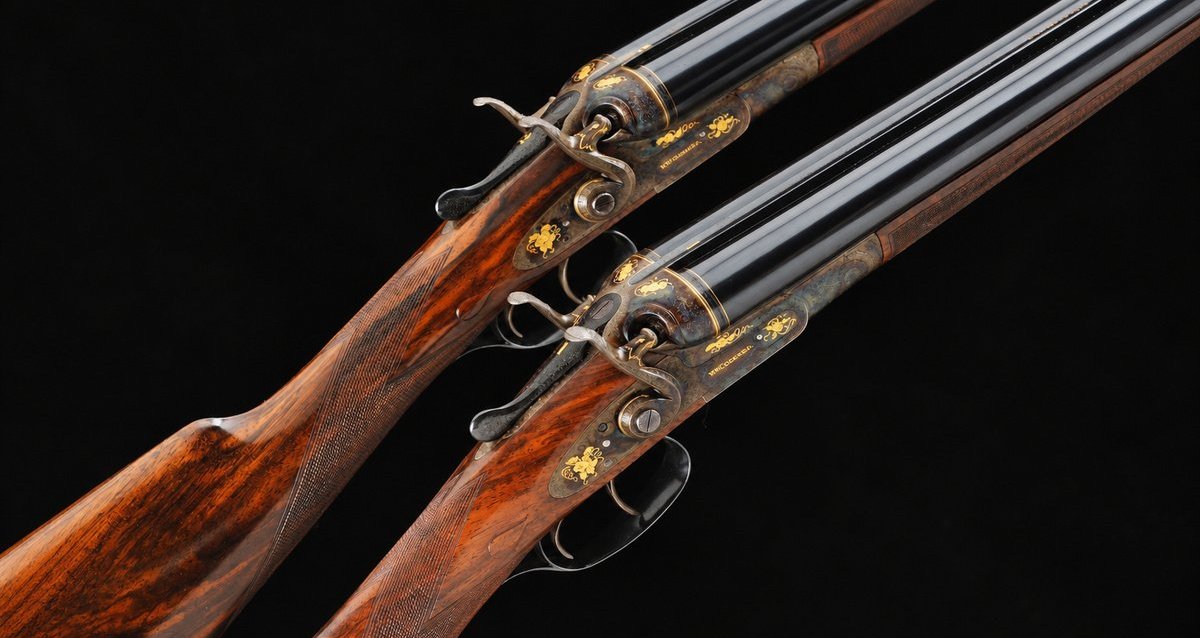
Gavin Gardiner Ltd’s sale of modern and vintage sporting guns at Pulborough on Wednesday, 18 November carries the final work of John Wilkes, the London maker that left 79 Beak Street in July 2003 and never reopened. For the secondhand and vintage trade the sale of almost 200 lots is more than a footnote to a closure: the estimates on the Wilkes guns, and on the Purdey over and under that heads the catalogue, are the clearest public read on what the market will pay for London names this winter.

What did the closure leave unfinished?

Three guns were awaiting final finishing and delivery when the firm closed, the auctioneer has confirmed from the maker’s own records: a .410 boxlock ejector and a pair of 20-bore. The .410 was not finished until 2010 and is estimated at £2,400 – £2,800, while the final 12-bore completed by the firm in 2003 is expected to make £5,000 – £7,000. Gavin Gardiner said: “The maker confirms that the gun was among the last guns completed after the firm’s departure from Beak Street in July 2003.” He added a note the trade will recognise from any house with a long serial run: “Confusingly the final sidelock gun, a .410 also bearing the serial number 15502, was completed for and engraved by Malcolm Appleby, now better known as the ‘Dragonfly’ gun.”

A pair of Greener 28-bore hammer guns, completed by Wilkes in the 1980s for the Tulchan collection, carries an estimate of £8,000 – £12,000, and the Wilkes lots as a whole span from under £3,000 to five figures.

The catalogue as a market benchmark

The headline lot is a 12-bore sidelock ejector over and under by James Purdey & Sons, built on the Purdey/Woodward action and completed in 1991, in very little used condition and cased with its accessories, with rose and scroll engraving by Martin Bublik. Its £40,000 – £60,000 estimate puts a recent, lightly used London over and under at a fraction of a new order, which is the comparison every retailer with a secondhand rack is asked to make. Below it, the spread of Wilkes estimates shows where a closed house with a good name but no living order book sits: collectors will pay for provenance and for the last of a line, but the small-bore boxlock and the 12-bore are priced as guns to be shot, not museum pieces. The balance of the sale is gun cases and shooting accessories.

Why does the Beak Street name still matter?

The Grade I-listed shop retains its original John Wilkes identity and is occupied today by the French fashion brand Officine Generale. A listed frontage keeps a maker’s name in public view long after the ledgers close, and the sale is a reminder that goodwill in the London trade outlives the firm that built it: a name on a top rib still sells, and the auction rooms rather than the shops are now where most of that value changes hands.

What happens next

The sale takes place on Wednesday, 18 November 2026 at Pulborough, West Sussex, live and online. Gavin Gardiner’s following sales are set for 28 April and 24 November 2027, both at Pulborough, which gives the trade two further fixed points for the vintage market in the coming year. Prices realised on the Wilkes and Purdey lots will be the figures to note.


Useful links

Gavin Gardiner Ltd – the auctioneer holding the 18 November sale and the 2027 dates


Frequently asked questions

When did John Wilkes close?

The firm left 79 Beak Street, Soho, in July 2003 and never reopened; three guns awaiting finishing were completed afterwards, the last in 2010.

What are the last John Wilkes guns estimated at?

The final .410 boxlock ejector at £2,400 – £2,800, the final 12-bore at £5,000 – £7,000 and a pair of Wilkes-completed Greener 28-bore hammer guns at £8,000 – £12,000.

When are Gavin Gardiner’s 2027 sales?

28 April and 24 November 2027, both at Pulborough, West Sussex.


Related articles

Last John Wilkes guns come to auction 23 years after the firm closed – the consumer telling of the sale on ShootingUK

David Winks obituary: Holland & Holland barrelmaker and director – the London trade’s craftsmen remembered

Single firearms licensing authority considered for England and Wales – the licensing reform the trade is watching

Other News Posts

Knife Crime Centre results: bulk-sale reporting duty for retailers

Back to blog

Retailers of sporting and outdoor knives have been given notice of the next regulatory load. The National Knife Crime Centre, the Home Office-funded unit hosted by the National Police Chiefs’ Council (NPCC) since April, published its six-month results on Monday, 2 November, and its head named mandatory bulk sales notifications and voluntary suspicious sales referrals as the tools to come. The centre coordinated the seizure or recovery of 1,364 weapons between 2 April and 28 September, identified 186 grey-market sellers and reported 183 social media accounts for closure.

What are the six-month figures?

Alongside the weapons count the centre contributed to 66 arrests or cautions linked to grey-market sales or importation, 94 charges, 90 of them for importation and four for grey-market sales, and three convictions, with further cases awaiting trial. It reviewed 21 weapons-related websites and identified 18 juveniles of concern. The pattern is a supply-side one: the unit works back from seized blades to the sellers behind them, and the online shop windows it is closing are the social media handles and websites through which prohibited knives reach buyers who could never have bought them over a counter.

The reporting duty the trade should plan for

Commander Stephen Clayman, head of the centre, said: “Mandatory bulk sales notifications and voluntary suspicious sales referrals will enable policing to identify concerning purchasing patterns at scale within England, Wales & Scotland.” He said that “new legislation will also strengthen our ability to intervene” and that the centre is “working with retailers and technology companies”. The release does not say who will report, at what threshold a sale becomes bulk, or when the duty commences, and Northern Ireland is not named. For a dealer or a country store that sells knives alongside guns and kit, the sensible preparation is a sales record that can already answer the question the duty will ask: who bought several blades at once, and whether anything about the order looked wrong.

What does the cross-border case teach?

The centre’s Operation Obex began with a European retailer selling both lawful and prohibited knives to UK customers “without being aware of differences between the two countries’ legislation”. The retailer agreed to stop sales to the UK immediately, and the centre worked its sales data into intelligence on more than 300 purchasers, some suspected of selling on. In the second phase Border Force intercepted dozens of shipments to addresses across England and Wales, hundreds of knives, most of them illegal and including zombie-style machetes, and identified almost 50 customers across 20 force areas; 150 weapons were later seized from two consignments already delivered in Greater Manchester. For any UK retailer trading into Europe, or distributor bringing stock in, the lesson is that compliance is checked at the border and at the parcel hub, and that a mistaken reading of another country’s law was enough to bring the centre to the retailer’s door.

What happens next

Policing minister Sarah Jones said: “With knife crime down 11% in two years, we’re making progress but there is more to do,” and the Government has launched its No Place for Knives campaign in Birmingham, Westminster and Croydon. Pooja Kanda, whose son Ronan was murdered in June 2022, used the release to call for a licensing system for knife retailers, which is not government policy but is now on the record beside the results. Gun Trade Insider will report the legislation’s thresholds and commencement date when they are published; the Gun Trade Association is the trade’s representative body, and its view will be worth having when the detail lands.


Useful links

National Police Chiefs’ Council – the centre’s six-month results and the Obex detail

Gun Trade Association – the trade body for the retailers the reporting duty will reach


Frequently asked questions

What is the National Knife Crime Centre?

A Home Office-funded national unit launched in April 2026 and hosted by the National Police Chiefs’ Council, which coordinates forces against the supply of knives and offensive weapons rather than individual street offences.

What are mandatory bulk sales notifications?

A planned duty, named by the centre’s head, for sales of knives in bulk to be notified to the police across England, Wales and Scotland, alongside voluntary referrals of suspicious sales; the threshold and start date have not been published.

How many charges has the centre brought?

It contributed to 94 charges in six months, 90 for importation and four for grey-market sales, with three convictions so far.


Related articles

National Knife Crime Centre seizes 1,364 weapons in six months – the consumer telling of the results on ShootingUK

Retailers told to tighten knife marketing at Home Office summits – the Home Office’s direct ask of the trade

Single firearms licensing authority considered for England and Wales – the other regulatory reform on the trade’s horizon

Other News Posts

Lead shot: Northern Ireland trade gets seven years as GB works to 2029

Back to blog

The UK gun trade is heading for two lead shot regimes on one island group. Northern Ireland will take a seven-year transition under the EU restriction now in its final stage of scrutiny, Countryside Alliance Ireland has confirmed, while dealers and makers in Great Britain work to the lead shot restrictions that bite on 1 April 2029. The EU text covers shot alone, so centrefire and rimfire lead stays unrestricted in Northern Ireland even as Great Britain restricts lead bullets for live quarry from 2029.

Why does the EU restriction bind Northern Ireland?

Northern Ireland remains inside the EU’s Registration, Evaluation, Authorisation and Restriction of Chemicals regulation (EU REACH) under the Protocol, now the Windsor Framework, while Great Britain runs its own regime, UK REACH, as the Government’s guidance confirms. Once the European Parliament and the Council have accepted the text, which they can only do whole, it binds Northern Ireland automatically with no decision at Westminster or Stormont. The transition has moved a long way in 17 months of negotiation: the European Chemicals Agency’s risk committee recommended 18 months, the European Commission proposed three years, and the final text gives seven. Bullets and slugs, which earlier drafts would have caught along with rimfire, are out of scope.

What does a split regime mean for stock and supply?

For a manufacturer or distributor serving both markets the calendar now runs on two clocks. Lead game and clay loads remain lawful in Northern Ireland for seven years from publication in the Official Journal, several years beyond the April 2029 date in Great Britain, and lead rifle ammunition is untouched there. The European Federation for Hunting and Conservation (FACE) expects more than 90% of the replacement ammunition to be steel shot, with standard steel cartridges already priced comparably to lead, and the European industry has confirmed it can deliver within seven years; Denmark, the Netherlands and Flanders made similar transitions without a fall in hunter numbers or bags. The Alliance notes that supply will need watching precisely because many manufacturers serve both the GB and EU markets, and a Northern Ireland dealer whose suppliers reorganise production around the GB date may find lead lines thinning before the local law requires it.

What is the counter conversation?

The Alliance’s advice to its members is to have a gunsmith confirm that a shotgun suits non-lead shot before switching, because older guns and tighter chokes need particular care. That is work for the trade: proof checks, choke advice and the fitting of steel-suitable chokes are the service a seven-year window lets a shop plan rather than rush. Gary McCartney, regional director of Countryside Alliance Ireland, said: “A seven-year transition and the removal of bullets and slugs from the restriction give our members far more time and certainty than their counterparts across the water. But that only helps if suitable alternatives are available, affordable and fit for our terrain, and we will keep pressing to make sure that is the case.”

What happens next

Adoption and publication in the Official Journal are the remaining steps, and no vote date has been published. Great Britain’s own restriction has been in force since 1 April 2026, with outdoor ranges there facing a separate April 2028 deadline unless they meet new risk-management requirements. Countryside Alliance Ireland says it will work through FACE and with the UK authorities on the availability of alternatives as the process moves on.


Useful links

Countryside Alliance – the full explainer from Countryside Alliance Ireland

European Commission – the body adopting the lead shot restriction that will bind Northern Ireland

FACE – the European federation’s steel supply and pricing expectation


Frequently asked questions

How long is the lead shot transition in Northern Ireland?

Seven years from adoption and publication of the EU restriction, against lead shot restrictions in Great Britain that apply from 1 April 2029.

Does the EU lead restriction cover bullets and slugs?

No. They were removed from the final text, so lead rifle ammunition, rimfire included, stays unrestricted in Northern Ireland, while Great Britain restricts lead bullets for live quarry shooting from 2029.

Why do different lead rules apply in Northern Ireland and Great Britain?

Northern Ireland remains within EU REACH under the Windsor Framework, so EU chemicals restrictions apply there automatically, while Great Britain follows UK REACH.


Related articles

Seven-year lead shot transition confirmed for Northern Ireland – the consumer telling of the Alliance’s explainer

EU lead shot ban moves to adoption with seven-year transition – how the seven-year transition was negotiated

No lead ammunition derogation for historic firearms, says Defra – the Great Britain timetable the rest of the trade is working to

Other News Posts

What dealers need to know about Range Right’s Turkish walnut PCP

Back to blog

Range Right’s Reximex Pretensis-K has had a full review in Shooting Times, and it reads well for the trade. Dave Barham tested the .22 Pretensis-K, the carbine version of the Pretensis, at a £615 RRP and concluded: “To put it simply, you are getting way more rifle than I would expect for the price tag.” For a dealer stocking regulated PCPs below £700, that is a line a counter can use, and the review supplies the detail to stand behind it.

What is the dealer selling?

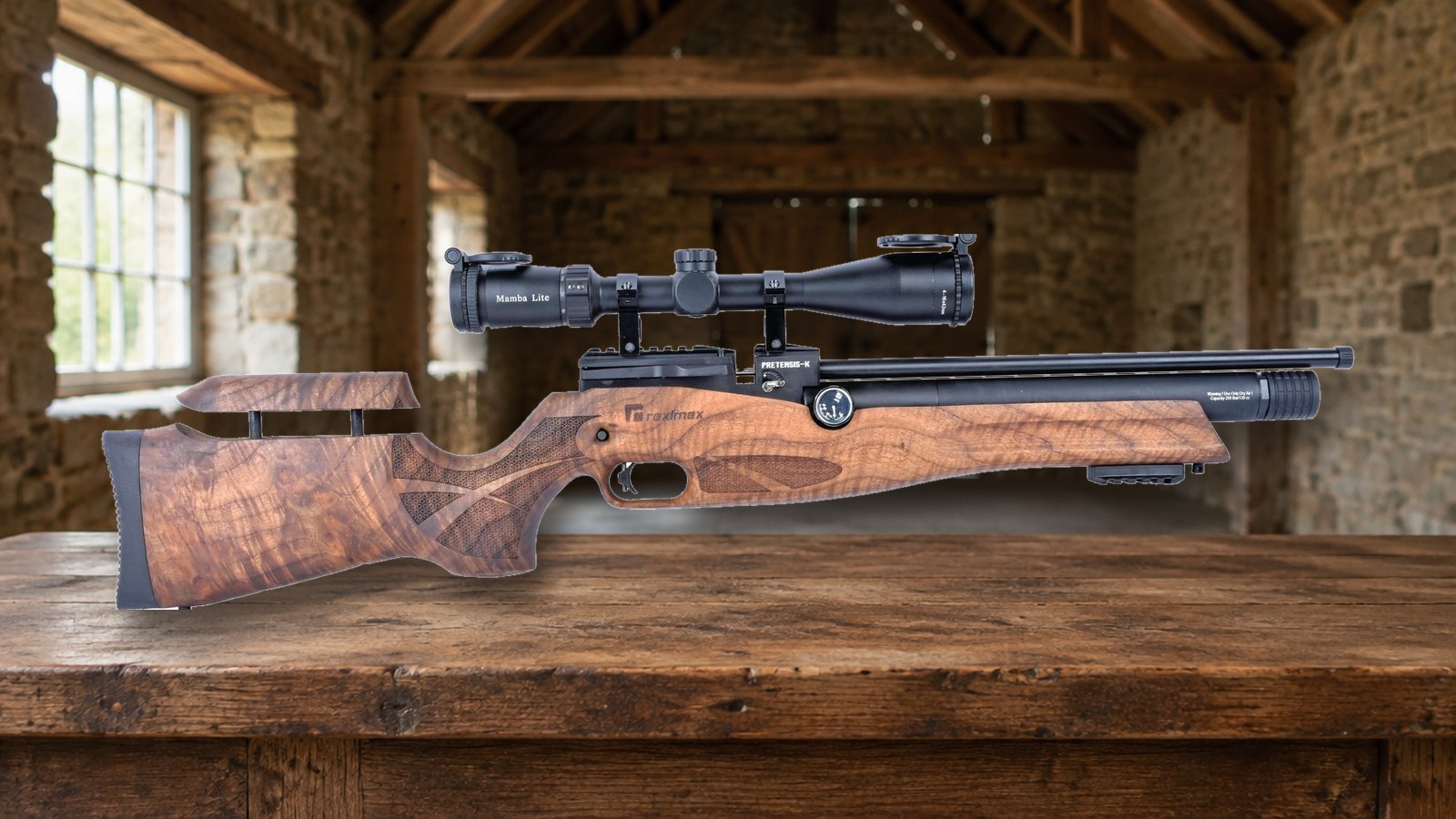
A Turkish-made multi-shot PCP carbine in .177, .22 and .25, imported by Range Right, with an ambidextrous walnut stock, a spring-assisted side-lever, a two-stage trigger adjustable four ways and a manual push-button safety. The regulated 130cc cylinder fills to 250 bar and, in the .22 Barham tested, gave around 90 to 110 shots. The rifle is 890mm overall with a 420mm floating barrel and weighs 2.8kg without a scope. The box holds two magazines, a single-shot magazine, a fill probe and a female Foster adapter for whips without one, which Barham called “a really nice touch”. The review records the RRP as correct at the time of publication and notes it may have changed.

Which build points sell at the counter?

The stock does the talking. “This rifle has a beautifully marked Turkish walnut stock, one of the nicest I’ve seen if I’m honest,” Barham wrote. The adjustable cheekpiece is cut from the stock itself rather than added, so the grain runs unbroken from the cheekpiece into the butt, and his reaction was “Hats off to Reximex for doing this.” Sling studs are fitted from the factory and there is a removable Picatinny rail under the slim fore-end for a bipod, “yet another attention to detail you don’t often find on rifles of this price”. Those are the points a customer can see and feel across the counter, and the review gives a dealer the words for them.

What did the numbers show?

Consistency is the review’s strongest finding. With JSB Exact Jumbo 15.89gr pellets the .22 ran between 548fps and 556fps for a peak of 10.9ft/lb, a spread of 8fps over 10 shots. Barham reported 5p-sized groups at 30m from the bench with very little change at 40m, and spinners falling at 50m. On the trigger: “The second stage has absolutely zero creep and with just under a pound of pull until the break it is easy to anticipate.” The regulator gauge on the test rifle appeared to be set at 100 bar.

Where are the add-on sales?

Two features point straight at accessories. The muzzle is threaded ½in UNF and the review all but prescribes a moderator: “As far as barrel crack goes, this rifle has a respectable bark, but slapping a moderator on will quieten it all down.” The eight-step power adjuster on top of the action, which takes the .22 from 10.9ft/lb down to around 5.5ft/lb, opens the rifle to the customer with a garden or a barn to shoot in: “It’s a very handy feature for those who shoot over shorter distances, in gardens or barns.” A moderator for the thread, a bipod for the fitted rail and a sling for the fitted studs are natural attachments to the sale.

What should a dealer be ready to explain?

The review is candid about three things. The push-button safety cut into the walnut above the trigger is positive and loud: “Not so great for hunting scenarios, but it does the job really well.” The magazine goes in from the right-hand side only, and “it takes a bit of working out the first time, but once you suss it out it’s a simple operation”; a dealer who shows the loading sequence at the counter saves a phone call later. And the bark without a moderator is a point to make before the customer gets home, not after.

What happens next

Barham’s verdict places the rifle with “a wide variety of shooters, from the weekend clubbers to the four nights a week pest controllers out there”, which is as broad a customer base as a £615 PCP can claim. The full review, with the specification table, is on ShootingUK and linked below, as is Range Right, the UK importer.


Useful links

Reximex Pretensis-K review – Dave Barham’s original review in Shooting Times, on ShootingUK

Range Right – the UK importer and distributor of Reximex airguns


Frequently asked questions

What is the RRP of the Reximex Pretensis-K?

The Shooting Times review records an RRP of £615, correct at the time of publication on 4 November 2026 and noted as liable to change.

Who imports Reximex airguns into the UK?

Range Right is the UK importer and distributor of Reximex, the Turkish maker of the Pretensis-K.

What calibres and magazine capacities does the Pretensis-K offer?

It is made in .177, .22 and .25, with magazines holding 14, 12 and 10 pellets respectively. Two magazines and a single-shot magazine are supplied.


Related articles

Reximex Lyra PCP airgun receives carbine update with new “K” model – the maker’s other carbine conversion

Reximex Mito Race air pistol review: race to the top – another Reximex on the trade test bench

Family values at the heart of Range Right’s growth – the importer behind the brand

Range Right appointed as exclusive UK distributor for Taipan Airguns and Valiant Optics – the distributor’s widening airgun portfolio

Other News Posts